
NR, in the magazine’s April 8 issue: Tom Seaver: The Perfectly Balanced Pitcher
Category: Baseball Columns
Frank Robinson, R.I.P.
Baseball’s Steroids Problem Is A Barry Bonds Problem
RIP Yogi
WINFILES: Baseball’s 400 Win Club
Let’s take a new look at an old-fashioned topic: baseball’s winningest pitchers.
One of baseball’s most unique aspects is the outsize role of the starting pitcher in each game, reflected in the fact that only a pitcher (usually the starter) is assigned a “win” or “loss.” Even today’s advanced statistical formulas confirm the primacy of the starting pitcher: using the popular “Wins Above Replacement” metric, Babe Ruth in 1923 is the only non-pitcher since 1872 to play more than 8 games in a season and earn more than 1 WAR per 11 games played; 167 starting pitchers have topped that threshold just since 2010. Put another way, in any given baseball game, a typical #1 or 2 starting pitcher is at least as valuable to his team as Babe Ruth at his best.
That’s never more true than in October. In the era of three divisions and a wild card (expanded in 2012 to a play-in game, and sometimes requiring a play-into-the-play-in game), starting pitchers throw fewer regular-season innings and make more postseason starts than ever in the game’s history. 2013 saw the end of the career of Andy Pettitte, whose 44 career postseason starts and 276.2 career postseason innings are career records and represent more than 8% of his career workload and more than a full season’s work for a 21st century pitcher. This will also be the first year on the Hall of Fame ballot for Greg Maddux, Tom Glavine, and Mike Mussina, all stalwarts of the post-1994 October order (it’s also the second year of Curt Schilling on the ballot, and next year we get John Smoltz). The games they won there are a part of their stories.
The Story Of The Win
Traditionally, 300 wins has been the gold standard for a successful pitching career. There’s a simple logic to this: 30 wins a year for a decade, or 20 wins a year for 15 years, or 15 wins a year for 20 years, or 12 wins a year for 25 years…no matter how you slice it, you need an exceptional combination of success and durability to win that many games. And winning games is, after all, the point of playing them; a starting pitcher who walks off the field with a W can always feel satisfied with his day.
In the age of advanced statistical analysis, wins have come under a lot of criticism as a yardstick of pitching success. Much of that criticism is fair. Pitchers have always been at the mercy of their offensive and defensive support to win games; while some of these factors even out over the course of a career, not all do. Among the greats, for example, Jim Palmer had unusually good defensive support, while Warren Spahn and Christy Mathewson had unusually good offenses behind them.
Then again, applying current criticisms of the win retrospectively can overlook the extent to which the game has changed over time. The big change in the starter’s role is the role of the bullpen: with starters finishing ever fewer of their games and increasingly leaving games in the fifth or sixth inning, they are more and more at the mercy of their bullpens as well. This is not a new trend – complete games have been in steady decline since the dawn of organized baseball in the 1870s, part of a broader pattern of declining pitcher workloads – but the late 1970s was really the tipping point, after which it became accepted that even a staff ace would finish no more than half of his own games. Roger Clemens in 1987 was the last starter to finish half his starts; no pitcher did that more than twice after 1977. By contrast, Spahn completed at least half his starts in 17 different seasons, Fergie Jenkins in 9 seasons. The argument that awarding wins to the starter vs the reliever is arbitrary may be a fair one in the baseball of 2013, but it made a lot more sense in Spahn’s day. And in other ways, pitchers have more control over their situation than they used to – defense is actually less important in today’s game than ever before, due to historically low percentages of plate appearances resulting in a ball in play – down to around 70% where it was once above 90%. Instead, we’re more likely than ever to see a time at bat end with a walk, strikeout or home run, all of which are one-on-one contests between pitcher and batter.
So, if we’re doing a sophisticated look at ranking baseball’s best pitchers, we’d use multiple measurements more precise than their win totals. But if the win has fallen from its once-privileged place in the world of analysis, career won-loss records still tell a story of the great pitching careers, of successes and failures both earned and fortuitous – and any list of the game’s winningest pitchers over their careers will still overlap quite a lot with any list of the game’s best. As Joe Posnanski has written, sometimes you have to sit back and let the numbers tell those stories. To expand that story, let’s taking a look baseball’s winningest professional pitchers, including not only the postseason but also the minor leagues and in some cases other professional leagues in the United States and abroad. As we’ll see, in some cases there’s a good deal more to the story, our appreciation of which can only be deepened by taking in the whole picture.
Major, Minor; Season, Postseason
Now that baseball-reference.com has expanded to more comprehensive (if still not 100% complete) coverage of the minor leagues, we have a consistent source of data to see the all-time wins list in a new light – because most everybody on the list of the game’s great pitchers has won games outside of their career win totals. Some pitched a good deal in the postseason, as noted. And most pitched at least some years in the minor leagues, others quite a few years, as we will see below. It was particularly common in the years between 1900 and 1940 for major league players to not only spend years working their way up the minor league ladder, but also spend additional years working their way back down it once their major league primes had passed.
To understand why, a very brief history is in order. Professional, league baseball began with the National Association in 1871, followed five years later by the foundation of the National League. The “major” leagues were in a state of flux from 1871 until the American League opened up shop in 1901, and unsurprisingly, other “minor” leagues were even less stable in terms of things like keeping the same franchises in business from year to year, having a standard length to the schedule and keeping players on their rosters from jumping teams – to say nothing of their record-keeping. The numbers laid out below include largely complete minor league records from around 1900 onward, but are much spottier for the 19th century.
Beginning in 1903, the NL and AL each had 8 teams, which didn’t change cities until 1953; none of those teams was south or west of St. Louis, leaving many markets without a major league team. The leagues also stopped raiding each other’s rosters, with the brief exception of the 1914-15 Federal League experiment, baseball’s last effort at a third major league. This was an era of peace and stability in the game, but it left the players little bargaining power, so few made very much money. And until Branch Rickey began building the first farm system beginning in the early 1920s, most minor league teams were independent businesses. The result was that many experienced players spent significant time in the minor leagues – either they liked it on the West Coast (the Pacific Coast League being the most powerful minor league), or their teams wouldn’t sell them to the majors, or they were ex-big-leaguers employed as player-managers or just looking to make a living. Between the late teens and the early 1950s, there were also Negro League teams composed of black players who couldn’t cross MLB’s color line, although for a variety of economic reasons the Negro Leagues generally played less regular schedules than white baseball did (contributing to the difficulty of getting reliable Negro League statistics). Minor league competition was rarely the equal of the big leagues, but these were nonetheless competitive leagues.
With that background in mind, let’s take a look at baseball’s winningest pitchers, adding up major league wins, minor league wins and major league postseason wins. I haven’t included exhibitions like spring training or the All-Star Game (starters can only go three innings in the ASG anyway), and stats on the minor league postseason are too irregularly kept to be included. In a few cases down the list, I include statistics from Japan, and in just one (Satchel Paige) is there sufficient information to include Negro League stats.
The Economic Case Against The DH
My debut column at Grantland.
PS – Welcome new readers! Stop and look around, there’s more than a decade’s worth of stuff here; baseball, politics, pop culture, law, etc. Check the sidebar for some of the highlights.
Designated Hitters and the Economics of Baseball
Originally published at Grantland
Baseball is a game of traditions. It comes as no surprise, then, that nearly four decades after it was adopted, the game and its fans still have not fully embraced the Designated Hitter rule. Most of us can recite in our sleep the traditionalist arguments against the DH — it creates halfway players, it reduces strategy, it’s not The Way Things Have Always Been. But those arguments are matters of taste. Other arguments against the DH — the havoc it creates with postseason and interleague play, especially in the age of the unbalanced schedule — are more a function of the rule existing in only one league. Still others, such as whether the DH rule contributes to the ever-diminishing workloads carried by frontline pitchers, remain open to debate; it’s hard to separate the evidence from other long-term trends in the game.
But let’s instead focus on another aspect of the DH rule: the practical effect of the rule on the game’s economic structure, and why the economic effects of the DH rule are precisely why we can neither get rid of it nor extend it to the National League.
A major league roster has 25 players, but the cost of those players is not evenly distributed, and neither is their impact on the team’s success. Most teams carry 11 or 12 pitchers, of whom five starters and perhaps three relievers will play critical roles. A National League roster has eight everyday players and a four- to six-man bench; in the American League, the DH means there’s one extra everyday player, generally at the expense of one bench job. Due in part to the expansion of bullpens, platooning is far rarer today than it was two decades ago, so there’s a wide gap in pay and playing time between true regulars and bench players. So, an NL team has about 16 crucial jobs, an AL team 17. But wait: A typical team will be able to fill about seven of those jobs with players who don’t have enough service time to demand high salaries. The reality is that adding another regular can take a team from nine to 10 jobs that truly require a major outlay of cash.
The numbers bear this out. The average AL payroll was $92.8 million from 2006 to 2010, while the average NL payroll was $80.1 million. If you look only at teams with winning records — working under the theory that those are the teams actually trying to spend enough money to compete and succeed — the disparity is even larger: The average winning AL team had a payroll of $108.4 million compared to $88.7 million in the NL. That’s a $20 million-a-year difference.
Is the DH rule to blame for this? It’s obviously not the only reason, but certainly it’s a contributing factor.
Over the same five-year period, the 14 American League teams employed something like a full-time DH in 57 out of 70 possible seasons. (“Full time” is defined here as 300 or more plate appearances with at least half the player’s games at DH.) The average salary of those players? $6.8 million. And that doesn’t include the cost of DHs who break down due to age or injury. Travis Hafner made more than $8 million in 2008, Ken Griffey $2.3 million in 2010, and neither made it to 300 plate appearances. Frank Thomas had a $12.5 million salary when he was with the Blue Jays in 2008, Pat Burrell was making $9 million from the Rays in 2010, Shea Hillenbrand $6 million from the Angels in 2007. All three were cut early in the year and were signed for a song by other teams.
The financial impact of the Designated Hitter rule also widens the gap between big- and small-market teams. Just compare the haves and have-nots: Over the same five seasons, the average AL team that finished .500 or worse had a payroll of $71.1 million, indistinguishable from the $72.0 million average in the NL but $37.3 million behind the winning teams, while the NL teams trailed the winners in their league by $17.6 million. Some of those American League teams kept their costs down by just giving up. Sure, a well-run small-market team can compete by filling roster spots with players who haven’t reached free agency yet and thus are paid below their market value. But the more roster spots there are to fill, the harder it is to use the farm system to keep up with the teams that are buying high-end veterans on the open market, especially the big sluggers who generally fill the ranks of DHs. The average age of the starting DHs in the AL over that period? 32.7 years old. Aside from Billy Butler on the 2007-08 Royals, no American League team employed a DH under the age of 25, and the only AL franchises to use a regular DH under age 29 were the Royals, Twins, Rays, and Blue Jays. And the DH gives roster flexibility to the biggest players in the free-agent market. The Yankees, for example, could move guys like Jason Giambi and Hideki Matsui there near the end of big contracts to make room for still more high-priced acquisitions.
The disparity in labor costs makes the National League more attractive to owners in the free-agency era. Two teams were added to the National League when Major League Baseball expanded in 1993, matching it with the American League. Then came the 1998 expansion and realignment. Tampa Bay and Arizona were added, and Commissioner Bud Selig managed to move the Brewers from the American League to the National League. The Rays and the Diamondbacks agreed that they could be shifted to another league without their consent, but when Selig floated a plan to realign them in 2001, the Rays expressed interest in going to the NL; the D-Backs, facing transfer to the AL, fought the plan. With another realignment scheme in the air this year, Astros owner Drayton McLane is singing the same tune.
Yet the same payroll considerations are why we are stuck with the DH. The MLB Players Association will fight tooth and nail to avoid losing those high-paying jobs, and, as was the case with steroid testing, owners seem to have higher priorities in the zero-sum negotiations with the union than fixing structural problems for the greater good of the game. In the case of the DH, the big-market AL teams have no financial incentive to reduce their competitive advantage, and the NL owners have no real stake in reducing the AL owners’ cost of doing business. Unless and until all the owners are willing to make financial concessions in other areas to bring an end to the DH rule in the AL, we’re stuck with it as is.
The Path to Cooperstown: Third Base
If you’re wondering what I was working on lately besides the division previews, my fifth annual Hall of Fame column is up today at The Hardball Times, and it’s on the third basemen.
UPDATE: I’ll have to post the full tables here when I get a chance, the plate appearance figures are crucial to the column, and it looks like the editors at THT removed them to save space. They took out the steals, caught stealing and GIDP data, too. Urk.
Charts below the fold:
Birds of a Feather
One thing that’s been interesting this season as Jose Reyes bloomed abruptly into an offensive force is the parallel development of Carl Crawford in Tampa Bay. Crawford is very much the same type of hitter as Reyes, and like Reyes he started slowly (batting .261/.342/.322 through May 21*) before very suddenly catching fire (.386/.709/.409 since then) to raise his averages into the .300/.500/.350 zone, in which a player as fast as Reyes or Crawford is just dynamite. Crawford’s a bigger guy than Reyes and a year older and has done it a little differently – more homers, fewer walks and triples – but both of them, if they stay healthy, should have very long and productive careers ahead of them (look at Kenny Lofton or Marquis Grissom).
Gibson and Alexander
This is a column I started three years ago, and just recently wrapped up.
Gibson and Alexander, Alexander and Gibson. Let’s hit the books and take a look back . . .
Who was a better pitcher � who did more to help his teams win � Pack Robert “Bob” Gibson, or Grover Cleveland “Pete” Alexander? In the popular imagination, the answer is easy. Gibson was voted to the All-Century team. Lefty Grove, Christy Mathewson and Alexander were the only three 20th Century pitchers to win 300 games and win more than 64% of their decisions (Roger Clemens has since joined them); in the balloting, Gibson (with 251 career wins and a .591 career winning percentage) drew more votes than all three combined. It�s not just the public at large; when the Society for American Baseball Research (SABR) named its top 100 players of the century, Gibson was 17th, Alexander 25th. What got me thinking particularly about the comparison between the two was Sports Illustrated; SI�s state-by-state list of the top athletes of the 20th Century placed Gibson directly above Alexander among athletes from Nebraska.
Besides both being from Nebraska, both men were late bloomers; Gibson arrived in the majors at age 23, but struggled with his control and didn’t have his first good year until age 26, and didn�t really blossom until they expanded the strike zone the following year. Alexander didn’t even enter professional baseball until age 22 (in 1909) and had his career set back when he was nearly killed after being struck in the head by a thrown ball while running the bases in July of 1909. When he did arrive in the majors two years later he immediately led the league in wins and set a rookie strikeout record that lasted 73 years.
Stylistically, they were complete opposites. Gibson was a classic power pitcher, with a high leg kick and over-the-top delivery; his favorite pitches were High and Inside, Higher and Further Inside, and Right Down Your Throat. Alexander was a sidearmer who threw so many tailing sinkers that he was known as “Old Low and Away.”
Incidentally, it was probably the sidearm delivery that allowed both Alexander and Walter Johnson to throw so many more innings than their contemporaries. Many pitchers, like Christy Mathewson, threw straight overhand by the early 1900s; Alexander and Johnson were among the exceptions. (Johnson once complained that his shoulder hurt just watching Smokey Joe Wood�s overhand delivery).
There are more than a few reasons to narrow the statistical gap between the two; but as I discuss below, I can’t shake the feeling that Gibson’s higher standing is mostly a matter of good press notices. But Alexander was the better pitcher.
Let’s look at the record:
Happy Anniversary To Me
This week was so busy, I forgot to celebrate a milestone that passed on Monday: my three-year anniversary as an internet columnist. Here’s my first piece, from May 5, 2000, on a proposed baseball rule change. Of course, back then, I had never heard of a blog (and people like Glenn Reynolds were still completely unknown), although my columns were running on the Boston Sports Guy website, which really did all the things you would expect from a blog – a daily battery of links accompanied by snide commentary, a breezy, first-person interactive dialogue with the readers – and wound up making Bill Simmons, the site’s proprietor since the mid-90s, into one of the earliest internet-only celebrities. My location and format have changed since then (although I’ve owned the www.baseballcrank.com domain for almost the whole 3 years), moving to the outskirts of Big Media (the Providence Journal) and back. If you’re new to the site, check out the “Baseball Columns” category – while some of the stuff is dated and I’m far from getting all the old stuff loaded, there are a number of pieces there that I’d humbly submit are still worth reading.
Baseball’s Underappreciated Great Teams, 1970-99
Originally posted on Projo.com
The 1970s: 1974 Los Angeles Dodgers
102-60 (.630), 1st place (by 4 games), lost World Series to A’s 4-1, 4.93 R/G, 3.46 RA/G (Avg 4.15)
The Dodger infield of Steve Garvey, Davey Lopes, Bill Russell and Ron Cey became household names in 1974, but for me at least, the team was long identified with the squad that lost consecutive World Serieses to the Yankees — Tommy Lasorda’s team, with Reggie Smith and Dusty Baker in the outfield. But the 1974 team was the best Dodger team in the franchise’s tenure in Los Angeles, and would probably be remembered as such if they hadn’t lost to the Mustache Gang in the World Series.
Continue reading Baseball’s Underappreciated Great Teams, 1970-99
Baseball’s Underappreciated Great Teams, 1950-69
Originally posted on Projo.com
1950s: The 1954 Chicago White Sox
94-60 (.610), Third place (17 games out of first), 4.62 R/G, 3.38 RA/G (Avg:
4.19)
There’s a bit of a shortage of interesting teams in the 1950s, with the Hated Yankees sucking all the oxygen out of the decade (if I wanted to write about Yankee teams of that era I’d probably go with the 1958 World Champs, with Mickey and Whitey in their primes, Bob Turley winning the Cy Young Award and Ryne Duren in the bullpen). One good team that has disappeared entirely from memory is the 1950 Tigers, with George Kell, Jerry Priddy, and a dynamite outfield of Vic Wertz, Hoot Evers and Johnny Groth batting a combined .312/.511/.408 with 311 RBI.
Another is the White Sox of 1951-54, of which this team was the last installment. What initially drew my attention to this team was an anomaly: this team had nine men named to the All-Star team, six of whom played in the game: starters Minnie Minoso in left field and Chico Carrasquel at short were apparently voted onto the team, second baseman Nellie Fox was used as a substitute, and three White Sox pitchers appeared – Sandy Consuegra, Virgil Trucks and Bob Keegan. The other three were catcher Sherm Lollar (Yogi played the whole game), first baseman Ferris Fain, and well-traveled third baseman George Kell.
Continue reading Baseball’s Underappreciated Great Teams, 1950-69
Baseball’s Underappreciated Great Teams, 1900-1949
Originally posted on Projo.com
Starting this week: a three-part history column. Let’s take a look back at successful teams from each decade of the 20th century that have fallen away a bit from popular memory or haven’t been given their due:
The 1900s: The 1902 Pittsburgh Pirates
103-36 (.741), First place by 27.5 games, no postseason, 5.58 R/G (runs scored per game), 3.17 RA/G (runs allowed per game), league average 3.98/G.
Histories of the game tend to leave off 19th century baseball with the 1897 pennant race and pick up 20th century baseball with Christy Mathewson throwing three shutouts in five days in the 1905 World Series, filling the interregnum with accounts of the crises and interlocking ownerships that led to the contraction of the National League from 12 teams to 8 after the 1899 season, the founding of the American League in 1901, the jumping of players like Nap Lajoie to the AL and the litigation that sprang up in their path, the refusal of John McGraw’s Giants to play in a World Series in 1904, and the ultimate peace between the leagues under which the 1905 Series kicked off the new era. The game on the field underwent a number of dramatic changes in this era, with several developments, most notably the foul strike rule (in the 19th century, a foul ball was not a strike) leading the transition from baseball’s highest-scoring era in the 1890s to its lowest in the following decade. Mathewson’s throttling of Connie Mack’s A’s signaled the arrival of that era as well.
Continue reading Baseball’s Underappreciated Great Teams, 1900-1949
2003 Hall of Fame Ballot
Originally posted on Projo.com
The 2003 Hall of Fame ballot included 16 returning candidates and 17 new candidates; only two (Eddie Murray and Gary Carter) were elected. Let’s look at the guys who went in and the leading candidates who missed. 8 players garnered at least 40% of the vote; 75% is needed for election.
1. EDDIE MURRAY (85.3% of the vote)
Murray, really, was a no-brainer. The easiest summary of his credentials is the fact that he’s one of just 3 players (with Mays and Aaron) to get 3000 hits and 500 homers. Since that club will likely have some crashing in the future, it’s useful to look beyond that. But anywhere you look, Murray is an easy guy to vote for. Top 5 in the MVP voting six times, including five in a row, plus 6th and 8th place finishes. Murray was MVP runnerup in back-to-back seasons. He drove in 84 or more runs 16 times in 17 years, the exception being the 1981 strike season when he led the league with 78 RBI in 99 games. Murray is 8th all time in total bases and RBI.
Baseball-reference.com measures OPS+, a measure of how a player’s on base plus slugging compares to a park-adjusted measure of the league. By that yardstick, Murray was at least 30 percent better than the average hitter in the league on 12 occasions, and at least 20% better his first 12 straight years in the league. “Steady Eddie” wasn’t just a none-too-clever rhyme; Murray missed more than 11 games in a season only once in his first 18 seasons in the league, and that one time he still managed 578 plate appearances. He even managed to lead the major leagues in batting while playing in Dodger Stadium in 1990 (at age 34), although he was robbed of the batting title by a quirk of the rules: Murray hit .330 to Willie McGee’s .324, but McGee was hitting .335 in over 500 at bats when he was traded from St. Louis to Oakland, so .335 got the title.
The only blemish on Eddie’s resume is his chilly relationship with writers, the guys who do the voting. But his numbers were too big for any but the most determined grudges to overcome. Murray deserved to be elected in a walk.
2002 AL MVP Ballot
So, Barry Bonds wins the NL MVP again – there really wasn’t another choice. The guy gets on base 58% of the time and slugs .799 and his teams squeaks into the playoffs again with an unimpressive-looking supporting cast – who else are you gonna give the thing to?
But the AL MVP award, handed out this afternoon (undecided as I write this) is another story. The numbers, again, are clear: the three best hitters in the AL were Jim Thome, Jason Giambi, and Alex Rodriguez (in that order; Manny Ramirez was also more productive per at bat than Rodriguez, but you can’t give the MVP to a guy who missed a ton of time for a team that missed the playoffs by a handful of games). The offensive differences were not huge, but when you consider that Thome and Giambi are first basemen who run like apartment houses and are mediocre (Thome) to poor (Giambi) with the glove, while Rodriguez runs well and is a good fielding shortstop, the answer – on paper – is quite obvious.
Livan’s Luck Runs Out
Originally posted on Projo.com
Sometimes, your luck runs out. People who study baseball statistics have come to one clear conclusion: there’s just no evidence that anybody consistently hits well in the clutch. Over time, nearly every hitter will perform, in clutch situations – however defined – about as well as you would expect, compared to his overall performance. As we saw this postseason, this applies as well to guys who have historically underachieved in key situations, like Barry Bonds – his luck turned.
Is there such a thing as clutch pitching? There’s no reason there couldn’t be, given that pitchers have a greater ability to change their approach in different situations than hitters do — different deliveries and pitch selections, maybe a little extra velocity, maybe a few more of that pitch that kills your elbow to throw too often — but the jury’s still out on that one too.
This we know: one of the key things that slew the Giants in this World Series was the decision to rely on clutch pitching by starting Livan Hernandez in Games 3 and 7, while having Kirk Reuter start just once (Game 4) in the series. Now, this wasn’t the most disastrous pitching lineup of the postseason – that honor goes to Art Howe, who started Tim Hudson twice and Barry Zito just once against the Twins, only to watch his lefthanded starters chew up the Twins (as lefties had all year) while they ate Hudson for lunch. But it did cost Baker the World Series, and it’s worth asking: is it always a good idea to pick your startes based on their postseason experience?
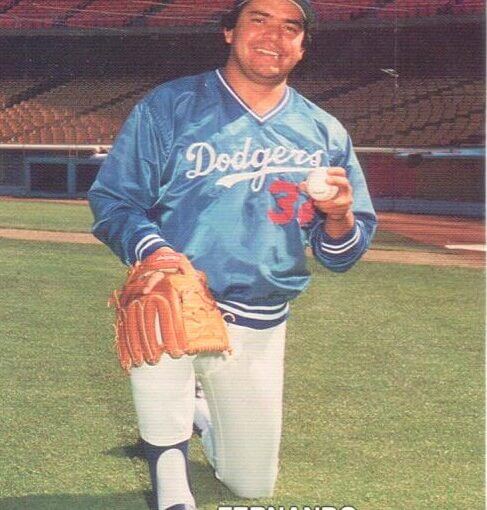
Fernandomania!
Where were you when Cal Ripken broke the consecutive games record? You don’t remember, do you? Did you even watch the game? I didn’t. Sure, it was interesting at the time, but a moment you will remember forever? If you’re keeping score at home, Major League Baseball’s fan voting produced this Top Ten List:
The Top 10 Most Memorable Moments (as voted by fans):
1. 1995 – Cal Ripken breaks Lou Gehrig’s streak with his 2,131st consecutive game.
2. 1974 – Hank Aaron breaks Babe Ruth’s all-time home run record.
3. 1947 – Jackie Robinson becomes the first African-American Major Leaguer.
4. 1998 – Mark McGwire & Sammy Sosa surpass Roger Maris’ single-season home run record.
5. 1939 – Lou Gehrig retires with his “luckiest man” farewell speech.
6. 1985 – Pete Rose passes Ty Cobb as the all-time hits leader.
7. 1941 – Ted Williams is the last man to post a .400 average.
8. 1941 – Joe DiMaggio hits in 56 straight games.
9. 1988 – Kirk Gibson’s pinch-hit homer sends LA on its way to a World Series upset.
10. 1991 – Nolan Ryan pitches his seventh career no-hitter.
Here’s the complete 30-moment ballot, and ESPN Page 2’s list of moments they left entirely off the list.
The two lists, totaling 40 ‘moments,’ present an inviting target, although
each does bear the marks of careful selection of more of the moments than not. They left off the Merkle incident in 1908, when the pennant race turned on rookie Fred Merkle’s failure to touch second base on a game-winning hit (he was on first). Many other pre-1930 moments get ‘dissed’ here – like the stunning conclusions to the 1912 and 1924 World Serieses, the incredible finish to the 1908 AL pennant race, the Black Sox fixing the World Series, and the Yankees crushing the Pirates in the 1927 World Series – and given how few people still remember them, maybe that’s understandable. I might also quarrel that Maury Wills’ stolen base record was more memorable than Rickey’s, and that I, at least, remember Nolan Ryan’s fifth no-hitter as the milestone, not the seventh. After the furor over Roberto Clemente being left off the All-Century team, it’s also understandable that MLB picked Clemente’s last hit, Ichiro’s MVP award, and Satchel Paige’s Hall of Fame induction to satisfy as many constituencies as might be offended. The latter was far from a fitting tribute to Paige, but since many of his best moments are closer in memory to Paul Bunyan stories than documented facts, it’ll have to do. For each of the three, it’s really an inclusion more of the man than the moment, and they are certainly all worthy of a certain share of the game’s honors.
Anyway, the inclusion of Clemente and Ichiro, coming alongside the late-season phenomenon of Francisco Rodriguez, brought to mind another of baseball’s truly phenomenal runs, and one that is maybe not as well-remembered as I would have thought at the time: Fernandomania!
Lessons From The 2002 World Series Teams
Originally posted on Projo.com
In baseball, success is often imitated. Every year, general managers look at the teams that won it all, or won the pennant or division, and ask themselves what those guys are doing right that we need to try. Some people dismiss this as mindless groupthink – the herd mentality – and it can be, particularly if dumb GMs ape the superficial features of the winners (like Steinbrenner’s ill-fated early-80s decree that the era of power hitters was over and he was going to rebuild the Yankees as a team of speedsters) without capturing the important parts. But it’s also a useful evolutionary process, and hey, animals run in herds for a good reason. Last year’s pennant winners offered lessons that were easy to understand and hard to imitate, like the value of having the two best (healthy) pitchers in baseball, or the importance of Mariano Rivera. But imitation is all the more tempting when the winners exceeded expectations. What lessons can we take from the Angels and the Giants?
1914-17 Giants Part Two
Originally posted on Projo.com
With a team mostly composed of players in their late 20s and with substantial major league experience, and with no reigning power dominating the National League, the New York Giants must have been optimistic about a return to the top in 1916. But any illusions were rapidly dispelled as the team sank into a 2-13 funk, 4 games behind the next-to-last-place Pirates and 8.5 games behind the crosstown rival Dodgers, who were getting some spectacular pitching. Adding insult to injury, the Dodgers would go on to the pennant that year, with Chief Meyers catching and Rube Marquard posting a 1.58 ERA, both just a year after McGraw had sold them for the waiver price. The Giants at this point were misfiring on all counts: tied for last in the league in scoring (3.53 runs/game), third to last in pitching and defense (allowing 5 runs a game).
1914-17 Giants, Part One
I generally don’t post my Projo columns here, least of all before they are up on Projo, but since the readership here is small yet and there have been some transmission problems with getting the first half posted over there (plus the Projo folks are all tied up with the start of football season), here’s a treat for y’all – Part One of my column on the 1914-17 New York Giants:
The recent 20-game winning streak of the Oakland A’s brought back mention of the 1916 Giants, with their 26-game winning streak, and some debate over whether the Giants should fairly be considered the record-holders when they had a tie in the middle of the streak. Fair enough. Most people who followed the story or know their history can tell you that, amazingly, the Giants finished fourth that year. Some could even point out the more astonishing fact: the Giants were in fourth place when the streak started, and were still stuck in fourth when the streak ended.
But what these pieces of trivia don’t tell you is that those Giants were part of a bigger story, one of baseball’s great turnaround stories and all-around roller coaster rides — the story of the 1914-17 New York Giants.
Oops
Yes, in my last Projo column, I forgot to mention the Phillies as a team that has been utterly eviscerated by their bullpen.
2002 The Year Of The Bullpen
Originally posted on Projo.com
With the threat of Baseball Armageddon behind us, 2002 will not now be known as The Year Of The Third Strike. Instead, it should be known as The Year Of The Bullpen. Nearly every one of baseball’s major stories this season, at a team level, have turned on the bullpen.
Some of the Major Leagues’ best bullpens, of course, are no surprise: both the Yankees and Mariners entered the season stocked with well-known, well-paid relievers with extensive track records of success. Both have made good use of those resources. But around the majors, there are teams that have been better (or worse) than expected, and in nearly every case the bullpen has been a critical factor. Let’s look at the teams that have been the biggest surprises of 2002:
Baseball Mom
Baseball, the sages tell us, is a game for fathers and sons. From games of catch and Little League coaches all the way to the big league world of Alomars and Ripkens and Bondses and Griffeys, we often think of how the game ties together generations of men. All of this is true, of course; hey, I got choked up at the end of “Field of Dreams” the first time I saw it, too.
But let’s not overlook one of the best gifts a boy can have growing up as a baseball fan: the Baseball Mom.
2002 All-Star Break Musings
Originally posted on Projo.com
I’ve been absent from this space for too long due to other commitments. Let’s run down some random thoughts:
+For a couple of years there, Jim Rice was just about as good a hitter as Brian Giles is.
+It’s ridiculous that the All-Star Game ended in a tie, but realistically it was the only decision they could make. Bud Selig looked like he wanted to crawl under a rock (maybe Joe Torre should have talked Giuliani into making the announcement). What’s scandalous is how they got there – the managers can take a pitching staff full of superstars, you’d think they can find a few people to throw 2-3 innings at a stretch without getting hurt or tired. If 4 starting pitchers each throw 2 innings, you’re entering the ninth with 6 or 7 pitchers on hand. They’re pitchers, for crying out loud; the rest of them aren’t going to complain if they don’t pitch.
I know, it’s an unfair comparison in several ways, but I can’t resist: In the 1933 World Series, screwball pitcher Carl Hubbell pitched a complete game in Game 1 – then came back on two days’ rest — TWO DAYS — and tossed an 11-inning complete game 2-1 victory.
Rey Vaughn
Originally posted on Projo.com
These days, if you watch him on anything like a regular basis, you can’t avoid the question: is Mo Vaughn done? And, does Sunday night’s big home run against David Wells change anything?
The numbers tell a story that doesn’t lie: entering Sunday, Mo wasn’t just hitting .231, he was hitting an empty .231, with just 4 homers and 5 doubles leading to a .323 slugging percentage (lower than Rey Ordonez posted last season, and lower than the career slugging averages of Rey Sanchez or Rey Quinones – hey, maybe we should start calling him Rey Vaughn). He’d struck out a staggering 55 times in just 214 plate appearances – once every 3.89 trips to the plate – but in the 126 times he’s put the ball in play, mostly batting behind a bunch of other struggling hitters, he’s still managed to hit into 9 double plays. Mo is hitting .319 when not striking out, compared to .399 before this season, which suggests that he’s not just not making contact, he’s not making the kind of contact he used to. The only bright spot is that he’s walking more and getting hit by more pitches, so he’s on base sometimes (.332 on base percentage, which is not good but not dreadful) – but then he runs like a man carrying heavy boxes in the rain.
Even those numbers don’t entirely capture how helpless Mo has looked at the plate, constantly struggling to catch up to pitches. He’s behind on everything. Keith Hernandez had a great point the other day: because Mo has such a severe uppercut, his bat spends very little time in the hitting zone (as compared to a Tony Gwynn type who swings level or even a Darryl Strawberry type with a long arc to his swing). As a result, if his timing is off even a little, he’s lost. And his timing and bat speed haven’t been right all year.
Gay Ballplayers and Steroids
Originally posted on Projo.com
Somehow, it’s always baseball. My mind came back to this, last week as the papers carried two reports on the same day: Mike Piazza denying he was gay, and Barry Bonds denying he uses steroids. For now, we must take both men at their word, and in Piazza’s case in particular there is really no reason to inquire further if that is the answer he wishes to give. But the questions were being asked, and on the steroid issue, they are just getting warmed up. And that’s baseball, and it’s another reason why, for all the mega-ratings popularity of football, for all the pop culture cache of hoops, this is still America’s game. People have higher hopes and expectations for baseball, and they expect it to solve its problems. Let college football wallow in hypocrisy, as it has done for all its existence. (Really, we’re just students who like to play a game on Saturday! Nobody’s making any money here!) See the NBA’s popularity soar without the league having done a single thing about the various shames that have been reported about its players in recent years. But if baseball players are on steroids, sooner or later, people want to know. And they will know, even though nobody in the game really has a strong incentive to blow the whistle. Maybe, as he has threatened, it will break with Jose Canseco. The SI-Ken Caminiti expose means the process has already begun.
Canseco and the Dick Allen Problem
Originally posted on Projo.com
One of the perennial debates that rages around baseball’s milestone numbers — 300 wins, 500 homers, 3000 hits — is when the party will be crashed by someone who doesn’t belong in the Hall of Fame (right now, other than Pete Rose, everyone in those clubs is in the Hall or on the way), or, more properly, whether they do and should guarantee a ticket to Cooperstown, no questions asked.
We’ve had close calls — Tommy John and Bill Buckner come to mind — but the guys who didn’t deserve the honor always came up short. In recent years, the debate has centered on Jose Canseco and Fred McGriff. With Canseco’s retirement on Monday, it’s time to look at why, in my opinion, he was never a Hall of Fame threat even if he made it to 500. (McGriff is a better HOF candidate than you think, but I’m reserving judgment on him right now).
The occasional case for Canseco as a Hall of Famer has generally been based on his career totals: .266/.515/.353 with 462 homers and 1407 RBI. But his problem can best be explained by first looking at another candidate. It’s the Dick Allen problem.
The Reds, The Rangers and The Early Results
Originally posted on Projo.com
Want an early candidate for a team playing over its head? Other than the Red Sox, of course; the Sox have played over anybody’s head thus far, as well they should with 18 of their first 24 games against Baltimore, Tampa Bay and Kansas City. Playing close to .700 ball even against the bad teams is impressive, but we’ll need more time to evaluate these Sox as the schedule balances out with an impending West Coast swing.
But the rest of the early returns in the AL are fairly close to expectations. The real surprises have been in the NL, with the Braves and Phillies struggling, the Expos and Dodgers surging, and the whole NL Central is topsy-turvy. Everyone knows about the Expos, who are sort of for real but will cool down some when Michael Barrett returns to earth and when/if they get hit with their annual run of pitching injuries (ace Javier Vazquez complained of a sore arm in camp but has gotten stronger as the season has worn on, while the biggest injury risk, Carl Pavano, has not pitched well and thus hasn’t been an element of the team’s early success). Some of their success may keep up: early hero Lee Stevens may just be on his way to a good year in his mid-30s, Tony Armas Jr. has always had good stuff and Tomo Okha was a solid starter in the minors, and Brad Wilkerson has looked for some time like a guy who could get on base and contribute if he settled down into an everyday job. (One worry: key reliever Matt Herges, who worked hard the past few years in LA, is on pace to appear in 96 games and throw over 100 innings).
Continue reading The Reds, The Rangers and The Early Results
On Track For 300
Originally posted on Projo.com
I was having this discussion with a few different people in recent weeks, and so even though I’m sure I’ve seen it written up in one form or another in a few other places, I thought I’d pull together this chart and run it here – it’s truly astounding, when you consider the growing consensus that the 300 game winner may be nearly extinct. Greg Maddux and Tom Glavine both turned 35 last year. Do they have a shot at 300 wins? How do they stack up against past 300 game winners? Well, check out the standings against all the other pitchers to win 300 whose careers started since 1920, plus active candidate Roger Clemens, at the same age (wins after 35 are in parentheses):
Greg Maddux 257 (2) (thru Monday)
Steve Carlton 249 (80)
Tom Seaver 245 (66)
Roger Clemens 233 (49) (thru Monday)
Don Sutton 230 (94)
Tom Glavine 224 (3) (thru Monday)
Lefty Grove 223 (77)
Nolan Ryan 205 (119)
Warren Spahn 203 (160)
Early Wynn 201 (99)
Gaylord Perry 198 (116)
Phil Niekro 131 (187)
Opening Week 2002 Observations
Originally posted on Projo.com
Can anyone pitch in Coors Field? Well, during the past 3 seasons Pedro hasn’t ventured there – but Randy Johnson has, five times in a stretch when he was one of the best pitchers in the game’s history and the most extreme strikeout pitcher. How did he fare?
| PITCHER | W | L | ERA | G | IP | H | HR | BB | K |
|---|---|---|---|---|---|---|---|---|---|
| Johnson | 3 | 2 | 4.41 | 5 | 34.2 | 40 | 3 | 12 | 47 |
That’s about as well as you can do it, folks, and even keeping the ball in
the strike zone and in the park and whiffing 12.2 men per 9 innings, he
still had an ERA in the mid-fours. What’s more impressive, given how many
pitches you have to throw there and how late inning leads slip away, is that
Johnson stuck around long enough to get the decision in all 5 starts.
How about a few of the NL’s other elite starters? I took a quick look at
Curt Schilling, Greg Maddux, Kevin Brown, Tom Glavine and Al Leiter; I’ll
leave Johnson on the chart with them, and add in the guys who lived there:
| PITCHER | W | L | ERA | G | IP | H | HR | BB | K | Astacio | 15 | 14 | 6.91 | 41 | 251.1 | 317 | 56 | 101 | 241 | Hampton | 9 | 7 | 6.05 | 17 | 105.2 | 132 | 15 | 53 | 56 | Kile | 5 | 5 | 8.24 | 17 | 95 | 132 | 22 | 49 | 50 |
|---|---|---|---|---|---|---|---|---|---|
| Johnson | 3 | 2 | 4.41 | 5 | 34.2 | 40 | 3 | 12 | 47 | Brown | 3 | 2 | 4.01 | 5 | 33.2 | 38 | 3 | 7 | 23 | Schilling | 1 | 0 | 4.54 | 5 | 33.2 | 44 | 6 | 6 | 28 | Maddux | 3 | 0 | 4.74 | 3 | 19.0 | 28 | 3 | 8 | 10 | Leiter | 1 | 1 | 8.36 | 2 | 14 | 16 | 3 | 10 | 10 | Glavine | 0 | 0 | 2.70 | 5 | 13.1 | 15 | 1 | 2 | 8 |
Hampton doesn’t look so bad there next to Astacio and Kile. All three are good pitchers. Of course, Todd Helton is left-handed and Larry Walker is known for ducking the tough lefthanders, particularly Johnson, so that may skew the results in favor of Johnson and Glavine, plus Glavine and Leiter may be further away from the average just as a fluke of making just 2 appearances each there. But this isn’t really a scientific study anyway, just a look at how the best have handled the worst conditions, and a reminder of how these pitchers’ records might look if they too had to live with the Coors effect.
2002 Preview
Originally posted on Projo.com
NL EAST
1. Braves
2. Mets
3. Phillies
4. Marlins
5. Expos
The Mets, I’ve been through already. I’m skeptical of the Braves’ starting rotation (heresy!) beyond Maddux, who is ceding ground only slowly and grudgingly to the ravages of time. And the infield corners are shaky at best, disastrous at worst. But this team has baseball’s best offensive outfield, its best defensive center fielder, a dynamite young DP combination (if Furcal’s healthy) and a catcher who can hit. And a manager who’s a whiz at making a good bullpen from scratch. I’m just not ready to write the obit yet; this year’s Braves may be different, but they are still a good bet for the 90 wins that are more than enough to win this division.
2002 Red Sox Preview
Originally posted on Projo.com
I’d give you a thorough appraisal of the current soap opera in Boston, except that (1) there are so many bizarre internal dynamics here that I can’t hope to do justice to the situation from my perch in Queens and (2) this column takes some lead time to write, and at this writing, Lord only knows who else will be hired or fired by Friday. Let’s do some basics:
1. Was it time for Duquette to go?
Of course it was. First of all, the new guys will usually want to bring in their own people. Second, the “golden parachute” contract given to the Duke is a sign that the outgoing management knew he’d be toast when the sale cleared. Third, I’ve stressed before that getting along with people isn’t a major part of the GM’s job — was any management team more “cold” and “calculating” than George Weiss and the rest of the team that ran the Yankees in the Fifties? — but in any organization, when the boss is generating open contempt by the employees and the media all at once, he’s in trouble. In the age of free agency, that has an impact on the team’s ability to attract and retain free agents (although it didn’t get in the way of signing Manny and Damon). I don’t know the true story of whether Pedro and Nomar really hated Duquette and wished they weren’t playing for his organization, but if the new owners had a basis for thinking that the stars of the team might leave some day because of Duquette and the circus that grew up around him, or if they just wanted a fresh start, they were certainly justified.
2002 METS PREVIEW
Originally posted on Projo.com
Mike Piazza’s Mets have found themselves in the same trap that ensnared Patrick Ewing’s Knicks and Dan Marino’s Dolphins (to say nothing of Pedro’s Red Sox, but that’s another week’s column) for years: the star is so good, and a type of player who’s so hard to come by, that you always feel like a championship is a possibility; he’s also getting old and banged up, so you can never be sure if he’ll last long enough at this level to risk a 2-3 year rebuilding process. So, every year, you give away a few more shots to develop young players, drag in wheezing veterans, and take another shot. Yet, every year it seems to get further away.
It’s an unenviable position for a GM, but as a fan there are worse things (ask any Knick fan in the post-Ewing era); the Mets will contend for a postseason berth again this year, and that beats being the Orioles. Whether it also risks becoming the Orioles later will depend on the decisions the Mets make once Piazza starts to lose his edge as a hitter.
Derek Lowe as a Starter
Originally posted on Projo.com
One of the big questions in Red Sox camp this spring is, will Derek Lowe make it as a starter? I’ve been arguing for over a year that Lowe’s high-hit, low-walk, high-ground-ball profile is better suited to a starting pitcher who gets to start his own innings rather than a reliever who comes in with men on base. The history of bullpen-to-rotation switches is a mixed one and hard to generalize, since the least successful transitions usually don’t last a full season (Goose Gossage, Steve Bedrosian and Paul Quantrill being egregious exceptions). The most successful mid-career switches have tended to be knuckleballers like Charlie Hough and Wilbur Wood, who are difficult to generalize from.
For a lot of Sox fans, putting Lowe in the rotation after last season may seem like participating in clinical trials to see exactly how much cyanide the body can handle. (As Bill Simmons put it, “Can you imagine going into a playoff series at Yankee Stadium next October with Derek Lowe as your No. 2 starter? I think I just threw up in my mouth.”) But it’s never wise to panic just because a guy had one bad year at the wrong moment. Lowe wasn’t so much a horrible pitcher last season as a mediocre one with dreadfully bad timing, a bad characteristic for a closer. While he was certainly hit frightfully hard at times, there are important signs that he can bounce back. And even if he stayed within spitting distance of last year’s form — a 3.53 ERA in a league where the average is 4.47 — he can still be useful.
2002 Yankees Preview
Originally posted on Projo.com
BASEBALL IS BACK!!!!!!
And, just in time to keep us all from getting too enthused about this, let’s start with the obvious: thanks to an offseason spending spree, the clear preseason favorite to win the 2002 World Series is . . . the Hated Yankees.
Do you doubt me? Let’s ask a few questions, shall we?
2001 In Review
Originally posted on Projo.com
Before we bid good riddance to 2001 I thought it would be useful and fun to
do a little navel-gazing and take a look back at my own various predictions
for the season, and see how things worked out and what can be learned from
them. (You will have to bear with me, since many of the preseason
predictions were made on the Boston Sports Guy website, and are no longer
posted on the internet). Probably the biggest lesson was that I shouldn’t
have been so hard on age-32-and-up veterans. I’ll go column-by-column:
The New Bill James Historical Abstract
Originally posted on Projo.com
Fans of baseball history and statistical analysis — and, for that matter, fans of good writing about the game, period — have reason for great excitement this off-season: the long-long-long-awaited arrival of the third edition of the Bill James Historical Baseball Abstract. Since the first/second edition (the paperback second edition was only slightly revised) is the one book I’d take with me to a desert island, I eagerly awaited the third edition and dove into it once it arrived.
After a 15-year interval, does the book live up to the hype? Well, James’ reputation at this point is such that it would be nearly impossible to do so. Reading Bill James as a teenager didn’t just teach me how to think about the game, he taught me how to think, period; the approach to critical thinking that I learned from his books has been invaluable to me in my career as a litigator. Many others feel the same way. In some ways, the relationship of James to his devotees reminds me of Hari Seldon, the character in Isaac Asimov’s “Foundation” novels who predicts the future through a set of mathemetical models and then, after his death, has his followers open holographic messages from him at specified times to tell them what’s next. Many of us want to see what the master thinks of everything that’s happened since we last heard from him, and that’s a terrible burden for any writer.
James’ work can no longer have the earth-shaking impact it once did, plus as writers get older they sometimes pull punches to avoid being unnecessarily mean — they become better human beings, and worse writers. There’s a little of that here. But if James isn’t the best in the business, like Michael Jordan, he’s still awfully close, and he still has asides and comparisons that nobody else draws on, and pulls together interesting facts from many sources — who else would compare Lave Cross to the Emperor Constantine? And did you know (I didn’t) that Honus Wagner was the only player of his generation who lifted weights, or that it was said that Bibb Falk could curse for an hour without repeating himself? If you liked his work in the past, or if you missed out but have enjoyed the work of his many imitators — Rob Neyer, the guys at Baseball Prospectus and Baseball Primer, yours truly — you really do need to buy this book.
2001 World Series Wrapup
Originally posted on Projo.com
Did the Yankees choke? They came into the World Series heavily favored. They entered the weekend with a 3-2 lead after two victories so totally demoralizing that one would scarcely expect any opponent to revive, much less against a 3-time defending champion. Saturday, Andy Pettitte — the Yankee with the most big postseason starts to his credit — came out with nothing, the offense was flat, and they lost 15-2. Sunday, they played their first Game 7 in a 7-game series in the modern Yankee era (i.e., since Steinbrenner bought the team), and even after the Yankees came from behind to take a 2-1 lead into the ninth, it wound up a lot like the last one, the 1964 defeat that ended the Yankee dynasty of 1947-64. Should we regard this as a simple defeat, or one of the big choke jobs in postseason history?
Notes Before The 2001 World Series
Originally posted on Projo.com
A few thoughts as we come to the end of the second extended break in this bizarre baseball autumn . . .
+Yankees in five. Yeah, I’ve given up picking against them. No, I don’t have a rational explanation, I just think they aren’t going back to the desert once they get to the Bronx – unless Curt Schilling can do to this Yankee team what Mickey Lolich did to Bob Gibson’s aura of unbeatability in 1968. Arizona’s offense has two flaws that go badly together: a lack of guys who get on base and a lack of team speed (other than the frightening Tony Womack). Yet, they finished third in the NL in runs scored, and scored more runs than the Yankees did even with the DH. In any normal year, you would look at that and just give Luis Gonzalez the MVP award in a walk.
+Looking at the numbers, one of the huge factors in the Yankees’ improvement this season as compared to last has been Andy Pettitte’s command of the new strike zone. Pettitte cut his walks in half this year, and had his best season since 1997. Curt Schilling, obviously, has also shown he knows how to take maximum advantage of the higher zone.
+Imagine how miserable Mariner fans must be right now, after expecting some vindication for the disappointments of the nineties. Win 116 games, have the media on your bandwagon all year – and then all of a sudden it’s just another Yankee year, for the 38th time in the past 81 AL seasons. It would have been your dream year; now it will be just another pennant that Yankee fans won’t even remember 5 years from now except as part of a blur, anymore than they remember the difference between the 1950 team that squashed the Phillies’ first pennant winner after emerging from 31 losing seasons in 32 years, and the 1951 team that crushed the Bobby Thompson Miracle Giants. The Mariners won’t be forgotten, but like the 1954 Indians they will always be a footnote in the discussion of all-time great teams (unless, like the 1906 Cubs, they can reel off a few World Championships after this one, which I doubt).
While the 116 wins may have been a bit of a fluke, the Mariners’ “Pythagorean record” (i.e., the number of games they would be expected to win based on their runs scored and allowed) was 109-53, still a staggering mark. Another of their secrets, besides those I examined back in July, was health: while Edgar got hurt, their other top 4 hitters (Boone, Olerud, Ichiro and Cameron) nearly never came out of the lineup. Only 3 bench players got more than 100 at bats, and of their top 12 hitters only one (backup catcher Tom Lampkin) was really awful.
GOTTA GET TO MO
Originally posted on Projo.com
Well, they�re doing it again. The Hated Yankees knocked off the A�s, stifling yet another threat to their title defense. Now, they�ve got the hammer ready to fall on the Mariners. I can�t say I�ve enjoyed this � it�s like having sand poured down your throat watching it � but one of the things I love about baseball is watching a story develop, watching history unfold, if you will, and seeing where it seems to be headed.
Maybe the mind plays tricks on us, and there are always twists you can�t anticipate, but the whole �team of destiny� thing doesn�t come from nowhere. Baseball is a game in which talent creates probabilities, and the team with the odds on its side usually wins out in the end. But sports is also an emotional business, a confidence game. Emotions are volatile, particularly when magnified by all the things sports does to magnify them � the roaring crowd, the lack of time to reflect or seek a moment�s peace, the fact that everything rides on just a few at bats, the inevitable stretch of days and years ahead rehashing split-second decisions. Sometimes, that confidence can be fragile as emotions run high.
All this is to say that part of the fun of tight September races and the postseason � and the maddening part, to analysts of the game � is putting aside the logic and the probabilities and getting on the emotional roller-coaster. And waiting for that storyline you see playing in your head to play out.
Here�s what I see: the single biggest advantage these Yankees have had over the past few years in the postseason is the bullpen: Rivera and Stanton, Nelson, Mendoza � but mostly Rivera.

WHY BASEBALL STILL MATTERS: My September 11 Story
On Tuesday, they tried to kill me.
I am ordinarily at my desk between 7:30 and 8:30 in the morning, in my office on the 54th floor of one of the World Trade Center’s towers. Tuesday, I was running late – I stopped to vote in the primary election for mayor, an election that has now been postponed indefinitely. Thank God for petty partisan politics.
Around 20 minutes to 9, as I have done every day for the past five years, I got on the number 2/3 train heading to Park Place, an underground stop roughly a block and a half, connected underground, to the Trade Center. The train made its usual stop at Chambers Street, five blocks north of my office, where you can switch to the local 1/9 that runs directly into the Trade Center mall. The subway announcer – in a rare, audible announcement – was telling people to stay on the 2/3 because the tunnel was blocked by a train ahead of us. Then he mentioned that there had been “an explosion at the World Trade Center.”
Now, I grew up in the suburbs, so maybe I’m not as street smart as I should be, but after living in the city a few years, you develop a sense of the signs of trouble (like the time there were shots fired in the next subway car from mine). I didn’t know what the explosion was, maybe a gas leak or something, but I knew that I was better off getting above ground to see what was going on rather than enter the complex underground. So I got off the train to walk to work.
When I got above ground, there was a crowd gathering to see the horror above: a big hole somewhere in the top 15-20 stories of the north tower (having no sense of direction, I thought that was Number 2 at the time, not Number 1 where my office was), with flames and smoke shooting out. I quickly realized it would not be safe to go into the office, despite a number of things I had waiting for me to do, so as I heard the chatter around about there having been a plane crash into the building (onlookers were saying “a small plane” at that point) and a possible terrorist attack, I turned away to start looking for a place to get coffee and read the newspaper until I could find out what had happened. That was when it happened.
The sound was a large BANG!, the unmistakable sound of an explosion but with almost the tone of cars colliding, except much louder. My initial thought was that something had exploded out of the cavity atop the tower closer to us and gone . . . where? It was followed by a scene straight out of every bad TV movie and Japanese monster flick: simultaneously, everyone around me was screaming and running away. I didn’t have time to look and see what I was running from; I just took off, hoping to get away from whatever it was, in case it was falling towards us. Nothing else can compare to the adrenaline rush of feeling the imminent presence of deadly danger. And I kept moving north.
Once people said that a second plane had hit the other tower, and I saw it was around halfway up – right where my office was, I thought, still confused about which tower was which – it also appeared that the towers had survived the assault. I used to joke about this, telling people we worked in the only office building in America that had been proven to be bomb-resistant. I stopped now and then, first at a pay phone where I called my family, but couldn’t hear the other end. I stopped in a few bars, calling to say I was OK, but I still didn’t feel safe, and I kept moving north. In one bar I saw the south tower collapse, and had a sick feeling in my stomach, which increased exponentially when I saw Tower Number One, with my office in it and (so far as I knew) many of the people I work with as well, cave in. Official business hours start at 9:30, but I started reeling off in my head all the lawyers who get in early in the morning, and have for years. I thought of the guy who cleans the coffee machines, someone I barely speak to but see every day, who has to be in at that hour. I was still nervous, and decided not to think about anything but getting out alive. A friend has an apartment on 109th street, so I called him and kept walking, arriving on his doorstep around 1 p.m., and finally sat down, with my briefcase, the last remnant of my office. I had carried a bunch of newspapers and my brown-bag lunch more than 120 blocks. The TV was on, but only CBS was broadcasting – everyone else’s signal had gone out of the Trade Center’s antenna.
Finally, the news got better. I jumped when there were planes overhead, but they were F-15s, ours. American combat aircraft flying with deadly seriousness over Manhattan. My wife was home, and she had heard from people at the office who got out alive. It turns out that my law firm was extraordinarily lucky to get so many people out – nearly everyone is now accounted for, although you hold your breath and pray until it’s absolutely everyone. The architect who designed the towers – well, we used to complain a lot that the windows were too narrow, but the strength of those buildings, how they stayed standing for an hour and an hour and a half, respectively, after taking a direct hit by a plane full of gasoline – there are probably 10 to 15,000 people walking around New York today because they stayed up so long.
++++++++++++++++++++++++++++++++++++++++++++++++++++++++++
By Wednesday night, the adrenaline was finally wearing off, and I was just angry. They had tried to kill me, had nearly killed many of the people I work with, and destroyed the chair I sit in everyday, the desk I work at and the computer I do my work on. And that’s before you even begin to count the other lives lost. Words fail to capture the mourning, and in this area it’s everywhere. I finally broke down Thursday morning, reading newspaper accounts of all the firemen who were missing or dead, so many who had survived so many dangers before, and ran headlong into something far more serious, far more intentional. My dad was a cop, my uncle a fireman. It was too close.
The mind starts to grasp onto the little things, photos of the kids and from my wedding; the radio in my office that I listened to so many Mets games on, working late; a copy of my picture with Ted Williams (more on that some other day); the little Shea Stadium tin on my desk that played “take me out to the ballgame” when you opened it to get a binder clip, the new calculator I bought over the weekend. All vaporized or strewn halfway across the harbor. The things can mostly be replaced, they’re just things, but it’s staggering to see the whole context of your daily routine disappear because somebody – not “faceless cowards,” really, but somebody in particular with a particular agenda and particular friends around the world – wants you dead.
++++++++++++++++++++++++++++++++++++++++++++++++++++++++++
There’s a scene that comes to mind, and I’m placing it in the Lord of the Rings because that’s where I remember it, but feel free to let me know if I’ve mangled it or made it up. Frodo the hobbit has lived all his life in the Shire, where the world of hobbits (short, human-like creatures) revolves around hospitality and particular etiquette and family snobbery and all the silliest little things, silly at least in comparison to the great and dangerous adventure he finds himself embarked on. Aragorn, one of the Men, has been patrolling the area around the Shire for years, warding off invading creatures of all varieties of evil. Frodo asks Aragorn, eventually, whether he isn’t frustrated with and contemptuous of hobbits and the small, simple concerns that dominate their existence, when such dangers are all at hand. Aragorn responds that, to the contrary, it is the simpleness and even the pettiness of the hobbits that makes the task worthwhile, because it’s proof that he has done his job – kept them so safe and insulated from the horrors all around them that they see no irony, no embarrassment in concerning themselves with such trivial things in such a hazardous world. It has often struck me that you could ask no better description of the role of law enforcement and the military, keeping us so safe that we may while our days on the ups and downs of made-up games.
+++++++++++++++++++++++++++++++++++++++++++
And that’s why baseball still matters. There must be time for mourning, of course, so much mourning, and time as well to feel secure that 55,000 people can gather safely in one place. The merciful thing is that because, save for the Super Bowl and the Olympics, U.S. sports are so little followed in the places these evildoers breed – murderous men, by contrast, have little interest in pennant races – that they have not acquired the symbolic power of our financial and military centers. But that may not be forever.
But once we feel secure to try, we owe it most of all to those who protect us as well as those who died to resume the most trivial of our pursuits. Our freedom is best expressed not when we stand in defiance or strike back with collective will, but when we are able again to view Barry Bonds and Roger Clemens as the yardsticks by which we measure nastiness, to bicker over games. That’s why the Baseball Crank will be back. This column may be on hiatus for an undetermined time while the demands of work intrude – we intend to be back in business next week, and this will not be without considerable effort – but in time, I will offer again my opinion of why it would be positively criminal to give Ichiro the MVP, and why it is scandalous that Bill Mazeroski is in the Hall of Fame. And then I’ll be free again.
Mussina’s Near-Perfect Game
Originally posted on Projo.com
Give the devil his due: if there’s one thing we’ve seen this Yankees team do over the past 5 years, it’s put away an opponent on the ropes . . .
On Sunday, Mike Mussina nearly became only the fifth pitcher in major league history to throw a 9-inning, complete game perfect game — on the road. When you consider how many games have been played in the history of the game, 4 perfect games by the visiting starting pitcher is just a shockingly low number. On the high wire of finishing off a perfect game, maybe that friendly crowd really does make a difference . . . Carl Everett also robbed Paul O’Neill of the opportunity to play right field behind an unprecedented four perfect games. Mussina’s near-perfect game, sowing salt on the ashes of what used to be the AL East race, brings to mind a question: how many perfect games have been thrown in pennant races?
Hating Barry Bonds, Scoring Rey Ordonez and the 1962 MVP Race
Originally posted on Projo.com
Happiness is a 3-game series at Shea Stadium where even Rey Ordonez gets a game-winning hit and Barry Bonds doesn’t homer. But then Bonds has to go and spoil it in the fourth game . . .
Sports is entertainment, and entertainment needs good guys, heroes. But it also helps to have villains. And Barry Bonds, like John Rocker, hasn’t just blundered into the villain role; he’s embraced it so thoroughly it might as well have been scripted for him by the WWF.
Bonds’ improbable late-career assault on the home run record — a record he never challenged until Mark McGwire raised the bar — has provoked a new round of that all-American sport, Barry Bonds hating. Rick Reilly of SI, who never met a moral high horse he didn’t mount, led the way with a series of Jeff Kent quotes slamming Bonds as a selfish, me-first guy who surrounds himself with a staff of acolytes and won’t give his teammates the time of day, let alone a seat in his comfy chair and a gander at his big screen TV. (Never mind that Kent has never been well-liked anywhere he’s played, and that none of his teammates is exactly hard up for cash to buy a recliner and a TV at home). Bob Klapisch piled on with innuendo that Bonds uses steroids and/or corks his bat — fair enough charges if Klapisch has a good faith basis for levelling them, but he wouldn’t phrase them the way he does if he did. Klapisch should think back to when Bobby Bonilla called him names one time, and remember that this is not always a great strategy. As much fun as we have maligning Bonds, a little fairness and objectivity wouldn’t be a bad thing, for the sake of the readers, if not the man himself.
Continue reading Hating Barry Bonds, Scoring Rey Ordonez and the 1962 MVP Race
Was Jimy Williams A Rational Manager?
Originally posted on Projo.com
My first reaction to the Jimy Williams firing was, has anybody ever fired a manager in August in the middle of a pennant race? Let alone, done so and win? Other teams have rallied to win around the halfway mark, but it looked from the published reports (such as Jayson Stark�s column) like the answer was no. Not so fast. In 1981, the strike season, Dick Williams left the Expos � I believe he was fired, if I remember right — with just 27 games left in the second half of the spilt season. The perennial runner-up Expos had finished third in the season�s first half, and stood just 14-12 in the second half with the season winding down. New manager Jim Fanning guided the Expos to a 16-11 mark, taking the second half title, and eventually winning the divisional series over the defending World Champion Phillies and coming within a Rick Monday home run of the World Series.
The 2001 AL Pennant Race Outlook
Originally posted on Projo.com
At the three-quarters mark, with scarcely more than 40 games left on the schedule and major roster overhauls unlikely, the pennant races are now set: barring injury, teams will either win with who and what they have, or they will lose. What lies ahead for the new man at the Red Sox helm?
Let�s look at how the AL contenders stack up by position grouping similar positions together. (I�m being generous in considering the Angels as a “contender,” but stretching the definition out to the White Sox seemed a bit too far, plus trying to evaluate how good the White Sox new starting rotation really is made my head hurt) I�m rating the players on one simple standard: who would you rather have on the roster from now through October? Thus, I�m not interested in what Bret Boone or Nomar has done so far this year, except insofar as it shows where they are headed. Nonetheless, this year�s performance so far does bear some serious weight in that discussion.
Best-Hitting Catchers Ever
Originally posted on Projo.com
I?m writing from vacation this week, so forgive me if I digress from the pennant races . . . I?ve come across this question a lot lately: where do Mike Piazza and Ivan Rodriguez rank, really, among the best-hitting catchers of all time? It is so widely said that Piazza is the best-hitting catcher of all time that nobody even bothers, it seems, to look behind the spectacular numbers and ask how he stacks up when you take account of the high-scoring context of the past decade. And there are many who argue that Rodriguez, with the fastest gun in the West, is on his way to being the best catcher ever, period; is he?
There?s a number of ways to skin this particular cat, and I won?t try to go through them all here. For example, my personal view is that, when rating players in general and catchers in particular, we need to zero in on the block of seasons that constitute their productive years, and not judge, say, Mickey Cochrane or Roy Campanella or Thurman Munson ahead of Gary Carter just because the violent ends of their careers prevented them from hanging on as subpar part-time players way past their prime. Eddie Epstein and Rob Neyer take a useful look at the ?big four? catchers (Cochrane, Bench, Berra, and Campanella) from this perspective in their book ?Baseball Dynasties.?
For a quick measurement, I took a look at the historical ?player cards? database on the Baseball Prospectus site to compare the all-time and active catchers by EqA and see what came up. (Scroll to the bottom here for an explanation of EqA and my thoughts on the player cards). Unfortunately, the answer I got back was one that just didn?t seem right ? the number 2 hitting catcher of all time, for example, came up as Gene Tenace. Now, Tenace was indeed a fine hitter; he hit for power and drew tons of walks in an extreme pitcher?s park in a pitcher?s era. Joe Rudi?s batting averages notwithstanding, Tenace was probably the third-best hitter on the ?mustache gang? A?s, behind Reggie and Bando. But I?m suspicious of relying on a formula to conclude that he was really better than Yogi Berra.
Nomar v. Joe D, Giambi v. Gehrig, 2001 Sox/Mets/Yanks Deals
Originally posted on Projo.com
This week we round up some semi-random observations on a few of the deadline deals and developments. . .
THE RED SOX
Let�s start with the Red Sox:
| Player | G | AB | HR | R | RBI | Avg | Slg | Obp |
|---|---|---|---|---|---|---|---|---|
| A | 59 | 230 | 11 | 45 | 44 | .357 | .595 | .415 |
| B | 76 | 272 | 14 | 58 | 67 | .346 | .596 | .459 |
| C | 76 | 292 | 16 | 53 | 66 | .315 | .562 | .392 |
Player A is Nomar, 2001, projected from his 1998-2000 �established performance level� (((three times 2000 totals) + (two times 1999 totals) + (1998 totals))/6) over the 59 games remaining on the schedule starting with his return on Sunday.
Player B is Joe DiMaggio, 1949, the year he missed the first half of the season
with a heel injury only to return and drive a stake through the heart of Boston.
Player C is DiMaggio�s 1946-48 established performance level projected to 76
games; as you can see, Joe D did basically what you would have expected him to do if completely healthy, and then some. Not everyone is Joe Dimaggio � but
Nomar certainly returned with a bang last Sunday, and getting the old Nomar back or better is really no more improbable than what Joe D did way back when.
Continue reading Nomar v. Joe D, Giambi v. Gehrig, 2001 Sox/Mets/Yanks Deals
A’s Coming On; The K/BB Record For Pitching Staffs
Originally posted on Projo.com
Here are the overall American League standings, from May 2 through this morning:
Mariners 52-22 .703 (20-6)
A�s 46-28 .622 (8-18)
Yankees 44-29 .603 (15-12)
Indians 42-32 .568 (15-9)
White Sox 41-33 .554 (8-16)
Red Sox 40-33 .548 (17-9)
Angels 40-34 .541 (11-15)
Twins 40-35 .533 (18-7)
Tigers 34-39 .466 (9-15)
Orioles 29-43 .403 (13-14)
Rangers 30-42 .408 (11-15)
Blue Jays 30-45 .400 (17-9)
Royals 29-45 .392 (10-16)
Devil Rays 24-49 .329 (8-19)
An object lesson, here, in the importance of April. The A�s and White Sox were 8-18 and 8-16, respectively, on the morning of May 2, and the Angels 11-15, while the Twins were 18-7 and the Red Sox were 17-9. Some other points of note: the Blue Jays� hot start has masked the complete collapse of the team over the succeeding 77 games. The Orioles have sought out their true level after initial aspirations of mediocrity. And did anyone think the Angels would hang in there to play competitive baseball, despite the loss of Mo, a horrible year by Tim Salmon, the continued offensive black hole that is Garret Anderson (RBI opportunities go in, but they don�t come out), and all manner of other problems? Granted they should be bringing in guys off the street who could out-hit their DHs, but give Mike Scioscia a hand for dealing with a no-win situation in terms of making the most of the available talent.
Anyway, the main point of this chart is to show why the Oakland A�s are probably not going to dump salaries, or shouldn�t. They�ve been the second-best team in the league since their April swoon, playing at the pace of a 98-win club for 76 games now. That�s not a hot streak; it�s a good team. I�ll get into why in a later column, but unless Oakland management decides to cut bait on Jason Giambi and Johnny Damon, this team should prevent the contenders in the East and Central from assuming they have the wild card to safely fall back on.
* * * * *
One of the few causes for optimism in this dismal season for the Mets has been the pitching staff�s control of the (allegedly new) strike zone. Experience teaches us that pitchers who control the strike zone (as measured by K/BB ratio) succeed far more often than not � because it�s a sign that they are staying ahead of the hitters and fooling enough of them to get strikeouts, and simply because strikeouts and walks are the elements of the game a pitcher has the most control over.
Continue reading A’s Coming On; The K/BB Record For Pitching Staffs
The 2001 Mariners at the Midpoint
Originally posted on Projo.com
The Seattle Mariners weren�t supposed to be this good. Not even close. I mean, I remember the preseason in 1998, when everyone was talking about how good the Yankees could be, how deep they were. I remember 1986, when Davey Johnson declared in the spring (after the Mets had won 98 games the year before despite their best hitter missing almost a third of the season) that he didn�t just want to win � he wanted to dominate. The Tigers of 1984 weren�t as heralded, but everyone knew the talent there was superior and they were preceded by years of debate about when they were going to put it all together. Yet, almost nobody picked these Mariners to win more games than it did last season, and few gave them a chance to make a return trip to the ALCS. Good teams often sneak up on you � but great teams rarely do.
And this has been, thus far, a great team. Through 66 games, they had the best record of all time, topping the 1927 Yankees, the 1998 Yankees, the 1906 Cubs, everybody, peaking at a 52-14 record (!!) on June 16. They currently lead the majors in runs scored and are second in the AL in fewest runs allowed. Entering Thursday�s action they were 68-26, on a pace to break the 1906 Cubs� record of 116 wins in a regular season.
The hot question around the majors is: How did they do it � and can it keep up? More than a few columnists have weighed in on this, so I won�t hit every angle here, and I�m not going to speculate on how they will fare the rest of the season beyond noting some of the things that can�t be expected to continue. But there are a few elements of Seattle�s success worth exploring in some detail.