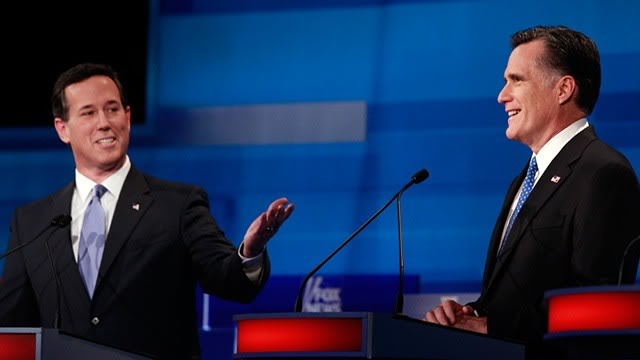
Debate Advice for Romney & Obama

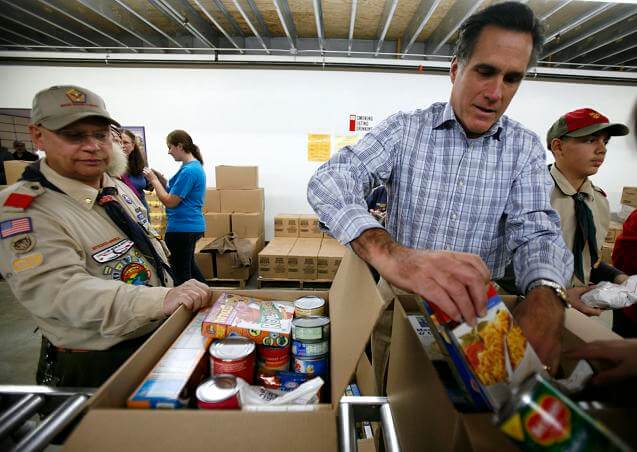
mememitt2.JPG
Allow me to remedy the nation’s critical shortage of advice for the participants in the presidential debates that kick off with Wednesday’s Obama-Romney debate. Below, a few suggested do’s and don’ts for each of the two candidates.
Advice for Romney
I’ve watched Romney debate a lot (although this will be the first presidential debate where I’ll be rooting for him rather than against him – it’s kind of like the feeling I had when Tom Glavine joined the Mets, hopefully with a better ending). On the whole, Romney is about average as a debater. On the plus side, he’s smart, aggressive and basically shameless – a little like John Kerry without the pomposity (aggressiveness in debate was one of Kerry’s few positives as a candidate) – and not easily rattled. On the negative side, he’s not very flexible/improvisational (he tends to stick to his game plan, other than the time he offered Rick Perry a $10,000 bet) and he will never be Mr. Empathy. Which leads to…
perryhitsmitt2.JPG
Get Obama’s Goat: The first rule of presidential debates is that how the candidates come across usually ends up mattering a lot more than what they say (absent a colossal gaffe; the only debate gaffe that may arguably have swung a presidential race was Ford’s Poland gaffe in 1976). The most famous example is JFK winning the televised debate with Nixon when the people who listened on the radio thought Nixon won. But there are many others: Dukakis’ cold-fish affect when answering the death penalty question in 1988, George H.W. Bush looking at his watch in 1992, Al Gore’s audible sighs in 2000.
And one of the first corollaries of that rule is that the first guy to get mad loses. Obama has lived in a bubble most of his political career, and never moreso than the past two years, avoiding any venue where he might be challenged with difficult questions or forced to discuss subjects he doesn’t want to address. And historically, he gets prickly when he’s challenged. Romney should do everything he can to get under Obama’s skin, from communicating subtly and unsubtly his lack of personal respect for Obama to challenging his knowledge and truthfulness. It’s more important to puncture Obama’s cool than for Romney to pull his punches trying to look friendly and agreeable.
Debate Like A Boss: Let’s face it: Romney’s not a particularly likeable, relatable guy, and he’s not going to become one 34 days from Election Day. I’ve long thought that Romney’s closing argument about himself had to be kind of a cross between Hyman Roth’s boast that he always made money for his partners and Danny DeVito’s speech in Other People’s Money (“I’m not your best friend…I’m your only friend…and you might make a few bucks for yourself.”). He’s the guy who knows how business works, who takes charge and makes the tough decisions, and he should send the message that he came to do just that.
Here’s a point from The Transom that Ben Domenech and I had kicked around as a suggestion for a way for Romney to tie together that attitude with an approach that would be guaranteed to get under Obama’s skin:

“In the private sector, one of the things I did was invest in companies. I learned a lot about how jobs are created, but I also learned a lot about leadership. One of the things I had to do when we got involved with a company was evaluate its leadership and see if it needed a change. And let me tell you, if I got involved with a company that was losing money and jobs hand over fist and piling up debt like there was no tomorrow, and I found out the CEO had been in the job four years and still spent most of his time blaming his predecessor and his co-workers, I’d fire him and get somebody in there who could get results.” A response like this, besides being one virtually guaranteed to tick off Obama, makes the whining look petty and small. But it would also do something else, too: workers of all types, but particularly blue-collar workers, resent the idea of the incompetent senior management which survives pain while they bear the brunt of it. Romney should do his utmost to speak for those who demand accountability and turn his negative role as one of the suits into an advantage.

Don’t Get Mad, Get Even: Continuing in this vein, candidates who complain about negative ads come off as losers. But Romney also has an opportunity he needs to take to set the record straight as to some of the more outrageous falsehoods being thrown at him, ranging from the delusional fabulist claim that he intends to raise taxes on the middle class to the ads blaming him for things done at Bain Capital after he’d left to run the Olympics.
Here, too, how you say it matters. The better approach is to acknowledge that he’s a big boy and negative ads come with the territory – but that the voters deserve to be told the truth.
I Question Your Premise: Similarly, conservatives and Republicans – myself included – spend a lot of time beating up the media for bias, but it comes off poorly when the candidates themselves complain about it in general terms. But as Newt Gingrich demonstrated during the primary debates, it’s another story when confronted with an obviously loaded/slanted line of questioning. Romney will never have Newt’s facility for doing this, but he should enter ready to pick on a question or two that strike him as especially outrageous, and use it to force discussion of some issue Obama doesn’t want to get into.
Four More Years? Romney this week has been hitting what I think has to be the core of his closing argument about the election as a whole, which is more about Obama than Romney: the country can’t afford four more years of this. No matter what else Obama throws out there as a distraction, Romney needs to keep bringing it back to the actual record of the past four years and the extreme unlikelihood that anything’s going to improve if we give Obama four more – and communicate a certain incredulity at the idea that anybody could consider the past four years a good record or something they’d want more of. He should not try to steal Reagan’s “there you go again” line, which will look transparent – but he absolutely should ask Reagan’s equally famous and perennially relevant question: are you better off now than you were four years ago? The beauty of the question is, the voters and not the politicians or the media get to have the final answer.
Advice for Obama
Obama’s greatest weakness as a debater is the contrast to his soaring rhetoric on the stump, and of course he’s rusty. That said, his debates with McCain were some of the better debates in recent memory. He may be full of silly ideas, but he’s not stupid. Aside from the obvious need to keep his cool, stay on script and not have another “you didn’t build that”/”spread the wealth around” moment that inadvertently reveals his actual thinking, here are some of the things he’d be wise to consider entering this debate.
xhillobama.jpg
Stick to The Issues: Obama has run much of his campaign away from the issues, in particular focusing fire on Romney’s business career, taxes and wealth. But focusing on those points in the debate could be a disastrous error. First, as we saw throughout the Republican debates, Romney is at his weakest when debating public policy; he’s at his strongest and most vigorous when defending his own business career. Second, Obama’s invested a huge amount of money in unanswered negative ads on Romney’s biography; it would be a colossal error to give Romney the chance to rebut those in free airtime in front of an audience of tens of millions of voters.
Tag Team: Romney is well-prepped to defend his business career and he knows what he wants to say about issues like Romneycare and the auto bailout. Paul Ryan will come well-prepared to defend his own plans in Congress. The wise approach is to switch: make Romney defend Ryan’s plans, many of which he’s not nearly as comfortable with or prepared to address, and have Biden make Ryan defend Romneycare, which he obviously loathes, and Mitt’s taxes.
That said, the spectacle of Romney defending Romneycare is one that always puts a drag on GOP base enthusiasm, and is probably too tempting a target to pass up.
Leave The Straw Men Home: Obama has few more unappealing characteristics than his tendency to sneer at straw man caricatures of everyone who disagrees with him. “You didn’t build that” and “bitter clingers” came out of that sort of thing, as have a number of his other gaffes. Romney’s 47% line has given the most divisive partisan occupant of the Oval Office in memory a fig leaf to try to rebuild his tattered reputation as an above-the-fray guy, but the minute he starts painting everyone who criticizes him as racists, extremists, ignoramuses, etc., he’ll remind people why they were so sick of him by 2010.
Forget George Bush: Everybody’s opinions about Bush are cast in concrete by now. The excuse-making is unpresidential and opens up precisely the kind of rejoinder from Romney I noted above. At some point, it’s just counterproductive.
Leave General Motors Alone: The Obama campaign has told a fairly compelling story about General Motors: Romney wanted it to go out of business, but Obama kept it out of bankruptcy and saved the company. The problem is, the narrative doesn’t survive contact with the facts: Romney argued for a bankruptcy restructuring, Obama poured billions into the company and couldn’t avoid a bankruptcy restructuring anyway: on June 1, 2009, the company filed one of the largest bankruptcies in American history. And the GM saga is right in Romney’s wheelhouse – it lets him talk about business as a businessman. He’s the son of a car-company CEO; he knows this stuff inside and out and should be ready to tear the Obama story to ribbons (recall that the bailout was unpopular, not because people wanted GM to fail but because the government picked winners and losers in the bailout and let a lot of other companies go without similar bailouts). Obama may be forced onto this turf, but it is not where he should want to go.

Romney and Obama Sing From The Same Hymnal on Emergency Room Care

A sure sign of political silly season: seeing a whole lot of Obama supporters reflexively pushing the same attacks on Romney with the same overheated rhetoric at the same time on points that don’t stand up to even the most modest logical scrutiny. You’d think, given the clear and obvious points of disagreement between these two tickets on some issues, that would be the focus, but no…
Here’s Romney on 60 Minutes the other night:

[W]e do provide care for people who don’t have insurance … if someone has a heart attack, they don’t sit in their apartment and – and die. We pick them up in an ambulance, and take them to the hospital and give them care. And different states have different ways of providing for that care.

Romney in 2010:

It doesn’t make a lot of sense for us to have millions and millions of people who have no health insurance and yet who can go to the emergency room and get entirely free care for which they have no responsibility

NPR characterizes this as “Romney said almost exactly the opposite,” but it’s exactly the same point: Romney’s been arguing for years that his health care mandate plan in Massachusetts was designed in large part to deal with the issue of hospitals getting stuck with the bill for emergency room care that federal law (EMTALA) requires them to provide, but for which they are often unable to collect payment from the uninsured. Romney in 2007, defending his plan on Glenn Beck’s show:

When they show up at the hospital, they get care; they get free care paid for by you and me…If that’s not a form of socialism, I don’t know what is.

“Socialism” here is typical of Romney trying too hard to pander to his audience; he’s never been a good political communicator, and if anything he was even worse in 2007, one reason why he lost in the primaries that year. (I’ll set aside the issue, which will be the subject of a much longer post in the works, over how we distinguish socialism from other forms of collectivism). Plainly, though, what he’s describing is a form of redistribution, i.e., some people receiving services and others getting the bill.
NPR argues that Romney is wrong because uninsured people do get stuck with large bills for emergency room services, but this completely misses his point, which is that (1) uninsured people do go to emergency rooms for care because they know it has to be given regardless of insurance or ability to pay and (2) hospitals are frequently unable to collect these bills, and end up passing on the costs to other customers and/or taxpayers.
You may agree or disagree with Romney’s preferred solutions to this – which, in Massachusetts, were essentially identical to Obamacare. You may even think he’s unduly concerned about the wrong problems. But what you can’t do is attack him for saying this stuff without mentioning that Obama has been saying the exact same thing for years, and indeed has made it a central theme of his policy and legal arguments for his own health care policies. Here’s Obama in June 2012:

First, when uninsured people who can afford coverage get sick, and show up at the emergency room for care, the rest of us end up paying for their care in the form of higher premiums.

Here’s Obama in July 2012:

And the only people who may have a problem with this law are folks who can afford health care but aren’t buying it, wait until they get sick and then going to the emergency room and expecting everybody else to pick up the tab. That’s not responsibility. That’s not consistent with who we are.

Basically, Obama is calling people who go to the emergency room for care irresponsible and un-American. You have a problem with Romney saying this kind of thing, you also have a problem with Obama. Here’s White House Press Secretary Jay Carney in June 2012:

You have a choice to buy — if you can afford health insurance — and you can, I assume, Jared. So if you don’t buy it, and you can afford it, it is an irresponsible thing to do to ask the rest of America’s taxpayers to pay for your care when you go to the emergency room.

You can find more examples of this with a simple Google search of the White House website.
Now, I wish we had a Republican candidate who was not burdened by the legacy of Romneycare, as its aftermath in Massachusetts illustrates the folly of the Obamacare solution to the EMTALA “free rider” problem; we have to settle for Romney pledging to repeal a law that does things he evidently still believes in. A more robust debate on the issue would benefit everyone. But it’s a sign of the intellectual bankruptcy of Obama’s defenders that they can find nothing better to do than beat up on Romney for making the exact same arguments as Obama in defense of the exact same policy solutions to the exact same problems. If it offends you to see this sort of thing said about people who go to emergency rooms to get EMTALA-mandated care they will not end up paying for, I have one simple answer for you: don’t vote for President Obama.

Mike Trout Scores

Mike Trout recently played his 162nd major league game, in which time he scored 136 runs. How unusual is that? Pretty unusual, at least in modern baseball. Baseball-Reference.com has game logs going back to 1918, and while I can’t run a systematic search, I’m pretty sure this is a complete list of the players since 1918 to score 120 or more runs in their first 162 major league games – 8 Hall of Famers out of 26 (plus at least one, Ichiro, who is sure to be a 9th, plus others who still could and a handful of guys who would have made it if they’d stayed healthier or out of World War II). Ages and years are listed by the age the player was in the season when he played his 162nd game:

Player Runs Age Year
Joe DiMaggio 154 22 1937
Ted Williams 146 21 1940
Lloyd Waner 142 22 1928
Johnny Frederick 142 28 1930
Mike Trout 136 20 2012
Vada Pinson 136 20 1959
Barney McCoskey 135 23 1940
Roy Johnson 133 27 1930
Jackie Robinson 132 29 1948
Jim Gilliam 132 25 1954
Dom DiMaggio 131 24 1941
Ichiro Suzuki 130 28 2002
Kiki Cuyler 130 26 1925
Frank Robinson 128 21 1957
Charlie Keller 127 23 1940
Nomar Garciaparra 126 23 1997
Hanley Ramirez 124 23 2007
Bobby Bonds 123 23 1969
Pete Reiser 123 22 1941
Chuck Klein 122 24 1929
Hal Trosky 121 21 1934
Augie Galan 121 23 1935
Carlos Beltran 120 22 1999
Johnny Pesky 120 26 1946
Lou Boudreau 120 22 1940
George Watkins 120 31 1931

As you can see, the list includes a number of guys (Ichiro, Jackie Robinson, Johnny Frederick, Roy Johnson, George Watkins) who arrived in the majors as seasoned veterans in mid-career. (This is not the case for Johnny Pesky, who scored 105 runs in 147 games as a 23 year old rookie, then spent 3 years at war before scoring 115 runs in 1946 when he returned). It’s also heavily dominated by the high-scoring 1925-41 period. The number of players who compiled a scoring record like Trout’s at such a young age is short and dominated by immortals.
I won’t chart them, but others of note: Lloyd Waner’s better brother Paul 113, Roy Johnson’s better brother Bob 118, Joe DiMaggio & Charlie Keller’s outfield-mate Tommy Henrich 116 and their teammate Lyn Lary 116, Albert Pujols 115, A-Rod 117, Ryan Braun 116, Dick Allen 119, Frank Thomas 110, Julio Lugo 111, Denard Span 115, Terrence Long 115, Steve Henderson 112, Wally Moses 116, the ill-fated Len Koenecke 110, Earl Averill 111, Earle Combs 115, Vince Coleman 115, Minnie Minoso 117, Bobby Thomson 115, Dan Uggla 111, Gary Redus 112, Al Smith 112, Fred Lynn 108, Lu Blue 109, Jose Reyes 103, Adam Dunn 108, Richie Ashburn 107, Pee Wee Reese 107, Dan Gladden 108, Andrew McCutchen 108, Bob Meusel 101, Jim Bottomley 101, Walt Dropo 106, Chick Fullis 108, Juan Samuel 109.
You can go back and find a few more in the 1900-17 period – Federal League star Benny Kauff scored 124 runs in his first 159 games, Roy Thomas 137 runs in his first 150 games, Lefty Davis scored 150 runs in his first 171 games in 1901-02. The 19th century is different, of course – Willie Keeler scored 191 runs in his first 170 games, Billy Hamilton 165 runs in his first 172 games, Hugh Duffy 204 runs in his first 207 games, and going all the way back to the beginning in 1871, in the days before gloves, groundskeeping or even fixed fielding positions, Ross Barnes scored 272 runs in his first 136 National Association games and 197 runs in his first 165 National League games.
But if you have to go back that far, it should tell you what a special player Trout really is.

Mitt Romney, Friend in Need

The Obama campaign has spent months laboring to get this election to be about anything but the president’s record and the candidates’ policy proposals. As often happens in campaigns, this requires painting caricatures with no connection to the facts. The Obama camp has worked hard to make Mitt Romney out as a bad, unfeeling, cold-hearted rich guy who only cares about his own bottom line. Romney himself hasn’t helped the matter by being such a stiff, tin-eared speaker who actually looks and sounds like a walking stereotype; political communication is not among his skills. But the reality is that Romney’s biography shows him to be a real-life Good Samaritan who has walked the walk of caring for his fellow man not only with his own money but with his own time and his own hands. I’ve had my share of political complaints about Romney, but on this score, the critics should be ashamed of themselves: Romney is a genuine role model of what private citizens can do to assist those in need.

Continue reading Mitt Romney, Friend in Need

Human Nature, Culture and the Arab Spring’s Fall

2011’s Arab Spring, like its predecessor in 2005, presented a sight that always elicits natural sympathy among Americans: a popular revolt against tyrannical dictators. But beneath the immediate euphoria, harder questions lurked: who would these crowds follow? Would American interests, and the interests of our democratic allies, be better served if the dictators won? The Obama Administration has never offered any kind of coherent answer to this question, and the Romney campaign does not seem eager to engage the question. In fact, the answers rest on a major fault line in conservative thought not only about foreign policy but about human nature itself.

Here’s the dilemma. On the one hand, you have the venerable view, with deep roots in conservative thought, that human nature is universal and unchanging: “human nature has no history,” and is the same in all nations and all epochs of history. This is customarily presented as a pessimistic view, an argument against the progressive view of history as one of unfolding enlightenment and the socialist-utopian view that governments can remake man himself. In this context, however, the permanence and universality of human nature has an optimistic character as well. Those who stress the universality of human nature argue that democracy is a universal good because people everywhere share the same basic longings for liberty, peace and security for themselves and their families, just as they also share the same basic urges to violence and oppression towards others. In this view, the virtue of democracy is that it remains the best system for providing people with the ability to promote the former while channeling the latter into lesser forms of conflict resolution. The champions of democracy thus argue that while governments may not change men, men may change governments. Moreover, this is a well-tested method of improving the lot of the individual that has more or less adapted itself to do so in many different times and cultures the world over.

The Federalist Papers, which drew on observed experience with governments around Europe and America, are full of this sort of sentiment. As James Madison famously wrote, in Federalist No. 51:

Ambition must be made to counteract ambition…It may be a reflection on human nature, that such devices should be necessary to control the abuses of government. But what is government itself, but the greatest of all reflections on human nature? If men were angels, no government would be necessary. If angels were to govern men, neither external nor internal controls on government would be necessary. In framing a government which is to be administered by men over men, the great difficulty lies in this: you must first enable the government to control the governed; and in the next place oblige it to control itself. A dependence on the people is, no doubt, the primary control on the government; but experience has taught mankind the necessity of auxiliary precautions.

And in Federalist No. 10:

AMONG the numerous advantages promised by a well constructed Union, none deserves to be more accurately developed than its tendency to break and control the violence of faction…

There are two methods of curing the mischiefs of faction: the one, by removing its causes; the other, by controlling its effects.
There are again two methods of removing the causes of faction: the one, by destroying the liberty which is essential to its existence; the other, by giving to every citizen the same opinions, the same passions, and the same interests.

It could never be more truly said than of the first remedy, that it was worse than the disease. Liberty is to faction what air is to fire, an aliment without which it instantly expires. But it could not be less folly to abolish liberty, which is essential to political life, because it nourishes faction, than it would be to wish the annihilation of air, which is essential to animal life, because it imparts to fire its destructive agency.
The second expedient is as impracticable as the first would be unwise. As long as the reason of man continues fallible, and he is at liberty to exercise it, different opinions will be formed….

The latent causes of faction are thus sown in the nature of man; and we see them everywhere brought into different degrees of activity, according to the different circumstances of civil society. A zeal for different opinions concerning religion, concerning government, and many other points, as well of speculation as of practice; an attachment to different leaders ambitiously contending for pre-eminence and power; or to persons of other descriptions whose fortunes have been interesting to the human passions, have, in turn, divided mankind into parties, inflamed them with mutual animosity, and rendered them much more disposed to vex and oppress each other than to co-operate for their common good. So strong is this propensity of mankind to fall into mutual animosities, that where no substantial occasion presents itself, the most frivolous and fanciful distinctions have been sufficient to kindle their unfriendly passions and excite their most violent conflicts.

…It is in vain to say that enlightened statesmen will be able to adjust these clashing interests, and render them all subservient to the public good. Enlightened statesmen will not always be at the helm. Nor, in many cases, can such an adjustment be made at all without taking into view indirect and remote considerations, which will rarely prevail over the immediate interest which one party may find in disregarding the rights of another or the good of the whole.

Set against this view is another one with equally deep roots in conservative thinking: the primacy of culture. The story of human history is most emphatically not one in which all societies have provided equal blessings of freedom and progress to their people, and neither the structure of governments nor the variation in climates and natural resources alone can explain these variations. Rather, some cultures – especially the cultures of Western civilization and the Judeo-Christian religious tradition – have provided a superior platform on which to build stable democratic regimes, respect for individual rights and the rule of law, economic development and scientific progress. The proponents of culture argue that transplanting the fruits of Western culture and civilization into the soil of very different cultures will always be a fool’s errand, or at any rate that the specific political and legal doctrines promoted by Islam (especially when combined with Arab culture) are inherently irreconcilable with democracy and other Western values.

One need not look far among the Founding Fathers to see the sentiment expressed that democracy itself was only as viable as the morals and, yes, faith of the people. Ben Franklin famously remarked at the close of the Constitutional Convention 225 years ago today that the Constitution had given Americans “[a] Republic, if you can keep it,” and in his prepared message to his fellow delegates, warned that “I think a general Government necessary for us, and there is no form of Government but what may be a blessing to the people if well administered, and believe farther that this is likely to be well administered for a course of years, and can only end in Despotism, as other forms have done before it, when the people shall become so corrupted as to need despotic Government, being incapable of any other.” George Washington thought that the religious morals of the people were indispensable to a functioning democracy:

Of all the dispositions and habits, which lead to political prosperity, Religion and Morality are indispensable supports. In vain would that man claim the tribute of Patriotism, who should labor to subvert these great pillars of human happiness, these firmest props of the duties of Men and Citizens. The mere Politician, equally with the pious man, ought to respect and to cherish them. A volume could not trace all their connexions with private and public felicity. Let it simply be asked, Where is the security for property, for reputation, for life, if the sense of religious obligation desert the oaths, which are the instruments of investigation in Courts of Justice? And let us with caution indulge the supposition, that morality can be maintained without religion. Whatever may be conceded to the influence of refined education on minds of peculiar structure, reason and experience both forbid us to expect, that national morality can prevail in exclusion of religious principle.It is substantially true, that virtue or morality is a necessary spring of popular government. The rule, indeed, extends with more or less force to every species of free government. Who, that is a sincere friend to it, can look with indifference upon attempts to shake the foundation of the fabric?

John Adams took a similar view:

[W]e have no government armed with power capable of contending with human passions unbridled by morality and religion. Avarice, ambition, revenge, or gallantry, would break the strongest cords of our Constitution as a whale goes through a net. Our Constitution was made only for a moral and religious people. It is wholly inadequate to the government of any other…

Islamic societies, of course, face no shortage of religious strictures, but the proponents of the primacy of culture stress that those strictures are different, and less congenial to the maintenance of self-government and respect for the individual. Alexis de Tocqueville, who viewed American culture, and specifically American civil society outside of government, as crucial to democracy in America, wrote:

The Americans combine the notions of Christianity and of liberty so intimately in their minds, that it is impossible to make them conceive the one without the other; and with them this conviction does not spring from that barren traditionary faith which seems to vegetate in the soul rather than to live….

Muhammad brought down from heaven and put into the Koran not religious doctrines only, but political maxims, criminal and civil laws, and scientific theories. The Gospels, on the other hand, deal only with the general relations between man and God and between man and man. Beyond that, they teach nothing and do not oblige people to believe anything. That alone, among a thousand reasons, is enough to show that Islam will not be able to hold its power long in ages of enlightenment and democracy…

Arguments over the dependence of democratic government on the morals and faith of the citizenry are, of course, familiar in our domestic policy debates as well. It should be no surprise that these tensions have played out in the foreign policy debates of the Bush era and its aftermath. George W. Bush was never the Wilsonian advocate of nation-building for its own sake that some of his loftier rhetoric inspired his critics to charge – our wars in Afghanistan and Iraq each started with a traditional casus belli and, as in the aftermath of World War II, turned attention to nation-building only in the aftermath of the defeat and deposition of the opposing regimes and conquest of their territory. But Bush did increasingly, over the course of his years in office, embrace the “neocon” view that replacing dictators with popular sovereignty should be a keystone of our approach to reforming the Muslim and Arab worlds in order to address the root causes of terrorism. At the risk of oversimplifying, the neocon view is more or less that that root cause is the dysfunction of Muslim and Arab societies and the need of tyrants to direct popular rage at that dysfunction outward. In this view, democratic systems of government are a safety valve that allow internal tensions to instead be channeled inward in a more productive and less violent manner.

One of the main critiques of Bush on the Right was always that he was unduly optimistic about the Muslim world and specifically whether the Muslim ‘street’ actually preferred regimes that promoted genocidal war against Israel and terrorism against the United States and Europe. Volumes have been written on the intractability of Islamic political doctrines and their connection to the ideology of the suicide bomber, the impossibility of peaceable coexistence with Israel, and Islam’s irreconcilability with religious pluralism or any form of secular law. This critique has only accelerated without Bush at the helm. Many on the Right have given up on Afghanistan as incurably backward and treacherous (examples there and elsewhere – including last week in Libya – show Americans on the ground being betrayed by their own allies). I’m glossing here over some of the deeper debates about internal doctrinal debates within Islam as well as the role of Arab and other ethnic cultures in addition to the religious element.

In the case of North Africa, Mubarak was – as FDR would say – an SOB, but our SOB; Qaddafi had been deterred and contained effectively since surrendering his nuclear program after seeing what happened to Saddam. The regimes that replaced them are not of the most stable character, and in Egypt in particular, even President Obama has now blanched at calling the Muslim Brotherhood-run government an ally. There are substantial arguments made for the idea that winning hearts and minds is an inherently futile task.

As both a student of the Federalist Papers and a child of the Reagan era, I’m naturally optimistic about the attractiveness of the American-style system of government to the universal aspirations of all peoples, and the adaptability of such systems to improve the lives of all peoples even when imperfectly applied. The correct answer, however, likely lies in between – the fact that democracy is preferable in all places in the long run is not necessarily proof that it is the best answer in every place in the short run, not when balanced against the protection of American interests. But a vigorous national debate on the question seems, in this campaign season, a long way away.

On some foreign policy issues, the two candidates present a clear enough contrast. Romney, ever the Eisenhower-era Republican, prefers a stronger military and a more unapologetic defense of American interests and rights abroad than Obama. Obama has tended to put too much faith in his own personality cult and too much emphasis on having America wear the hair shirt, from arguing in 2007 that “I truly believe that the day I’m inaugurated, not only does the country look at itself differently, but the world looks at America differently” to his much-lauded speech to the Muslim world in Mubarak’s Cairo back when he viewed Egypt as an ally. But six years after they announced their first presidential campaigns, neither candidate has really laid out a vision of how properly to balance the roles of human nature and culture in evaluating the merits of democratizing the region going forward. That will have to wait for another day.

Barack Obama’s Passivity in Crisis

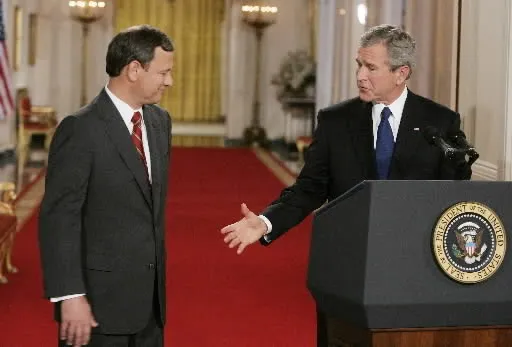
outstretchedhand.jpg
If there is one common theme about Barack Obama’s leadership style in a crisis that runs throughout his time on the national stage and is evident yet again in his response to the attacks in Cairo and Benghazi, it is passivity. Obama has shown, time and again, that he prefers to sit back, keep his distance and see what other people do first before he says or does anything. This is not an entirely bad trait – smoking out what everyone else at the table is thinking is an effective way to play poker, and there are times when doing nothing or being a follower is the wiser course. It has certainly paid him political dividends in situations where his opponents overextended themselves. But what it also clearly demonstrates is that vigorous public leadership – getting out in front and rallying the public to take some action that was not already widely supported – is above his pay grade.

Continue reading Barack Obama’s Passivity in Crisis

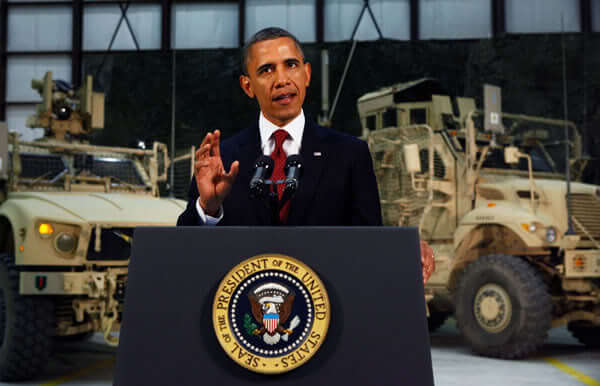
No, President Obama Didn’t Find Osama Bin Laden

RS: No, President Obama Didn’t Find Osama bin Laden
With few other unquestionably popular accomplishments for this president to crow about, we should expect to hear a lot at the Democratic Convention the next two days about how President Obama authorized a Navy SEAL team to kill Osama bin Laden in Pakistan. Vice President Biden, who opposed the mission, has made it a favorite stump speech line: “Bin Laden is dead and General Motors is alive.”
But signing off on killing bin Laden was a no-brainer; as anyone who remembers the past decade knows, the hard part was finding him. The Abbottabad raid was the culmination of many years of intelligence-gathering. And for all the chest-thumping by Obama and Biden, virtually none of that intelligence-gathering resulted from policy decisions that originated with the Obama Administration. To the contrary, several were harshly criticized by Obama and his allies, and some have been discontinued by Obama.

Continue reading No, President Obama Didn’t Find Osama Bin Laden

The Registration Gap

The Boston Globe notices that the Democrats have a problem:

[A] Globe analysis of voter registration data in swing states reveals scant evidence that the massive undertaking [of Democratic voter registration drives] is yielding much fresh support for Obama.
In stark contrast to 2008, when a strong partisan tailwind propelled Democratic voter registration to record levels, this year Republican and independent gains are far outpacing those of Democrats.
In Florida, Iowa, North Carolina, Colorado, and Nevada – tossup states where direct election-year comparisons could be drawn – the numbers are striking. Democratic rolls increased by only 39,580, less than one-tenth the amount at the comparable point in the 2008 election.
At the same time, GOP registration has jumped by 145,085, or more than double for the same time four years ago. Independent registration has shown an even stronger surge, to 229,500, almost three times the number at this point in 2008.
…This week, Third Way, a centrist Democratic think tank, released a study of eight battleground states that illustrated the rise in independent voters since the 2008 election. The report, titled “The I’s Have it,” found that based on recent data, Democratic registration has declined by more than 800,000, or 5.2 percent; Republican enrollments were down about 80,000, or 0.7 percent; and independents were up 486,677, or 6.4 percent, in those states.

Read the whole thing for some of the dramatic results from Iowa and New Hampshire – sites of hotly contested GOP presidential primaries – in particular. The Democrats have an explanation for this, but it doesn’t address one of their core problems.

Continue reading The Registration Gap

The Vice Presidential Stakes

Ten of the last twenty presidents, dating back to 1900, have been forced from office or come close: one was forced to resign (Nixon), one was impeached (Clinton), two were assassinated (Kennedy and McKinley), one was shot (Reagan), one was shot at twice in three weeks (Ford), two died in office of natural causes (FDR and Harding), one was incapacitated by a stroke (Wilson), and one nearly died of a massive heart attack (Eisenhower). If you go back to the 19th century, the record unsurprisingly gets worse. As for vice presidents since 1900, not only have five taken office (Ford, LBJ, Truman, Coolidge and Teddy Roosevelt), but four others have been nominated for the presidency while sitting (George H.W. Bush won, Richard Nixon lost and then won later, and Hubert Humphery and Al Gore lost – with Gore and Nixon losing two of the closest races in history and Humphery losing a tight three-way race), and one other (Walter Mondale) was nominated four years later. Losing vice presidential nominees have mostly not gone on to better things, but a few have – FDR came back to win the presidency 12 years later, Earl Warren became Chief Justice of the Supreme Court five years later, Bob Dole was nominated for the presidency 20 years later, and Lloyd Bentsen moved laterally to become Treasury Secretary five years later. Others, like Sarah Palin and Joe Lieberman, saw their national profiles greatly raised by the experience; Lieberman, Edmund Muskie and John Edwards all ran presidential campaigns four years later, with varying degrees of impact on the race.

All of which is a way of saying that Mitt Romney’s choice of a running mate could have very important repercussions whether or not that choice makes much impact on the outcome of the 2012 election. Romney seems to be a man of unusual health, vigor and personal ethics, and so less likely than most to leave the Oval Office before his term is out if he’s elected, but he’s also 65 years old; things happen. Given that the outcome of the election remains uncertain, we should therefore be rightly concerned with his choice. Let’s take a look at a couple of the considerations on the table, and why I ultimately think Paul Ryan is the best choice under the circumstances.

Continue reading The Vice Presidential Stakes

That Sinking Feeling

I’ve lived through many depressing Mets seasons, ranging from years like 1978-80 when there was just no hope from the outset to years like 2006-08 when the team just unraveled right at the very end. But there is, in my view, no more unwatchable spectacle than a team that stays in the hunt or at least plays respectable halfway through the season, then just goes into freefall.
We’ve been down this road before. The two most memorable of these were 1991 and 2004. In 1991, the Mets had a Gooden-Cone-Viola front 3 and a rebuilt post-Strawberry lineup with Vince Coleman and Hubie Brooks supposed to stand in for Darryl. It was not that impressive a solution, but for a while it seemed to work: the team was 46-34 and 2.5 games back at the All-Star Break, and 49-34 (a 96-win pace, and with 368 runs scored and 312 allowed, they were only about two games above their Pythagorean record) three games after the Break. They went 4-4 the next 8 games to stand 53-38 (still a 94-win pace) on July 21, 4 games back of the Pirates. Then they just stopped. Look at their batting and pitching lines through July 21 – Gooden was 10-6 with good peripheral numbers (but a 4.06 ERA), Viola was 11-5 with a 2.92 ERA, Cone was 9-6 with a 3.07 ERA (with a combined K/BB ratio of 329/112 between the three), the Franco/Pena/Innis bullpen was solid, HoJo was hitting .268/.363/.553 with 69 RBI, Brooks was hitting .254/.350/.454, Kevin McReynolds .293/.357/.463, Gregg Jefferies .287/.360/.426, and Dave Magadan, Coleman and Rick Cerone had OBPs of .379, .360 and .369.
The team went 24-46 the rest of the way, including an 8-21 mark in August (batting / pitching). Brooks and Coleman got hurt, combining for just 159 ineffective plate appearances the rest of the year. McReynolds hit .212/.275/.351 the remainder of the way, Jefferies .256/.312/.322. Garry Templeton ended up starting at first base for a while, and hit .209/.235/.291 after July 21. HoJo kept hitting for power, but with an OBP of .315 the rest of the season. On the pitching side, Gooden started just 6 more games, and Viola – due partly to poor defense – collapsed to 2-10 with a 5.73 ERA the rest of the way. It was a gruesome end to the team that had averaged 95 wins a year from 1984-90 and been on pace to do the same in mid-July. The team would not contend again for 6 years.
2004 was horrible in a different way. The Mets were coming off two straight down years, so expectations were low enough in Art Howe’s second season at the helm. And in fact, they were never a really good team – but due to a poor start by the perennially division-leading Braves, the Mets were 1 game out of first place as late as July 15, the first game after the All-Star Break. The trouble signs should have been obvious: the team was 45-43, the Phillies were tied for first, the Marlins were also a game out, and the Mets’ .528 Pythagorean record still paled next to Atlanta’s .551. As it turned out, the Braves would go 50-24 the rest of the way.
The Mets on July 15, 2004 had a few bright spots (batting / pitching). Mike Piazza, then 35, was hitting .293/.385/.500. Cliff Floyd was hitting .281/.347/.516. Al Leiter and Tom Glavine had ERAs of 2.39 and 2.66, and closer Braden Looper’s 1.80 ERA understated his dominance – 43 K, 6 BB, 2 HR in 50 IP.
You know what happened next. The Mets dropped 10 of their next 14 games to fall 7 games back on July 30 – and then pulled the trigger on a trio of trades that packed off top pitching prospect Scott Kazmir and another prospect to the Rays for Victor Zambrano, obtained Jose Bautista from the Kansas City system in exchange for Justin Huber and then packaged Bautista and Ty Wigginton for Kris Benson and Jeff Keppinger. The deals were win-now deals, but the Mets had already effectively dropped out of the race; after going 3-5 their next 8 games, they were 11 games back and finished. Overall, they ended up 26-48 the rest of the way, Benson posted a 4.50 ERA and Zambrano got hurt and started only 3 games. (batting / pitching). The team became almost as totally unwatchable as in 1991, the sole exception being the July 21 callup of David Wright, who hit .293/.332/.525.
2012 is starting to get that feeling. There were a lot of memorable highlights this season’s first half, from Wright’s amazing comeback (slashing his K rate by more than half from the prior years) to Johan Santana’s no-hitter to RA Dickey’s amazing dominance. All I really asked for was that, after Mike Pelfrey went down, this team keep Wright, Ike Davis and the four remaining rotation starters healthy. The Mets were 43-36, 2.5 games out and leading the Wild Card race on June 30 (playing only slightly above their Pythagorean record), and would make it into the Break 46-40.
Through June 30, things looked solid. (batting / pitching). Wright was hitting .355/.449/.564, and while he had no other major help, some other offensive contributors were pitching in a little: Lucas Duda was hitting .258/.348/.417, Kirk Neuwenhuis .275/.335/.414. Ike Davis, after a nightmarish start, was beginning to shake off the rust in mid-June. Dickey was 12-1 with a 2.15 ERA, Santana 6-4 with a 2.76 ERA, and the top four starters (Dickey, Santana, Jonathan Niese and Dillon Gee) were combining for 383/115 K/BB ratio in 395.1 IP.
But the second half has been a nightmare. Gee went down with a season-ending blood clot in his arm. Santana went to the DL, nominally with an ankle injury but most likely signifying his shoulder hasn’t really recovered after his June 1 no-hitter; he had allowed 4 HR in 68 innings through that night, 11 in 42.2 IP and a 6.54 ERA since. Dickey’s ERA since July 1 is 4.69, and most of the rest of the staff has been no improvement. In the outfield, Duda has hit .140/.260/.233, Nieuwenhuis .105/.190/.132, Jason Bay .109/.242/.164 (the former two have since been demoted). (batting / pitching)
The Mets lost 11 of the first 12 games after the Break, dropping to 11.5 games back in the division and 5.5 back of the second Wild Card. The losses have, this time, been more of the excruciatingly close variety. Of those 11 losses:
-On July 14, the Mets blew a 7-5 lead in the bottom of the 8th and lost by 1 run, 8-7.
-On July 17, the Mets staged a 3-run rally to lead 3-2 entering the bottom of the 9th, blew the lead, took a 4-3 lead into the bottom of the tenth, and lost the game 5-4.
-On July 18, the Mets lost a 1-run game, 4-3.
-On July 20, the Mets lost a 1-run game, 7-6.
-On July 21, the Mets trailed 6-5 entering the 9th inning, before Dickey (working in relief) was tagged for two runs.
-On July 22, the Mets rallied with runs in the 7th and 9th to tie the game, then lost 8-3 in 12 innings.
-On July 23, the Mets rallied to tie the game in the 7th, then lost 8-2 in 10 innings.
That’s a 12 game stretch featuring 3 extra inning losses, 3 other 1-run losses, and 1 other game that was a 1-run game into the 9th.
Amazingly, the team has actually righted the ship a little since then, with a 5-2 stretch entering yesterday’s loss and a total record of 6-5 on the current West Coast road trip, including some spectacular moments by raw rookie Matt Harvey (1-2 so far but with 23 K in 16.1 IP). Daniel Murphy (.369/.414/.524) and Ruben Tejada (.338/.377/.392) have been on a tear since July 1, and Jordany Valdespin has hit a number of big pinch hit homers, picking up where Scott Hairston left off earlier in the season; Mets pinch hitters are batting .268/.367/.492 with 8 pinch homers on the season. So the situation is not as dire as that of, say, the Astros, who after posting a 22-23 record through May 25 have gone 14-50, including 4-30 since June 27 (and have traded away their only good starting pitcher and most of their bullpen).
But it’s hard to watch, after the hope of the first half. This team will have to keep fighting to avoid the fate of 1991 and 2004.

1968: Year of the Injured Hitter?

Why was 1968 the Year of the Pitcher? Let me present to you an unorthodox theory that has been percolating in my brain since I noticed a pattern leafing through the Bill James Historical Baseball Abstract a quarter century ago: the dominance of pitching that season was exacerbated by an unusual run of injuries to a number of the game’s best hitters, combined to some extent with an unusual run of good health by the game’s best pitchers.
Lest we get too carried away with the theory, let me step back a bit. The offensive/defensive conditions of the game change every year, sometimes due to years-long structural factors, sometimes due to weather, chance or other one-year factors. Scoring dropped throughout the 1960s due to a number of the former: a bigger strike zone, more pitcher-friendly parks, higher mounds, more night games, a reduction in the stigma against strikeouts without a corresponding emphasis on plate patience. Those factors affected the game from 1963-68, and some of them continued to linger into the late 1970s. 1968 was simply the most extreme example of its era. Scoring was down from 3.77 runs per team per game to 3.42 (a drop of almost 10%), rising back in 1969 to 4.07.
But I have wondered for years if there was something specific at work that made 1968 stand out from the years around it, and if you look one by one at the injuries to major offensive stars that season, a pattern suggests itself. I do not promise a systematic comparison of 1968 to other seasons in this regard, but take a look at the anecdotal evidence with me and see if you agree.
The Walking Wounded
Let’s start with the core group of players, most of them major offensive stars, who were hampered by injury in 1968. I’ll list each player’s age as of 1968 in parentheses, and a chart showing each player’s plate appearances and Offensive Wins Above Replacement (OWAR) for the 1967-1968-1969 seasons (source: baseball-reference.com).
Joe Morgan (24)

1967 PA OWAR 1968 PA OWAR 1969 PA OWAR
580 5.6 27 0.3 657 4.7

Morgan wasn’t the biggest star KO’d by injury in 1968, but he was the most total loss. While he wasn’t recognized as a major star until he escaped the Astrodome in 1972, Morgan had been second in the Rookie of the Year voting in 1965, an All-Star in 1966, batted .276/.385/.408 and averaged 20 steals a year from 1965-67, and .253/.366/.392 with 44 steals a year from 1969-71, plus another All-Star appearance in 1970. But 10 games into the 1968 season, with Morgan’s OBP at .444, he tore up his knee when Tommie Agee ran into him at second base, ending his season.
Harmon Killebrew (32)

1967 PA OWAR 1968 PA OWAR 1969 PA OWAR
689 6.9 371 2.1 709 7.5

The biggest home run threat of the 1960s, Killebrew hit .266/.379/.546 from 1959-67, including 44 homers, 131 walks and a second-place MVP finish in 1967. He hit .267/.409/.534 from 1969-71, including 49 homers, 145 walks, 140 RBI and an MVP Award in 1969. In 1968, Killebrew was off his game but still productive (.210/.361/.420, OPS+ of 131); he was batting .204/.347/.392 when he tore a hamstring stretching for a throw in the All-Star Game, and didn’t return until September, when he batted .257/.458/.629 but started only 10 games and managed just 48 plate appearances.
Roberto Clemente (33)

1967 PA OWAR 1968 PA OWAR 1969 PA OWAR
632 8.0 557 4.7 570 6.0

Clemente won the 1966 NL MVP and won his third batting title in four years in 1967, batting .357/.400/.554 and driving in 110 runs. Overall, he batted .332/.375/.503 from 1961-67, and .346/.395/.532 from 1969-71. But in 1968, Clemente was hampered by a nasty shoulder injury he suffered in the offseason at his home in Puerto Rico when a steel railing he was climbing on collapsed on his patio, sending him hurtling down a hill. Clemente tried to play through it, but later admitted that he should have at least skipped spring training; he hit .211/.237/.368 through May 24 before returning to something like his usual form, ending the season at .291/.355/.482.
Frank Robinson (32)

1967 PA OWAR 1968 PA OWAR 1969 PA OWAR
563 6.5 508 4.3 643 6.4

Robinson, the 1966 Triple Crown winner, was slowed slightly in 1967 by vision problems from a violent collision, which may have lingered the following year; in 1968 he added mumps and a sore arm. He batted .314/.407/.609 in 1966-67 and .299/.400/.524 in 1969-71, but missed 32 games and hit .268/.390/.444 in 1968.
Al Kaline (33)

1967 PA OWAR 1968 PA OWAR 1969 PA OWAR
550 6.3 389 2.7 518 2.5

Kaline batted .307/.385/.509 from 1955-67, and had arguably his best season as a hitter in 1967, batting .308/.411/.541 (OPS+ of 176). He was still a productive hitter in 1968, batting .287/.392/.428 (OPS+ of 146), and despite an off year in 1969, his batting line from 1969-72 was a robust .286/.378/.456. But Kaline missed six weeks in 1968 after his arm was broken when he was hit by a pitch from Lew Krausse on May 25.
Willie Stargell (28)

1967 PA OWAR 1968 PA OWAR 1969 PA OWAR
536 2.8 496 2.2 594 5.6

Stargell battled injuries in both 1967 and 1968 before getting healthy and returning to form in 1969:

Willie’s production fell off in 1967. With Mota continuing to hit .300, Stargell found himself often benched against lefthanders. He suffered through injuries as well that year, crashing into the wall twice in a span of three days and experienced tendonitis in his shoulder. His weight remained and issue and inactivity did not help it. In 1968, Stargell first injured a knee and later suffered a concussion and face lacerations making a spectacular catch while crashing into the Forbes Field scoreboard and ended up hitting .237, the lowest of his career as a regular player as he battled headaches for the rest of the season.

On the whole, Stargell declined from .315/.381/.581 with 102 RBI in 1966 (his second straight 100 RBI year and third straight slugging .500) to .271/.365/.465 with 73 RBI in 1967 and .237/.315/.441 with 67 RBI in just 128 games in 1968. Stargell would bat .307/.382 /556 in 1969 and .289/.375/.555 from 1969-79.
Joe Torre (27)

1967 PA OWAR 1968 PA OWAR 1969 PA OWAR
534 3.9 464 2.5 678 3.2

If you’re keeping score at home, that’s six Hall of Fame hitters between the ages of 24 and 33. Torre might be a seventh, although he’s likely to be inducted as a manager. Torre batted .301/.364/.487 from 1963-67 and .326/.394/.501 from 1969-71, but in 1968 he missed 47 games with injuries including a fractured cheekbone that caused him to miss a month after being beaned on April 18 by Chuck Hartenstein and a fractured hand in September, batting .271/.332/.377 on the season. As Torre describes the beaning these days:

Hank Aaron was on first base, trying to steal, and as Torre tried to sneak a peak back at the catcher and didn’t pick up the pitch in time before it hit him. The pitch broke his palate, and Torre said the toughest part was staying in bed for a long period of time.

Tony Conigliaro (23)

1967 PA OWAR 1968 PA OWAR 1969 PA OWAR
389 3.1 0 566 0.4

I retold Tony C’s familar and sad story recently; he was one of baseball’s major rising star sluggers when he suffered a horrific beaning in August 1967, and missed the entire 1968 season.
Rico Carty (28)

1967 PA OWAR 1968 PA OWAR 1969 PA OWAR
496 1.1 0 339 3.2

A devastating hitter when healthy, Rico Carty batted .330/.388/.554 as a rookie in 1964, .324/.382/.505 from 1964-66 before struggling to hit .255/.329/.401 in 1967 while playing with a separated shoulder. Carty then missed the entire 1968 season with tuberculosis. He would return to bat .357/.434/.570 in 1969-70 before his next big injury, to his knee.
Rico Petrocelli (25)

1967 PA OWAR 1968 PA OWAR 1969 PA OWAR
556 3.0 451 1.8 643 7.9

Like a few others listed above, Petrocelli had injury problems in 1967 that worsened in 1968 before bouncing back healthy in 1969. In Petrocelli’s case, it was a bad elbow that cost him 39 games. He had batted .259/.330/.420 as a 24 year old in 1967 (OPS+ of 113) and would enjoy a monster breakout 40-homer .297/.403/.589 season in 1969, hitting .269/.363/.506 from 1969-71 (OPS+ of 134). But hampered by the elbow injury, Petrocelli hit just .234/.292/.374 (OPS+ of 92) in 1968.
Don Mincher (30)

1967 PA OWAR 1968 PA OWAR 1969 PA OWAR
563 4.3 457 0.5 514 2.1

Yet another beaning victim. Mincher, a productive if unspectacular slugger, batted .255/.348/.488 (OPS+ 134) from 1962-67, including .273/.367/.487 (OPS+ 156) in 1967. He would go on to bat .257/.359/.448 (OPS+ 129) from 1969-71. But 1968 was a significant off year, as he batted .236/.312/.368 (OPS+ 111) and missed 42 games, including 10 games in April and the last 20 games of the season. The main cause was a horrific April 11 beaning by a 90+ mph Sam McDowell fastball to the jaw, which knocked out teeth and caused Mincher permanent hearing loss in one ear and “gave me equilibrium problems.”
Tommie Agee (25)

1967 PA OWAR 1968 PA OWAR 1969 PA OWAR
584 2.3 391 -0.2 635 3.7

The April collision with Morgan wasn’t Agee’s first bruising of 1968; he was hospitalized after being beaned by Bob Gibson on the first pitch of spring training, and things didn’t get better from there: the 1966 AL Rookie of the Year had batted .256/.315/.412 (OPS+ 117) in 1966-67 and would bat .280/.348/.456 (OPS+ 121) from 1969-71, but in 1968 he was helpless, batting .217/.255/.307 (OPS+ 69) and doing even that well only with a strong September; Agee was hitting .109 in mid-May, .165 in mid-July and .181/.222/.265 on August 26 before regaining his bearings to hit .371/.397/.486 in his last 25 games.
Tony Oliva (29)

1967 PA OWAR 1968 PA OWAR 1969 PA OWAR
615 3.4 528 3.4 692 3.6

Another outstanding talent (he was feared enough to lead the AL in intentional walks in 1968) whose career was degraded by injuries, the 1964 Rookie of the Year and 1965 Al MVP runner-up batted .317/.363/.518 from 1964-66 (OPS+ 143), .322/.362/.517 (OPS+ 140) from 1969-71. He had had a mild off year (.289/.347/.463, OPS+ 129) in 1967, and in that context his 1968 season (.289/.357/.477, OPS+ 145) looks like the same old Oliva, just hitting under more difficult conditions. But Oliva averaged 664 plate appearances a year from 1964-67 and 683 a year in 1969-70, whereas he missed 34 games in 1968 including the entire month of September with a separated shoulder, and finished the season with just 68 RBI.
Dick Allen (26)

1967 PA OWAR 1968 PA OWAR 1969 PA OWAR
540 6.8 605 5.3 506 4.9

Allen, a better hitter than a good many Hall of Fame sluggers, was still a dangerous hitter in 1968 and had injury problems that season that were not unusual for him, but he may still deserve mention here; he suffered a groin injury and may have been suffering some aftereffects from the injury that ended his 1967 season (he tore up his hand pushing it through a car headlight on August 24); Allen started slowly, batting .257/.330/.396 through May 17, and while he caught fire after missing 8 games in early June, he ended up tailing off, batting .240/.334/.498 in the season’s second half (this being Dick Allen, that could also have been the results of a bruised ego, as he was feuding with his manager at the time). On the whole, Allen hit .312/.400/.601 in 1966-67 (OPS +178) – only Frank Robinson was better over that period – and .297/.390/.557 from 1969-74 (OPS+ 166). In that context, 1968 counts as a mild off year for Allen, .263/.352/.520 (OPS+ 160) with a career-high 161 strikeouts.
Adding Up The Damage

1967 PA OWAR 1968 PA OWAR 1969 PA OWAR
7827 64.0 5244 29.6 8264 61.7

I don’t want to overstate the effect of this rash of injuries to productive hitters, but the numbers do suggest that injuries to these 14 hitters alone were enough to have some effect at the margins. Combined, they accounted for 6.4% of all Major League plate appearances in 1967, 4.3% in 1968, and – with expansion – 5.6% in 1969. But not just any plate appearances – almost all of these guys were stationed at the top or middle of their teams’ batting orders, and the combined loss of 30-35 offensive WAR in a 24-team league is a lot of holes to fill.
In doing any sort of comparison, of course, we also have to consider that the 1969 bounce-back is inflated by expansion, which not only dilutes talent levels but tends to dilute them asymmetrically in favor of more scoring (marginal pitchers trapped in the minors are mostly there because they can’t pitch, whereas many marginal non-pitchers are trapped in the minors because they can hit but can’t field; adding more bad pitchers and a mix of bad hitters with good hitters who can’t field will, on balance, bring more scoring).
More Off Years
Of course, those 14 hitters were not the only ones to have a tough time in 1968, even relative to the league. To complete the picture, I’ll run here through a number of other players who had off years, some of them obviously not injury-related and others perhaps caused by unknown or minor injuries. But absent some reason to classify some of them as injury problems, I would not consider them as part of the analysis.
Carl Yastrzemski (28)

1967 PA OWAR 1968 PA OWAR 1969 PA OWAR
680 9.5 664 7.1 707 3.8

Yaz was healthy and one of the three best hitters in baseball in 1968, but his 1967 Triple Crown season was not something he could repeat. Nobody had a year like it in 1968.
Orlando Cepeda (30)

1967 PA OWAR 1968 PA OWAR 1969 PA OWAR
644 6.0 656 1.4 636 1.8

The unanimous 1967 NL MVP had back-to-back off years in 1968-69 (dropping from .314/.381/.500, OPS+ 148 to .252/.316/.402 OPS+ 108) before a big bounce back in 1970 (.305/.365/.543, OPS+ 136). I suspect his chronically bad knees may have had something to do with that, but that’s just guesswork.
Tim McCarver (26)

1967 PA OWAR 1968 PA OWAR 1969 PA OWAR
540 4.5 467 1.8 576 1.8

Injuries for catchers can just accumulate. McCarver’s reduced playing time and production suggest he was banged up.
Paul Blair (24)

1967 PA OWAR 1968 PA OWAR 1969 PA OWAR
619 3.9 467 0.0 685 3.9

I don’t know of any injuries – Blair’s famous beaning by Ken Tatum came in 1970 – but 1968 was a total loss for him with the bat, .211/.277/.318 (OPS+ 81), compared to .288/.338/.435 (OPS+ 126) in 1966-67 and .277/.335/.460 (OPS+ 119) in 1969-70.
Tommy Davis (29)

1967 PA OWAR 1968 PA OWAR 1969 PA OWAR
621 2.5 482 -1.2 492 -1.0

Again, I don’t know of specific injuries, but Davis had many knee problems in his career and fell off dramatically relative to the league in 1968.
George Scott (24)

1967 PA OWAR 1968 PA OWAR 1969 PA OWAR
641 3.5 387 -3.3 617 1.6

The Boomer had his usual spats with management over his weight, but seems to have just lost his batting eye in 1968, dropping from .303/.373/.465 to .171/.236/.237; he would go on to a long, productive career as a slugger.
Curt Blefary (24)

1967 PA OWAR 1968 PA OWAR 1969 PA OWAR
645 2.7 535 0.3 632 1.5

I’m not aware of any injury problems; the 1965 AL Rookie of the Year, who batted .252/.361/.447 (OPS+ 133) just fell apart, .200/.301/.322 (OPS+ 89) despite improving his K/BB ratio significantly. He would hit .253/.347/.393 (OPS+ 109) in the Astrodome the following year, his last as a productive hitter.
Rod Carew (22)

1967 PA OWAR 1968 PA OWAR 1969 PA OWAR
561 2.8 492 1.8 504 4.7

Carew was healthy and still just a young hitter coming into his own; his playing time was held back by his military commitments, which included 19 games away from the team in June 1968 to attend a summer training camp.
Tony Gonzalez (31)

1967 PA OWAR 1968 PA OWAR 1969 PA OWAR
568 4.1 471 1.4 561 -0.4

Gonzalez, a good hitter earlier in the decade, had a fluke year in 1967, hitting .339/.396/.472, but was never really a major offensive threat after that.
Wes Parker (28)

1967 PA OWAR 1968 PA OWAR 1969 PA OWAR
496 1.5 534 0.7 541 3.4

Parker missed 3 weeks in August, but this doesn’t seem all that unusual for him, and he was ordinarily not a major offensive star. But he did drop off from .250/.355/.367 (OPS+ 112) in 1966-67 and .301/.375/.444 (OPS+ 129) in 1969-70 to .239/.312/.314 (OPS+ 96) in 1968.
Jim Ray Hart (26)

1967 PA OWAR 1968 PA OWAR 1969 PA OWAR
665 6.5 535 3.5 271 1.0

A dangerous hitter from 1964-67 (.290/.352/.501, OPS+ 136) Hart’s career was ended prematurely by injuries including shoulder problems, supposedly stemming from being hit in the shoulder by Bob Gibson. He batted .258/.323/.444 (OPS+128) in 1968 and missed 26 games, including a week in May and another in August, compared to the 664 plate appearances he averaged the prior four years, and never played a full season again. It appears that he was never hit by Gibson in a regular season game, so unless Gibson’s just making up the story, it may have happened in a spring game, like Gibson’s beaning of Agee, but the year would be unclear.
Ron Santo (28)

1967 PA OWAR 1968 PA OWAR 1969 PA OWAR
697 7.3 682 5.2 687 5.0

Yeah, I didn’t realize Santo and Yaz were the same age, either, which is the main reason I bothered listing him here. He, too, was coming off a big 1967, and was healthy as a horse.
If you just include Parker, who was definitely injured, and Carew, who was definitely unavailable for reasons unrelated to the offensive conditions, the chart I ran above now looks like this:

1967 PA OWAR 1968 PA OWAR 1969 PA OWAR
8884 68.3 6270 32.1 9309 69.8

If you then add in Cepeda, McCarver and Tommy Davis, you get this:

1967 PA OWAR 1968 PA OWAR 1969 PA OWAR
10689 81.3 7857 34.1 11013 72.4

Without running the full numbers, there were a few other players who busted out of 2-3 year funks in 1969: Boog Powell (who’d been injured in 1966-67 but was healthy in 1968), Ron Fairly, Willie Davis (Bill James in the 1988 Abstract identified Davis as a guy who lost a lot to the expanded strike zone of 1963-68; he had no injury issues). Hank Aaron’s OWAR for 1967-69 read 8.1-5.2-7.1, but he was healthy. 1968 also saw a couple of long-productive sluggers hit the wall with age: Bob Allison, Leon Wagner. Mickey Mantle was at the end, but was more productive than his numbers looked at first glance, and Mickey had been in gradual decline for a few years.
1969 also saw a bunch of guys bust out big compared to their 1967-68 OWAR. Some were productive hitters in 1968 who blossomed even further with expansion, better hitting conditions and marginally better health: Willie McCovey (who missed 14 games in 1968), Pete Rose (who uncharacteristically missed 2 weeks in July 1968 but still managed 692 plate appearances), Frank Howard, Jimmie Wynn, Reggie Smith, Rusty Staub, Cleon Jones, Tony Perez. There were also a crop of young players who established themselves offensive stars for the first time in 1969, in many cases 1968 rookies or guys who got their first full seasons in 1969: Reggie Jackson, Johnny Bench, Sal Bando, Bobby Bonds, Bobby Tolan, Alex Johnson, Mike Epstein. A passel of young talent can contribute to changing the balance of power between hitters and pitchers, but then 1968’s crop of rookie pitchers included guys like Jerry Koosman and Stan Bahnsen who enjoyed immediate success; it’s probably an effect rather than a cause of the offensive environment that many of the rookie hitters that season needed more time to adjust.
Finally, despite the offensive conditions or in some cases perhaps because of them, there were a handful of major hitters who had better years (measured by OWAR) in 1968 than in 1967 or 1969. Some just had career years (Willie Horton, Ken Harrelson) or at least happened to be right at their peak (Bill Freehan) or enjoying an up year in a series of ups and downs (Felipe Alou, Matty Alou, Roy White). Others just gave up less ground than the rest of the league (Willie Mays, Billy Williams, Lou Brock, Brooks Robinson, Ernie Banks).
The Pitchers
I have thus far addressed the hitters and their problems. But there’s a dog that didn’t bark much in 1968: pitching injuries, normally the bane of every baseball team. For example, contrasted to the number of injured, in-their-prime Hall of Fame hitters in 1968, there were 14 Hall of Fame pitchers active that season. Two were relievers: Hoyt Wilhelm made 72 appearances, Rollie Fingers was 21 and made his Major League debut on September 15. Of the 12 starters, 9 started at least 31 games and threw at least 232 innings, plus Don Sutton, who started 27 games and threw 207 innings, plus 21 year old rookie Nolan Ryan, who started 18 games. And that includes a number of guys who were right at the top of their game – Gibson, Marichal, Seaver, Drysdale, Jenkins. Only Jim Bunning was hurt: Bunning was perhaps the best pitcher in baseball in 1967, but he was 36 and broke down in 1968, starting 26 games and throwing 160 innings on the way to a 4-14 season. Of course, there were two other major injuries: Jim Palmer started only 9 games in 1967 and missed all of 1968 at age 22, and Sandy Koufax, still just 32, had retired after 1966 (Whitey Ford’s career was also ended by injury in early 1967). The Hall of Famers hit 1968 like a bullseye: Bob Gibson, who had the great 1.12 ERA, had missed two months with a broken leg the year before, while Don Drysdale, who set the scoreless innings record that would stand for two decades, blew his arm out the next year. 1968 AL ERA champ Luis Tiant (1.60 ERA) would struggle in 1969 before missing large chunks of 1970-71 with arm woes, and 31 game winner Denny McLain would be effectively finished as a star by arm trouble in 1970, as would longtime AL star Dean Chance in 1969.
Looking more broadly around the league, there were a few other pitching injuries. Tommy John and of course Gary Nolan missed about 10 starts each. Jim Perry pitched well with a reduced workload, but it’s not clear if he had arm trouble or was just in a 2-year state of exile as a swing man. Overall, 67 pitchers started 27 or more games, an average of 2.8 per team – not bad for a league that mostly used four-man rotations. 56 pitchers cleared 200 innings. These were not especially shocking figures for the era, but they do support the view that there were a lot of healthy arms around.
In short, there were a lot of reasons why 1968 became the Year of the Pitcher – but the fact that a lot of the game’s elite hitters were hampered by significant injuries, while most of the game’s best pitchers were healthy, surely had at least some role at the margins in tipping the scales towards the men on the mound.
The Southern Strategy Myth and the Lost Majority

I recently finished reading Sean Trende’s excellent book The Lost Majority, which is a must-read for anyone attempting to intelligently discuss its subject: how winning political coalitions are built, maintained and undone in the modern American two-party system. Trende covers a range of topics. At the level of political science theory, he dismantles the theory of periodic realigning elections. In his historical analysis, he may surprise you by arguing that the most enduring coalition of the past century was assembled not by McKinley, FDR, or Reagan but Dwight Eisenhower. Looking to the recent past and future, he convincingly demonstrates that Obama’s 2008 coalition was always more fragile than Democrats at the time believed, and that there remain obstacles to the John Judis/Ruy Teixeira theory of an Emerging Democratic Majority. Trende’s major point is that all such predictions of enduring partisan majorities (he cites many dating back over the past century and a half) ignore the fact that political coalitions inevitably draw together factions with different interests and ideologies, and frictions within those coalitions inevitably offer opportunities for the other party to regain support.

But one of the historical narratives that Trende covers in depth is of particular interest because it remains a crucial part of partisan mythology today: the enduring myth of the Southern Strategy. On the occasion of Mitt Romney’s address to the NAACP, it is worth revisiting that myth today.

Continue reading The Southern Strategy Myth and the Lost Majority

The Supreme Court’s Disappointing Tax Ruling

Yesterday’s ruling that Obamacare’s individual mandate exceeded Congress’ power under the Commerce Clause showcased the Supreme Court at its intellectual best: the fruits of years of detailed and heated scholarly and judicial debate, intensive briefing and vigorous argument were reflected in the various opinions. Unfortunately, the same cannot be said of the Court’s opinions on the alternative ground – the taxing power – that Chief Justice Roberts and the Court’s four Democratic appointees found to be an alternative basis for the mandate. Critics on the Right have assumed that Roberts is wrong about the taxing power, and the cheerleaders on the Left are simply pocketing the result, but neither the various opinions nor most of the commentary have bothered to explain a theory of what Congress can and cannot constitutionally do through its power to tax.

Continue reading The Supreme Court’s Disappointing Tax Ruling

The Big Decision

You better not pout, you better not cry, you better not shout I’m telling you why. The Commerce Clause is coming to town….
Here’s my writeup on what happened. More to follow on other days, I’m sure.
A few other observations:
-In the long run, I’d rather lose the ones we can fix democratically than the ones we can’t.
-If Congress starts justifying every new regulation as a tax, Grover Norquist is going to be a very busy man.
-Romney has raised a vast amount of money from a lot of new donors today. Even more than energizing and galvanizing the base in the presidential race, focusing on repeal as a political goal should help down-ticket Republicans in Senate races (in states like Missouri, Ohio, Virginia and Florida) who lack Romney’s baggage on the issue.
-Both the Roberts and Scalia opinions are very explicit about the fact that Obamacare puts “massive new costs on insurers” and is essentially collectivist in using the mandate to force young people to subsidize the care of others by buying policies that will deliver them less benefits than the premiums they pay.
-I don’t know that anybody predicted a lineup of 5-4 for the mandate under the taxing power but 7-2 against the withholding of Medicaid funds from states that refuse to join the expansion of the program. It’s remarkable that Obama’s own Solicitor General at the time Obamacare was written joined an opinion calling it “a gun to the head” of the states.
-For all the flap before the decision about Justice Scalia rethinking Wickard v Filburn in his new book, neither his opinion nor Roberts’ actually argues for overturning Wickard or Gonzales v. Raich. That may come another day, but for now the Court simply distinguished them.
-I see in some quarters the notion that Scalia was wrong somehow to refer to Ginsburg’s opinion as “the dissent,” but her opinion is 4 Justices dissenting from the Court’s conclusion that the mandate wasn’t supported by the Commerce power. That is, technically, a dissent on that issue.
-Justice Thomas’ pithy 2-page opinion basically says that Congress is a spoiled child the Court didn’t say no to often enough & now it’s grown into an idiot teenager that does stupid things like try to force people to buy insurance policies. I paraphrase, but not by much.
-Characterizing the mandate as a tax may make it easier for Republicans, procedurally, to justify using the reconciliation process to repeal the bill with 51 votes instead of 60 in the Senate.
-This morning’s result will make Obama look even more ridiculous the next time he frames Citizens United as the work of a runaway right-wing Court.
-A prediction: the centerpiece of Chief Justice Roberts’ legacy on the court will be a case that hasn’t arisen yet.
Other commentary around the web worth reading:
Erick Erickson on why he’s not that down on John Roberts.
Krauthammer explains the institutional reasons that may have motivated Chief Justice Roberts to uphold the law.
Sean Trende compares Roberts’ decision to Marbury v Madison, which was my first thought as well.
Avik Roy looks at how the Medicaid decision could explode the federal deficit.
Tom Scocca looks further down the road at the impact of the Commerce Clause decision.
-In case you missed it, why IPAB is unconstitutional in at least two ways.

My Predictions on the Health Care Case

I follow the Supreme Court fairly closely and, I like to think, intelligently, having participated in briefing a number of cases before the Court. (As usual, my speculation is my own, and not the view of my firm). But I’m as much in the dark as everyone else on how the Court will decide any given case – indeed, the more veteran and expert the Supreme Court practitioner you talk to, the more uncertain they are likely to be in making predictions.
That said, we may as well all make our educated guesses now, while the jury (so to speak) is still out. Here, without much further explanation, I’ll offer mine, all of which will be rendered inoperative in less than 24 hours.
1. It looks as if Chief Justice Roberts will write the main opinion, possibly covering all the issues in the case. Sean Trende and Jack Balkin explain why this is so. If Roberts writes an opinion covering all four issues (bear in mind, there are only four issues in the case if the Court rules in the challengers’ favor on the Anti-Injunction Act and the mandate and severs at least some of the statute), expect a very long opinion and a whole bunch of opinions concurring and dissenting in differently-numbered/lettered subparts.
2. Judging by the arguments, the overall weakness of the Administration’s case, and the simple fact that the whole shebang remains undecided at Term’s end, I’ll be surprised if there are more than one or two votes to declare the mandate a tax that the Court can’t address until 2014 under the Anti-Injunction Act. Court may even be unanimous on that score.
3. Forced to predict, I’ll predict that the Court will strike down the individual mandate, 5-4. I can’t say I’m overwhelmingly confident in that prediction.
4. On severability, I think the most likely outcome is actually that the Court does what the Solicitor General asked in the event the mandate goes down, and throws out only the community rating and guaranteed issue provisions, probably on a 6-3 vote. That may not be an entirely principled compromise, but it at least has the advantage of being endorsed by the Administration, as opposed to leaving the Justices to decide on their own what is and is not integrally related to the mandate.
5. The enormous sleeper in the case is the Medicaid challenge. I could be wrong, but I don’t expect the Court to be willing to rule that Congress exceeded its authority under the Spending Clause here. The bad news for conservatives is that, after years of the Court warning that there are limits to how far Congress could go in using the spending power to indirectly dictate to the states things it cannot directly dictate, the Court would effectively have to concede that it will never tell Congress that it has breached that limit – you simply can’t find a more coercive program than Medicaid, which amounts to a quarter of most state’s budgets and as to which – as the states repeatedly emphasized – Congress did not even offer a Plan B for what happens if a state opts out. I expect a thundering, epic dissent from Justice Scalia on this abdication if that is where we come out.

Weak D

In a 2-part study in 2011 here and here, I looked at the best and worst team defenses, measured by their Defensive Efficiency Rating (percentage of balls in play turned into outs) relative to the league average. (This is not a park-adjusted measurement, so park effects do play into this).
Let’s look at this year’s contenders, as well as updating the 2011 charts, which were based on early season results. As I explained in the longer article, it is extremely rare for teams to finish 5% or more above or below the league average – the 2007 Tampa Bay Devil Rays, at 95.32%, were the least effective defensive team in the postwar era (they led the AL the following year, which accounted for almost the entirety of their improvement to a pennant-winning team), while only three teams in that era cracked 105%: the 2001 Mariners (tops at 105.52%), 1999 Reds, and 1975 Dodgers (yes, that’s two teams with Mike Cameron in center field). The last team below 95% was the epically awful 1930 Phillies, the last below 94% was the 1899 Cleveland Spiders, who finished 20-134. The 1930 Phillies were also the only team since 1915 to convert fewer than 65% of all balls in play into outs.
Here’s the decade in progress, through June 22, 2012:
National League

BIP% NL High DER High % Low DER Low %
2010 69.7% 689 SFG 707 102.61% PIT 671 97.39%
2011 70.4% 694 CIN 705 101.59% CHC 678 97.69%
2012 69.3% 690 WSN 718 104.06% COL 646 93.62%

A couple of things jump out when looking at the NL. First, balls in play are way down this year; the NL in 2010 was the first league ever below 70%, and this season’s average would be a historic low. But team defense is also off from 2011.
As far as team defense, the Nationals’ surge this year may owe a lot to the “K Street” pitching staff that is averaging 8.4 K/9, but the team has also featured the NL’s best defense since the 1999 Reds, beating every NL defense of the past decade by a full percentage point (if they can sustain this pace). At the opposite end of the scale, the Rockies are currently threatening to be the first team since the 1899 Spiders to run below 94% of the league average and the first since the 1930 Phillies to post a DER below 650 (the team opposing batting average on balls in play – BABIP – is an eye-popping .343; there are a few accounting reasons, such as double plays, why DER and BABIP are not precise mirror images). Two of the team’s top relievers, Esmil Rogers and Rex Brothers, have been pounded to the tune of BABIPs above .400, although Brothers has survived this by striking out 35 batters in 24 innings and allowing only one home run.
Regression to the mean is likely for both the Nats and the Rockies, and Colorado in particular is likely to tinker with its lineup to fix the problem (this is what the Astros did after a similarly horrific defensive start in 2011).
American League

BIP% AL High DER High % Low DER Low %
2010 71.4% 694 OAK 711 102.45% KCR 679 97.84%
2011 71.3% 694 TBR 724 104.32% MIN 677 97.55%
2012 70.0% 697 CHW 715 102.58% DET 669 95.98%

In the AL, the league DER dropped off sharply from early June 2011 – when I wrote last year’s post and the league average was 702 – to season’s end at 694, leaving the Rays (who slightly improved their DER) with the best defense relative to the league (and in absolute terms) since 2001. Meanwhile, the Twins’ defense collapsed, moving the White Sox out of last.
Turn to 2012, and the White Sox are now atop the AL, and Tampa at 696 is just a hair below the league average. But it’s the Tigers who horrify, with an Opening Day infield of Prince Fielder at first, converted outfielder Ryan Raburn at second, lead-footed Jhonny Peralta at short and Miguel Cabrera – who is not significantly thinner than Fielder – at third. Even the spectacular center field defense of Austin Jackson can’t salvage this D. Raburn, hitting just .165/.225/.245, has largely been supplanted now by Ramon Santiago, but Cabrera, Fielder and Peralta aren’t going anywhere. This presents a real problem. The highest BABIP ever recorded (since such things have been tracked; at present the records go back to 1948) against a pitcher to qualify for the ERA title was .358 vs Kevin Millwood 2008 (four of the ten worst were Texas Rangers – besides (Millwood, you can find Kevin Brown, Aaron Sele, and John Burkett on the list). THis season, you have Max Scherzer at .383 BABIP, Josh Johnson of the Marlins at.365, and Rick Porcello at .350 (no Rockies qualify). Even with some expectation of a regression to the mean, the BABIP vs the whole Tigers staff is .318, so Scherzer and Porcello can expect to struggle with this all year. This is a major reason why Scherzer has a 5.17 ERA despite striking out 11.5 men per 9 innings and a K/BB ratio of 3.45 to 1 (Scherzer has also had home run problems), and Porcello a 4.95 ERA despite allowing just 2.3 walks and 0.9 HR/9 and a 2.3 to 1 K/BB ratio. The 1983 Phillies were the first team ever to finish in first place with the league’s worst DER; it’s been done twice again since (the 1998 Rangers and 2001 Indians), but for a team that was projected as the division leaders based on their offense (which, granted, is 7th in the league in runs) and pitching, that may prove too heavy a burden to carry.

The Knuckle Master

Kilimanjaro was a front. In fact, R.A. Dickey went to the Dagobah system in the offseason. It’s the only possible explanation.
Dickey right now is locked into one of the greatest pitching stretches in baseball history – he’s just the tenth man to throw back-to-back 1-hit shutouts, and the first since 1900 to strike out 10+ batters in both. He’s the first pitcher in major league history to notch 5 straight starts of 0 earned runs and 8+ Ks. Over his last six starts, he’s 6-0 with an 0.18 ERA, averaging over 8 innings per start (48.2 IP) and a 63/5 K/BB ratio (11.65 K/9 and 0.92 BB/9), no homers, and just 21 hits allowed (3.88 per 9). He’s now 11-1 with a 2.00 ERA (ERA+ of 188), leading the NL in Wins, ERA, strikeouts, WHIP, shutouts, and complete games. And his last fourt starts have been against the Cardinals (who entered that series leading the NL in scoring), the first-place Nationals, the then-first-place Rays, and the Orioles, who entered the game 39-27.
Dickey’s mastery has come on as a sudden step up from what was already a successful record – his first two years with the Mets, he posted a 3.08 ERA and struck out 5.6 batters per 9 innings; through May 12 of this season, he was striking out 6.5 batters per 9. Jeff Sullivan at Baseball Nation has a great breakdown of how the performance of Dickey’s knuckler has improved, including a staggering 69% of his knucklers this season being thrown for strikes. Other knuckleball pitchers have had great seasons, and like them, Dickey has done it wth excellent control – Wilbur Wood in 1971 had a 1.91 ERA (189 ERA+) in 334 innings (walking 1.7 men per 9) and was the second-best pitcher in baseball; Hoyt Wilhelm from age 41-45 had a 1.74 ERA over 539 innings in relief (ERA+ of 185), walking 2.3 men per 9. But even those walk numbers don’t really capture the level of Dickey’s ability to command a normally un-commandable pitch, to say nothing of the fact that unlike Wilhelm, Wood and Phil Niekro for most of their careers, he actually has a fastball (not the 90+ heater he had in his 20s, but enough to freeze batters looking for a knuckler that has been clocked as slow as 54 mph).
Really, you could not get two better stories at the front of your rotation than Santana and Dickey, assuming Santana can shake off his post-no-hitter doldrums.
UPDATE: Dickey since May 20, 2011: 18-9, 2.42 ERA, 209/57 K/BB ratio & 20 HR in 256.1 IP, one of just six MLB pitchers with an ERA below 2.50 in 200+ innings in that stretch.
Dickey could be the third knuckleballer to start the All-Star Game, after Dutch Leonard (not the 0.96 ERA one, the Senators pitcher from the 40s) and Bob Purkey, and is on track for the best strikeout rate ever by a knuckler.

The Glade Hander

One of the TV shows my wife and I are now in the habit of watching regularly is The Glades on A&E. It’s not Shakespeare, but I’m basically a sucker for crime shows, and South Florida is a wonderful place to set one, something Dexter and CSI:Miami have also exploited (Dexter is a great show; we gave up on CSI:Miami a few years and several hundred removals of Horatio’s sunglasses ago).
Which brings me to my rant: Jim Longworth, the main character, is the worst TV detective I have ever seen at questioning witnesses.
Longworth, if you haven’t watched the show, is a transplanted Chicago detective turned FDLE homicide investigator. He’s cocky, good-looking, wise-cracking, irreverent…he has a shtick. Which is a double-edged sword: a detective with a shtick can become a self-parody like Horatio, but at least it’s more entertaining than the colorless parade of no-character characters that a lot of the network police procedurals have turned out over the past decade, while the cable nets like USA have focused on more character-driven shows.
Anyway, it’s not Longworth’s personality that’s an issue, but how it gets in the way of his job. Week after week, he’s faced with the whole menagerie of suspects Florida can serve up: UFO freaks, snake handlers, gun and moonshine runners, stock car racers, high school football boosters, drug kingpins, Ernest Hemingway impersonators, you name it. And he can’t stop himself from sneering judgementally at them – their lifestyles, careers, hobbies, love lives, what have you. While he is questioning them. Which, even when questioning fictional characters, tends to cause them to get their backs up instead of winning their trust. And then he walks off instead of completing his interrogations. In last night’s episode, he literally walked out of an interrogation room while a suspect was shouting, “That’s not how it happened!” Any reasonably competent cop would have sat back down at that point and demanded to know, really, how it did happen.
The predictable result of this – which, granted, helps stretch out the episodes to an hour and keep the viewers guessing – is that everybody lies to him. Just about every witness he questions on the show has to be questioned two, three, four times before he gets their full and honest story. He can occasionally be effective in intimidating people he’s locked up (he generally locks up 1-2 suspects per episode who turn out not to have done it), but not in the spectacular fashion of Vincent D’Onofrio’s Detective Goren or Andre Braugher’s Frank Pembleton. He’s just a guy who has you locked up and maybe has a case against you.
(I’m leaving aside the political content that sometimes creeps in when Longworth is railing against gun shows and the like, which is a separate issue; it’s at least not out of character for a guy from Chicago to have a different, more Jack McCoy view of the world than Floridians)
Now, some TV detectives are interesting because they have character flaws. We used to watch Monk, which at times was an excellent show, and the writers made no bones about the fact that, while Monk was a genius, his various phobias and obsessions sometimes got in the way of doing his job. But the writers of The Glades never give you the impression that they realize that Longworth is doing anything wrong; after all, he does eventually solve all his cases. Sooner or later, they should realize that their main character is bad at one of the principal aspects of his job.

The Green Monster

I’ve tried to keep short-term expectations for Bryce Harper in line, noting in my NL East preview how few rookies, even among Hall of Famers, hit with significant power before age 22 and especially before age 20.
It’s a long season, and Harper as of now has just 144 plate appearances. But if he can sustain his .288/.375/.528 batting line, he’d have done something virtually unprecedented.
Harper’s current OPS is 903, and his OPS+ is 143. Among players with 140 or more plate appearances as a teenager, only two post an OPS above 900: Mel Ott and Jimmie Foxx. Both are inner-circle Hall of Famers: Ott was probably the best hitter in his league 4 or 5 times and retired as the all-time NL home run leader (it was 18 years after his retirement before another NL player cracked 500 homers), and Foxx won 3 MVP awards despite playing the same position at the same time as Lou Gehrig and Hank Greenberg, won a Triple Crown and missed a second by not leading the league in homers in a season when he hit 50, and was – until A-Rod – the only player to have 500 homers through age 32.
The OPS+ is equally impressive. Four teenagers with 140 or more plate appearances have cracked an OPS+ of 140, but one (Whitey Lockman) did it against war-depleted competition in 1945, and the other three (Jack Clements, Oyster Burns and Fred Carroll) did it in 1884, when the Union Association badly diluted the talent base. The only 4 guys to crack 130: Foxx, Ott, Ty Cobb and Tony Conigliaro. That’s some pretty fast company. If Harper can avoid the kind of plague of misfortunes that befell Tony C, he already looks like a guy who may have a really epic career.
PS – I’m reminded again, when you compare his numbers through age 22 to comparable hitters at that age, what a special player Conigliaro was and what a tragedy his career and life turned into. He should have hit 500 homers and waltzed into Cooperstown; go read his SABR bio for a full accounting of how it all went wrong, leaving him washed up at 25, brain damaged at 37 and dead at 45. I had not previously read the story of how Ted Williams warned him just before the beaning:

On the 17th [of August 1967], Tony’s partner in the music business, Ed Penney, was visiting his sons at the Ted Williams Baseball Camp in Lakeville, MA. Ted warned Penney, “Tony is crowding the plate. He’s much too close. Tell him to back off. It’s serious time now. The pitchers are going to get serious.” As Penney was leaving the camp later that evening, Williams shouted to Penney, “Tell Tony what I said. Don’t forget to tell Tony what I told you.” Penney did tell him, before the game the very next night. Tony was in a slump at the time, and told brother Billy he couldn’t back off the plate or pitchers wouldn’t take him seriously. If anything, he was going to dig in a little closer.
The Red Sox were facing the California Angels the next day – August 18 – and Jack Hamilton’s fourth-inning fastball came in and struck Tony in the face, just missing his temple but hitting him in the left eye and cheekbone. Tony later wrote that he jerked his head back “so hard that my helmet flipped off just before impact.” He never lost consciousness, but as he lay on the ground, David Cataneo wrote, Tony prayed, “God, please, please don’t let me die right here in the dirt at home plate at Fenway Park.” Tony was fortunate to escape with his life, but his season — and quite possibly his career – was over.

8020

You gotta believe. There is joy in Mudville. Finally, at long last, the Mets have a no-hitter, and it’s by Johan Santana, the Mets staff ace with the surgically reconstructed shoulder and a fastball that only barely impersonates his old heater.
How do you write about something you’ve waited for your whole life? Something I wish my mom and my older brother and Bob Murphy had lived to see?
This was the best Mets moment since the 1986 World Series, topping even the epic comebacks of 1999 and the 2000 NL Pennant. It was all the sweeter because it was Santana, a classy guy and a true warrior and a pitcher of the stature to deserve succeeding where Seaver, Gooden, Ryan, and others had failed, and the guy who had pitched the previous guttiest Mets start I ever saw, the last win at Shea in 2008. To recap, while the Mets had not produced a no-hitter in 8,019 prior games going back to 1962, the following pitchers had pitched for the Mets and thrown a no-hitter for another team:
Pitchers Who Threw No-Hitters After Leaving The Mets:
Nolan Ryan (seven times, including for every other franchise he pitched for)
Tom Seaver
Mike Scott
Dwight Gooden
David Cone
Hideo Nomo
Phil Humber
*Octavio Dotel (1 inning in combined no-hitter)
Pitchers Who Threw No-Hitters Before Coming To The Mets:
Warren Spahn (twice, albeit long before he was a Met)
Dean Chance (twice)
Don Cardwell
Dock Ellis
John Candelaria
Bret Saberhagen
Kenny Rogers
Al Leiter
Hideo Nomo (got ’em on both ends)
Scott Erickson
**Pedro Martinez (9 perfect innings, but allowed hit in tenth; no longer officially counted as a no-hitter)
*Alejandro Pena (1 inning in combined no-hitter)
*Billy Wagner (1 inning in combined no-hitter – same one as Dotel)
If you count Pedro and leave out the relievers, that’s 17 pitchers and 26 no-hitters. Meanwhile, teams like the Red Sox have had no-hitters thrown by figures as obscure as Devern Hansack.
Santana threw over 130 pitches tonight, the most of his career. A choked-up Terry Collins (who told Santana on the field that he was Collins’ hero) made the right choice during the game – given how much this meant to Santana and the franchise – to let him finish this game, but he was clearly worried about Johan’s health. At a minimum, the Mets have some options for giving Santana (who between this year and next is owed $54.5 million and is again the team’s ace) an extra day of rest, either by throwing RA Dickey on 3 days rest or by bringing up Jenrry Mejia.
Santana’s champagne and whipped cream shower after the game and SNY’s emotional footage of him returning to the Mets clubhouse after the game showed how much this means to these guys. Sports are an emotional business, and Collins, as a leader of men, can’t ignore that aspect. This team is unlikely to win the World Series; this is probably as good as 2012 gets for the players and the fans alike.
Collins in the postgame told a great story about managing Sid Fernandez to an A ball no-no; Sid had 18 Ks but had thrown 119 pitches through 8, and had a strict 130 pitch limit. He struck out the side in the 9th on 10 pitches, ended with 21 Ks. Sid was the all-time master of the 5 inning no-hitter and then the wheels come off (I saw him do that in an exhibition at the first game ever played at Camden Yards in 1992: 5 no-hit innings, 5 runs in the sixth). When he was promoted out of A ball in 1982, Sid had a career record of 13-2 with a 1.70 ERA; in 163.2 IP, he had allowed 81 hits and struck out 269. As anyone who watched the All-Star Game or Game Seven of the World Series in 1986 could attest, Sid could be that unhittable at his best even against the most fearsome Major League lineups.
There were many nervous moments in the game, from Kirk Nieuwenhuis almost crashing into Omar Quintillana on an 8th inning popup to Mike Baxter leaving the game with a busted shoulder on a catch against the wall.
There was poetic justice in Carlos Beltran being the last out of the 8th, and Adam Wainwright the losing pitcher.
On the whole, an Amazin’ night.

Tim Noah’s Sad Parade

The publication of Jonah Goldberg’s new book The Tyranny of Cliches has brought forth a number of responses from liberals and progressives, many of them either essentially proving Goldberg’s point or entirely avoiding grappling with the book’s substance. The latest entrant is Tim Noah, now writing with The New Republic, who seeks to offer a companion to Goldberg’s collection of liberal cliches with his own “conservative cliches.” It is clear from the column that Noah either (1) did not read the book, (2) completely missed its point, or (3) simply could not come up with counter-examples of the same type.
If you haven’t read The Tyranny of Cliches, Goldberg has not set out to gather liberalism’s strongest, weakest, most ideological or most fact-challenged arguments and contest them, but rather to focus on criticizing a particular type of liberal argument, arguments that (1) pretend not to be liberal or (2) pretend not to be arguments at all. He also takes on a variety of the kinds of shopworn slogans that sound like truisms and are often found on bumper stickers, but don’t stand up to even the most minimal scrutiny if taken seriously – the sort of thing Bill James used to do with old saws like “baseball is 75% pitching.” One of his main points is how these cliches allow people posing as something other than political ideologues to spread an explicitly political ideology without seeming to do so. And, as with his prior book Liberal Fascism, he puts a lot of effort into illustrating the intellectual and political history of the cliches he’s discussing, history that is often ignored by the people deploying them. Front and center are his critiques of cliched claims by liberals to be pragmatic, non-ideological, without labels and opposed to dogmas. These are big-picture themes, themes that often suffuse how modern liberal-progressivism is presented in academia and popular culture.
Noah, by contrast, sets his sights mainly on explicitly ideological arguments in the immediate political context of the day, thus missing the point completely.

Continue reading Tim Noah’s Sad Parade

#shrug

You would think it’s easy enough to get bipartisan agreement that the kind of tactics described here by a recipient of millions of dollars from supposedly respectable left-wing foundations are beyond the pale. But Markos Moulitsas, the man who has never failed in the immediate aftermath of any kind of political violence – even violence by people who turned out to be left-wingers – to jump to place partisan blame, just shrugs:

More here.
Shrug indeed. Or, as he once said: “screw them.”

Horror Show

You have to read this post by the fearless and indefatigable Patterico in its entirety to get the full effect of the campaign of personal harassment waged against him by left-wing activists. I’d also encourage you to follow the links in his post (as well as Erick’s post here) to see the background and how long Patterico has been on this particular beat. One thing I had not realized before was that these goons are the people behind the Raw Story site.
Let me add one thing here. Every belief system – political, religious, philosophical, lifestyle – attracts some nutty people, some stupid people, some evil and dangerous people. You can’t judge those belief systems by their craziest adherents. Liberalism, as understood in the United States over the past half-century or so, involves the belief in a lot of nonsense, but it is basically a peaceable creed.
But increasingly since the late 60s, we have seen the emergence of a particular style of activism – occasionally aped in some corners of the Right, but systematically practiced on the Left – that takes as its creed “the personal is political” and that everything is politics, and follows that to its logical conclusion by such methods as:
-Picketing the homes of political opponents and business executives.
-Boycotts aimed at donors and sponsors of political causes and political commentators.
-Efforts to “out” political opponents, ranging from disclosing the identities and addresses of anonymous or pseudonymous writers to targeting closeted homosexuals among Congressional staffers.
-Googlebombs designed to skew internet searches for information about a targeted person.
-Reporting targeted opponents to ISPs, hosting companies or Twitter as spam.
That’s just a quick list, and of course it ranges from older-style campaigns to things done specifically on the internet. The theoretical and practical justification for this style of political activism as personal war against opponents is, of course, laid out most explicitly in Rules for Radicals and other writings of Saul Alinsky, the father of “community organizing,” the subject of Hillary Clinton’s college thesis, and the specific inspiration for groups like the PIRGs and ACORN that (to simplify a much longer story) trained and worked hand in glove with Barack Obama. We see such campaigns waged regularly online by left-wing activist groups like ThinkProgress and particular in the battles over Proposition 8 (ranging from the targeting of Mormon donors to the reasons why Paul Clement ended up leaving his law firm). The campaign against Patterico merely takes these methods to their logical endpoint. If you think your role in politics is not merely to compete in the world of ideas but to raise the personal cost of opposing your ideas and agenda to the point where people fear speaking out against you, you have gone down this same path, and should think long and hard about what you are encouraging.
PS – If you want to know where this style of activism leads, read Mark Steyn’s bracing introduction to Geert Wilders’ book.

Hey, Big Spender

Following up on yesterday’s post, that Rex Nutting article cited by White House Press Secretary Jay Carney has been debunked so thoroughly by so many sources on the Right – a number of them cited in my post – that even the Washington Post Fact Checker felt compelled to point out how dishonest it was, leaving only the White House and PoliFact standing by it. Note the WaPo’s point about how Nutting distorted the record by ignoring inflation.

The Growth Deficit and Spending Fairy Tales

The United States faces a number of economic and fiscal challenges in the short and long terms. But the single biggest is the Growth Deficit: the problem of government spending and government debt growing faster than the private sector. That deficit needs to be reversed; we are on an unsustainable path unless we start producing a Growth Surplus. And Republicans and conservatives need to put more effort into emphasizing the importance of the Growth Deficit to the public.

The Obama Administration seems to recognize that this is a political vulnerability, as it has lately been spinning the notion that the last few years have not actually grown federal spending. Below the fold, I’ve collected a number of charts that illustrate why this is nonsense. But first, a word on how we should be measuring our solvency.

Continue reading The Growth Deficit and Spending Fairy Tales

Florida Democrats: This Is Why You Fail

One Florida political blog calls this “Maybe the worst political web video ever produced in Florida” and comments that “You watch this video and all of the losses — Jim Davis, Alex Sink, Kendrick Meek, etc. — begin to make sense.” David Freddoso quips that “After watching this, I’m convinced Obama is toast in FL this year.” And it’s not even targeting any of the actual Republican candidates in 2012, but instead going after the popular Marco Rubio. How bad is this web ad produced by the Florida Democratic Party? Watch for yourself.

Barack Obama Will Not Defeat The Taliban

We have reached an endpoint of sorts in the decade-long Afghanistan War. President Obama will not keep U.S. troops in Afghanistan to defeat the Taliban and force them to accept terms of any kind. Have we lost the war? Should we have left years ago, or never gone in? That depends on your view of what we were fighting for and about in the first place.

I. Lowering The Bar

The New York Times summarizes the lowered expectations Obama is pushing to be able to declare a successful withdrawal:

Gone is the much greater expectation that NATO will leave behind a cohesive central government with real influence beyond Kabul and a handful of other population centers. Gone is the assumption that Helmand Province, Kandahar and the rest of the heavily contested south – where the bulk of the 2010 influx of troops was sent – will remain entirely in the control of the central government once that area is transferred to Afghanistan’s fledgling national security forces.
…President Obama’s national security adviser, Thomas E. Donilon, described a hoped-for outcome in Afghanistan that was far less ambitious than what American officials once envisioned.
“The goal is to have an Afghanistan again that has a degree of stability such that forces like Al Qaeda and associated groups cannot have safe haven unimpeded, which could threaten the region and threaten U.S. and other interests in the world,” Mr. Donilon said.

Nowhere on this list is the defeat of the Taliban, which – seeing this coming – gave up on peace talks months ago:

While Kandahar and other population centers in the south have seen a decrease in Taliban attacks since the surge forces arrived, insurgent attacks have increased in less populated southern areas, military officials report. The heads of the Senate and House intelligence committees, appearing on CNN’s “State of the Union” program two weeks ago, and reporting on a recent trip to Afghanistan, said the Taliban were gaining ground, something that is bound to accelerate once the NATO troops give way to Afghan-led forces.
“I think we’d both say that what we found is that the Taliban is stronger,” Senator Dianne Feinstein, Democrat of California, said, seated next to Representative Mike Rogers, Republican of Michigan.

As Dan Spencer noted yesterday, this is a distinct change of tune from 2008, when then-candidate Obama described Afghanistan as “a war that we have to win” and 2009, when President Obama declared:

This is not a war of choice. This is a war of necessity. Those who attacked America on 9/11 are plotting to do so again. If left unchecked, the Taliban insurgency will mean an even larger safe haven from which Al Qaida would plot to kill more Americans.
So this is not only a war worth fighting; this is a – this is fundamental to the defense of our people.

But despite the President’s bold words, the Administration never did set a clear definition of victory in Afghanistan. Specifically, while the State Department designated the Pakistani Taliban a terrorist group, it resisted requests by even Democratic Senators to designate the Afghan Taliban as a terrorist group, apparently – at the time – due to an unwillingness to foreclose a negotiated resolution that would bring the Taliban back into the political process. This was not a new problem (the State Department had likewise refused to designate the Taliban as a terrorist group during the Bush Administration even in 2001) but at a time when the nation was ramping up its military commitment to the war in Afghanistan, the broader refusal to define an enemy to be defeated (the essential element of any military action) left the war effort directionless and increasingly difficult to justify to a war-weary public. And now, by withdrawing unilaterally without using the leverage of our arms to force a negotiated resolution on favorable terms, we are essentially washing our hands of the fight against the Taliban.

Continue reading Barack Obama Will Not Defeat The Taliban

Democrats Question Republicans’ Patriotism Over Debt Fight

With House Republicans (and their few allies in the Senate) gearing up for another battle over whether to raise the national debt limit without doing anything to cut spending, Democrats (and their many allies in the media) are falling back on their favored tactic of attacking the other side’s motives, this time accusing Republicans of deliberately harming the economy for partisan gain. This is either a sign of Democratic desperation or, perhaps, proof that the Democrats are so far down the rabbit hole they cannot even comprehend why anyone would want to reduce spending when the nation has spent itself so deeply into debt.
The irony, of course, is that Democrats are the first people to shriek and run to the media’s self-appointed civility police when they feel their patriotism is being questioned; it’s always a big applause line for Democrats to claim that they will never question anyone’s patriotism…and also a big applause line when they do just that, as this video juxtaposing remarks by Barack Obama in June and July 2008 illustrates:

Of course, Obama has since done exactly what he once said was unpatriotic (adding $4 trillion to the national debt), and in less than half the time – and now, he and his allies are claiming that it’s unpatriotic to try to solve the problem. Now, here’s Barbara Boxer:

[Y]ou know, it’s interesting that they’re setting up a big fight, McConnell and Boehner, making it a crisis when it isn’t a crisis and demanding more cuts when they didn’t live up to the cuts they agreed to. Because they want to create a crisis so maybe say, oh, my goodness, maybe if we change everything, things will be better. Maybe we need a different president.
[CHUCK] TODD: They’re doing this to try to help Mitt Romney?
SEN. BOXER: I think they’re doing it to hurt the Democrats, to say that the Democrats are in control of the Senate and we’re not doing the right thing when the facts show otherwise.

Chuck Schumer, quoted in an AP article helpfully entitled “Is GOP trying to sabotage economy to hurt Obama?”:

“The last thing the country needs is a rerun of last summer’s debacle that nearly brought down our economy,” Schumer said in a statement. In an interview, Schumer added: “I hope that the speaker is not doing this because he doesn’t want to see the economy improve, because what he said will certainly rattle the markets.”

Josh Marshall of TalkingPointsMemo goes full-on tinfoil hat: “Unfortunately, its pretty much a certainty that republicans are trying to damage the economy to deny Obama reelection.” Other liberal bloggers agree.
This a rerun of the rhetoric deployed from the Obama campaign on down last year:

Schumer and other top Democrats have said for months that GOP lawmakers may be trying to strangle the economic recovery for political reasons.
“Their strategy is to suffocate the economy for the sake of what they think will be a political victory,” Obama’s campaign manager, Jim Messina, wrote in an email to supporters last October, when Congress was debating a jobs bill.
Senate Majority Leader Harry Reid, D-Nev., said his Republican counterpart was not cooperating on that legislation “in hopes that he can get my job, perhaps.”
Maryland Gov. Martin O’Malley, chairman of the Democratic Governors Association, told The Associated Press last year that some GOP lawmakers, “through their intransigence, cleverly set up a situation for America’s economy to fail, either by needlessly driving us to default, or needlessly driving us into massive public-sector layoffs.”

This is not a new rhetorical strategy. In 2008, Joe Biden famously suggested in 2008 that Republicans were unpatriotic for opposing higher taxes. In 2000, we had the Clinton White House charging that Dick Cheney was “talking down the economy”.
Predictable rhetorical hypocrisy aside, what the tone and content of the Democrats’ attacks suggests is that they either can’t or won’t deal with the possibility that the problem at hand is too much debt, not efforts to reduce the debt. At this point, they’re like junkies resisting rehab, denying that they have a problem and insisting loudly that the real problem is those guys trying to stage the intervention. It’s true, of course, that brinksmanship over the debt ceiling is a less than ideal way to handle this situation, but it’s the only thing tried that has accomplished anything at all under Obama. The Democrats who control the Senate have not passed a budget in three years (even though a budget resolution doesn’t require 60 votes), and have stopped even proposing them for a vote. And they won’t vote for the only Democratic budget on the table, as President Obama’s budget got zero votes in the House and zero votes in the Senate, after last year also getting zero votes in the Senate. As Paul Ryan explains, this is because the Democrats simply don’t want the public to see how much they propose to raise taxes and still not fix any of the nation’s fiscal problems. It seems almost quaint to reflect that one of the major controversies of the 2004 presidential campaign was John Kerry’s vote on an $87 billion war appropriations bill; today you can have a $111 billion projected increase in one of Obamacare’s line items and the Administration barely feels the need to explain it, let alone return to Congress for votes. When the party controlling two-thirds of the branches responsible for taxes and spending won’t attempt to fix the problem, the House has little choice but to use the only tools available to it.
We have serious fiscal problems caused by too much spending and not enough private sector growth to pay for it. As we have seen in Europe, the real question regarding our economic future and the federal government’s creditworthiness is not what temporary political tempests arise around plans to fix the problem, but rather the question of whether the government will actually adopt such plans and whether they have a meaningful chance of success. That’s the question the Democrats desperately want to avoid facing.

CBS/NYT: Romney 46, Obama 43 Among Registered Voters

In a long election season, it’s never wise to get too high or too low over any one poll. Presidential elections are won at the state level, but statewide polling is fairly sporadic at this stage of the race, so we’re stuck reading national polls a lot. But the latest poll is bad news for President Obama.
We all know the major issues by now to look for with individual polls: some polls are adults, and are totally useless, because only registered voters can vote. Polls of likely voters, in turn, are vastly more accurate and less Democratic-biased than polls of registered voters, many of whom also don’t show up to vote. Most polls are also reported after weighting to achieve some guesstimate of the partisan breakdown of the general electorate among Democrats, Republicans and Independents. Even polls that don’t feature egregious hackery are an inexact science, because they rest on the pollster’s current assumptions about the D/R/I split and the ‘screen’ they use to decide who is a likely voter. If the shape of the electorate is not as projected, the poll will be wrong.
Polling averages tend to be steadier than individual polls conducted over a few hundred respondents, and they show a tight race – the RealClearPolitics average shows Obama up 46.5%-45.1%, while the left-leaning TPMPolltracker average shows Romney up 46.1-44.2. Those averages smooth out possible outliers like last Friday’s jaw-dropping Rasmussen poll showing Romney up 50-43 among likely voters. And the averages themselves get more reliable as more of the pollsters start polling likely voters – right now, Rasmussen is virtually the only pollster reporting regularly conducted polls that is polling likely rather than registered voters. Looking at RCP, Rasmussen’s mid-April poll is the last likely voter poll showing President Obama in the lead.
All that said, the Obama campaign cannot be happy with the results of the latest CBS/New York Times poll – a poll of registered voters done by two organizations notoriously unfriendly to Republicans* – showing Mitt Romney leading Barack Obama 46-43. Some breakdowns below the fold.

Continue reading CBS/NYT: Romney 46, Obama 43 Among Registered Voters

Operation Counterweight Comes To Indiana

Indiana Republicans go to the polls tomorrow to decide whether to re-nominate 80-year-old 36-year Senate veteran Richard Lugar or to pick instead State Treasurer Richard Mourdock, running as the conservative alternative. In the usual course of events, my advice for activists and pundits alike in these races is to not forget that every race is unique, based on the individual candidates, the state or district, and the issue environment of the day. Not every state is Utah or Rhode Island; not every conservative is Marco Rubio or Christine O’Donnell; not every moderate is Chris Christie or Jim Jeffords. Often (but not always), the better candidate wins, whether or not that candidate is the most conservative, the most Establishment-backed, or considered the most ‘electable’ by pundits and political pros.
That being said, the conditions of 2012 – specifically, the now-certain nomination of Mitt Romney as the Republican candidate for president – call for conservatives to take a harder line than ever in supporting Operation Counterweight (William Jacobson’s term), in particular to seek in Senate races what David Freddoso has called “an un-bossable Senate.” Party insiders expect conservatives, Tea Party-style outsiders and single-issue social conservatives to show up to vote anyway for a party whose leader is a man many of us distrust on nearly every issue. Politics, they remind us, is compromise. And that’s precisely my point: it is exactly because one side of the party got Romney that the other can less afford to swallow Romney-like figures in the Senate. That doesn’t mean backing the most conservative candidate in every single race without considering any other factor – but it does mean giving more than usual preference to the more conservative and/or less establishment option in Senate races. It’s not about demanding absolute party purity – it’s about recognizing that Romney has sopped up most of our tolerance for impurity already. If you want a Senate that will hold Romney’s feet to the fire, you have to start by replacing men like Dick Lugar and, in Utah, 78-year old Orrin Hatch.

Continue reading Operation Counterweight Comes To Indiana

Doubled Up

Looking through the baseball-reference.com Play Indexes, which have this data back to 1948, yields some interesting nuggets.
Highest opposing BABIP, 100 or more innings: Glendon Rusch in 2003 (.381). You can beat the balls in play if you’re good enough: BABIP vs Pedro Martinez in 1999: .325.
Most 2B allowed in a season since 1948: 68 by Rick Helling in 2001. Tied for second: 66 by Helling in 2000.
Most 3B allowed in a season since 1948 is a 4-way tie at 17, but Larry Christenson managed it in 1976 in just 168.2 IP. That 1976 Phillies team frequently had Greg Luzinski in LF, Ollie Brown or Jay Johnstone in RF, Garry Maddox in CF.
Most steals allowed in a season: 60 by Dwight Gooden in 1990. Tied for second: Gooden with 56 in 1988. Fewest: 200 innings in a season without allowing a steal has been done 10 times, four of them by Whitey Ford; Kenny Rogers in 2002 is the only one since 1968. Most career steals allowed: 757 off Nolan Ryan, and it’s not even close, Greg Maddux is second at 547. Gooden allowed 452 steals in just 2800.2 innings.
Then there’s the things besides steals that get buried in a pitcher’s line, even looking at BABIP numbers, most of all double plays, doubles and triples. Tommy John induced 605 double plays in his career. Since 1948, Jim Kaat is second with 462, a huge gap. For the 61 pitchers to throw 3000 or more innings over that period – admittedly an elite group – I broke out their GIDP, steals, doubles, triples, and total bases allowed on doubles and triples (23B/9, counting triples twice) per 9 innings. The results are obviously heavily influenced by era and park and teammates, but interesting nonetheless – Tommy John and Dennis Eckersley are as dominant in the most- and least-DP business as Ryan and Whitey Ford are in allowing the most and least steals. I sorted the table by GIDP/9, so for the others:
SB/9: Most – Ryan, Tim Wakefield, Joe Niekro, Eckersley; Fewest – Ford, Billy Pierce, Warren Spahn, Rogers.
3B/9: Most – Robin Roberts, Bob Friend, Curt Simmons (Roberts’ longtime teammate). Fewest – Chuck Finley, Randy Johnson, Jamie Moyer (Johnson’s Seattle teammate).
23B/9 (largely the same list as 2B/9): Most – Rogers, David Wells, Livan Hernandez, Wakefield. Fewest – Juan Marichal, Ryan, Bob Gibson, Ford.
All of which went a long way to explaining to me why Whitey Ford was so successful in an era when the truly fielding-independent paths to success (K, BB, HR) were limited – few pitchers in the 50s had especially low BB/9, high K/9 or huge variances in HR/9. Not to say there was no variations, but not nearly enough for a pitcher to really distinguish himself (it’s a study for another day to ask whether BABIP was as pitcher-independent in that era as today). But what’s clear is that, with the help of a superior defense and possibly park effects (see here and here), Ford cut off the running game, induced a lot of double plays, and rarely allowed doubles or triples, which in addition to a fairly low HR rate explains how a guy with a 1.37 K/BB ratio from 1950-60 could be such a dominating pitcher year in and year out.
The table is below the fold.

Continue reading Doubled Up

Exit Sandman

The torn ACL suffered by Mariano Rivera shagging fly balls in the wet Kansas City outfield last night most likely ends his career at age 42. Even the most determined Yankee hater like myself – or the most determined skeptic of the modern closer role – had to appreciate and respect Rivera’s talent, his accomplishments, his cool under pressure, his Christian faith and quiet dignity. And he did it, basically, with one pitch.
A few numbers to give the scale of Rivera’s greatness, which will undoubtedly carry him swiftly to Cooperstown:
-Rivera exits still at the top of his game. His ERA and ERA+ thus far this season were both better than his career averages for the fifth consecutive season…from age 38-42. Counting the postseason, he was working on strings of 21 straight appearances without an unintentional walk and 28 straight appearances without allowing a home run. This season, he’d struck out 8 (above his career K/9 ratio) and allowed (excluding intentional walks) 6 baserunners out of the 32 batters he faced. Absent injury, who knows how long he could have kept that up? But after 1051 big league games without a significant injury, he can hardly complain.
Rivera appeared in 848 games in which he was not charged with a run, the third-highest total of all time, behind Jesse Orosco (951) and Mike Stanton (864). Rivera threw more innings in those appearances than either of them, although four pitchers since 1918 threw more innings in scoreless appearances (Hoyt Wilhelm, Rollie Fingers, Rich Gossage and Kent Tekulve), plus presumably Walter Johnson (with 110 career shutouts) would top Rivera on that score. Rivera was unscored-upon in 560 of his career saves; only one other pitcher (Trevor Hoffman) even had a career total number of saves within 80 of that.
-Counting the postseason, Rivera’s career ERA as a reliever was 1.91. In 1310.2 innings over 1137 appearances. (That drops to 1.90 in 1318.2 innings over 1145 appearances if you throw in the All-Star Game, in which he pitched 8 times, 8 innings, allowing just 5 hits and a single unearned run).
-Rivera’s career ERA+ (park-adjusted ERA compared to the league average) of 206 dwarfs the #2 pitcher on the list with at least 1000 innings (Pedro Martinez at 154) – yes, Rivera’s career ERA, relative to the league, was 33% better than any other pitcher, ever, and twice as good as the league average. Only 4 other pitchers have career ERA+ above 200 in more than 40 career innings, and all four are young relievers still getting started (Craig Kimbrel, Johnny Venters, Andrew Bailey and Al Albuquerque). Rivera had 12 seasons of 60 or more innings with an ERA+ of 200 or better – second-most is a tie between Pedro and Joe Nathan with 5 apiece (Walter Johnson and Billy Wagner did it four times each). Rivera also ties Walter Johnson with the most seasons (11) of 60 or more innings with an ERA below 2.00, with three others (Hoyt Wilhelm, Cy Young and Grover Alexander) tied with 6 each.
-Rivera allowed 0.9 homers per 9 innings in 2009, the only time in 17 seasons after his rookie year he was above 0.6. He walked 3 men per 9 innings in 2000, the only time in those 17 seasons he was above 2.8 and only the second time he was above 2.5. He had a 3.15 ERA in 2007, the only time he was above 2.85 in those 17 seasons, and in 71.1 innings that year he allowed 4 home runs, struck out 74 batters and allowed 10 unintentional walks, so the ERA was mostly a fluke. That kind of consistency is just unreal.
Rivera’s average of 0.42 homers per 9 innings since 1996 is easily the lowest average in that period for pitchers with 1000 or more innings pitched in that stretch. Out of 167 pitchers, only 63 were below 1 homer per 9, 12 were below 0.75, and just 4 below 0.69: Rivera, Kevin Brown (0.56), Tim Lincecum (0.58) and Brandon Webb (0.63). Rivera did this while pitching in the American League straight through the heart of the power-mad steroid era. In the same time frame, he allowed the 11th fewest walks per 9, the 15th-most K/9, the 5th-best K/BB ratio, and – despite what was often a shaky Yankee middle infield defense – easily the lowest batting average on balls in play, .262 (only Matt Cain is below .270).
(If there was one area where Rivera’s regular season record was pedestrian, partly reflecting the way he was used, it was with inherited runners – he allowed in 28.98% of such runners, 79th best among the 296 pitchers to make 400 or more relief appearances; Ricardo Rincon is the best at 18.96%, followed by Trevor Hoffman at 20.23%).
-Yankee Stadium did Rivera no favors: his career ERA was 2.46 at home, 1.95 on the road. Oddly, the home ERA breaks down as 2.61 in Yankee Stadium and 1.73 in New Yankee Stadium. Rivera had a 1.99 career ERA with Jorge Posada catching him, 1.94 with Joe Girardi.
[UPDATED: I looked a little more at the home/road splits. A little is due to bad outings at home as a rookie. A big split is 1999-2002 (home ERA 3.08, road ERA 1.83), as compared to 2009-12 (home ERA 1.73, road ERA 1.96). In 2005, Rivera had a 2.28 ERA at home, but a preposterous 0.26 ERA – one run in 34 appearances – on the road. Although Rivera’s K/BB ratio at home has been an insane 94/10 in the new Stadium, the main distinction seems to be on balls in play: BABIP of .275 at old Yankee Stadium, .261 on road, .225 at the new Stadium. I wonder if the infield surfaces or grass have anything to do with that. I can’t get a good fix on grass/turf or indoor/outdoor, but Rivera was at his deadliest in domed stadiums, regardless of whether the roof was up: a 1.07 ERA and 1 HR in 50.1 IP at Tropicana Field, a 1.30 ERA and 1 HR in 27.2 IP at the Metrodome, a 1.85 ERA in 43.2 IP at Skydome, a 2.19 ERA in 12.1 IP at the Kingdome, and a scoreless inning at the Tokyo Dome, for a total of a 1.47 ERA in 135 innings]
Rivera allowed a home run to Reed Johnson last June in a game against the Cubs (he still got the save). That’s noteworthy because Rivera pitched 40.1 career regular season innings against the NL Central and NL West, and that’s the only earned run he allowed to either division.
-There was no good way to get Rivera. Opposing batters hit .201/.236/.281 against him when leading off an inning, .209/.270/.290 with men on base. Opposing hitters still hit .239 and slugged .346, both very weak figures (albeit with a .534 OBP) after getting three balls on Rivera. But he went to a 3-ball count only 698 times in 4752 batters faced for which baseball-reference.com has count breakdowns, less than 15% of the time, compared to 2591 times he got to two strikes on a batter. On a 3-2 count, opposing hitters hit .202/.403/.283.
-In 1990, his one season as a reliever in the minors before the Yankees tried to make him a starter, Rivera had a 0.17 ERA in rookie ball – in 52 innings he struck out 58, walked 7 and allowed 17 hits (2.9 hits per 9 innings). His career ERA in the minors was 2.35.
-As good as Rivera was in the regular season, he was rather literally twice as good in the postseason (twice the workload, half the ERA), and probably the most valuable postseason pitcher ever (maybe the most valuable postseason player ever). Anyone who says the Yankees can just slot in Rafael Soriano and David Robertson and not miss Rivera that much because closers are overrated is missing this crucial dimension.
The Yankees played 156 postseason games between 1995 and 2011, just about a full season’s schedule of games. The postseason can be brutally unforgiving, as I noted when reviewing Billy Wagner’s career, and normally it’s a victory to play the same in October as you did all year. Rivera’s now-apparently-final line in a season’s worth of postseason work: 96 games, 141 innings (nobody’s thrown 140 innings in relief in a regular season since Mark Eichhorn in 1986), 8-1 record (Game Seven of the 2001 World Series being his only loss), 42 saves, 78 games finished, 0.70 ERA (0.83 even if you include unearned runs), only two home runs allowed (the famous Sandy Alomar homer that decided the 1997 ALDS and Jay Payton’s home run in the Mets’ furious but futile comeback in Game Two of the 2000 World Series, the only time in 96 postseason appearances that Rivera allowed more than one earned run – he allowed 2), allowing just 86 hits, 21 walks (4 of those intentional; Rivera’s 2 walks in the ill-fated Game Four of the 2004 ALCS was the only postseason appearance where he walked more than one batter), and striking out 110. Counting 3 hit batsmen, that’s 111 baserunners in 141 innings, only one more than his strikeout total. Rivera pitched 2 or more innings in a postseason game 33 times, allowing a run in only 4 of them; he pitched more than 1 inning 58 times. In the postseason, his opposing BABIP dropped to .219, his inherited runners scored dropped to 19%. He’d actually gotten better; his postseason ERA since 2006 was 0.31 in 24 appearances. Rivera was ice in October. We will never see the like of that again. And he did it with a huge workload: you throw 141 high-leverage innings with a 0.70 ERA in the regular season, you should and will win the MVP award.
PS – Speaking of worthiness of respect, Stan Musial’s wife Lil died yesterday. Stan and Lil were married 73 years. Now that is a life.

2012 NL West EWSL Report

Part 6 of my now very belated “preseason” previews is the NL West; this is the last of six division previews, using Established Win Shares Levels as a jumping-off point. Notes and reference links on the EWSL method are below the fold; while EWSL is a simple enough method that will be familiar to long-time readers, it takes a little introductory explaining, so I’d suggest you check out the explanations first if you’re new to these previews. Team ages are weighted by non-age-adjusted EWSL, so the best players count more towards determining the age of the roster.
Prior: AL Central, AL East, AL West, NL Central, NL East.
Some players are rated based on less than three seasons or given a rookie rating. Key:
+ (Rookie)
* (Based on one season)
# (Based on two seasons)

Arizona Diamondbacks
Raw EWSL: 236.50
Adjusted: 246.53
Age-Adj.: 239.48
WS Age: 28.9
2012 W-L: 93-69

POS Age PLAYER Raw EWSL Age Adj
C 28 Miguel Montero 20 20
1B 24 Paul Goldschmidt* 3 8
2B 30 Aaron Hill 14 13
SS 29 Stephen Drew 14 14
3B 31 Ryan Roberts 11 9
RF 24 Justin Upton 21 27
CF 28 Chris Young 18 18
LF 30 Jason Kubel 14 12
C2 40 Henry Blanco 4 2
INF 34 Willie Bloomquist 6 5
OF 25 Gerardo Parra 13 16
12 35 Lyle Overbay 10 7
13 37 John McDonald 5 3
SP1 27 Ian Kennedy 14 12
SP2 25 Daniel Hudson# 11 15
SP3 24 Trevor Cahill 11 12
SP4 31 Joe Saunders 10 8
SP5 26 Josh Collmenter* 5 11
RP1 35 JJ Putz 9 8
RP2 27 David Hernandez 8 7
RP3 32 Brad Ziegler 6 5
RP4 31 Craig Breslow 5 4
RP5 42 Takashi Saito 5 3

Subjective Adjustments: None, but I expect Goldschmidt to easily surpass 8 Win Shares if healthy.
Also on Hand: Position players – Geoff Blum, Cody Ransom (who has now played 10 years in the majors without once having 100 plate appearances), AJ Pollock.
Pitchers – Joe Paterson, who is off to about the worst possible start imaginable: Paterson allowed as many earned runs (11) in April as he did in 62 appearances all last year. In 2.2 innings he’s faced 26 batters and allowed 18 baserunners (including 2 homers and 4 doubles), and he hasn’t struck out a batter yet. Also Bryan Shaw, Jonathan Albaladejo, Wade Miley, Mike Zagurski, Joe Martinez, Patrick Corbin and Barry Enright.
Analysis: The D-Backs remain the class of this division based on established major league talent, and were the logical preseason favorites. Obviously, the Dodgers’ 4-game lead through May 2 could turn out to be decisive in the long run even if LA comes back to earth. Arizona has also been banged up early, including injuries to Hudson, Drew and Saito. Upton remains a very logical potential MVP candidate.
Henry Blanco is still playing at 40, Matt Treanor at 36, Brian Schneider at 35, Rod Barajas at 36, Dave Ross at 35, Jose Molina at 37. If you know young football players, advise them to consider catching as a career. A little talent, toughness and work ethic will give them a longer, happier career than a lot of NFL stars seem to have.
I haven’t run the numbers, but the Diamondbacks have to have made the most trades involving the largest number of contributing major league players over the past 2 years or so.
San Francisco Giants
Raw EWSL: 209.00
Adjusted: 221.64
Age-Adj.: 213.06
WS Age: 28.9
2012 W-L: 84-78

POS Age PLAYER Raw EWSL Age Adj
C 25 Buster Posey# 11 16
1B 24 Brandon Belt* 3 7
2B 34 Freddy Sanchez 11 10
SS 25 Brandon Crawford* 3 6
3B 25 Pablo Sandoval 19 23
RF 28 Nate Schierholtz 10 10
CF 30 Angel Pagan 17 16
LF 27 Melky Cabrera 15 15
C2 22 Hector Sanchez+ 0 4
INF 35 Aubrey Huff 17 12
OF 28 Gregor Blanco 2 2
12 32 Ryan Theriot 12 9
13 27 Emmanuel Burriss 1 1
SP1 28 Tim Lincecum 16 15
SP2 27 Matt Cain 16 14
SP3 22 Madison Bumgarner# 9 14
SP4 34 Barry Zito 4 3
SP5 34 Ryan Vogelsong 7 6
RP1 30 Brian Wilson 13 11
RP2 32 Santiago Casilla 7 5
RP3 33 Jeremy Affeldt 6 4
RP4 34 Javier Lopez 5 4
RP5 29 Sergio Romo 8 7

Subjective Adjustments: None, because I’m trying to avoid biasing the results with events since the season started, but clearly Brian Wilson will not be contributing to the Giants this season, and now Sandoval is out with a busted hand. Freddy Sanchez has also been hurt, and it’s not really clear whether he or Burriss ends up as the second baseman once Sanchez is healthy.
Also on Hand: Position players – Brett Pill, Joaquin Arias, Eli Whiteside.
Pitchers – Clay Hensley, Guillermo Mota, Dan Otero, Eric Hacker.
Analysis: As noted above, San Francisco’s injuries make it a lot harder for the Giants to pick themselves off the mat. They have a lineup only Brian Sabean could love, despite the presence of three talented young bats (Sandoval, Posey and Belt). The outfield seems particularly symptomatic of a failure to learn anything from the Aaron Rowand signing. I needn’t belabor the obvious point that Belt needs to be just stuck in the lineup until he figures things out; he batted .320/.461/.528 in the minors last season after .352/.455/.620 in 2010, but the Giants seem unwilling or unable to live with any growing pains.
As for the rotation, there’s been a huge variation thus far in the batting average on balls in play vs various Giants pitchers, and their early successes and failures should seem a lot less dramatic as these even out over the course of the season; it’s why I’m not so worried about Lincecum in particular, whose peripheral numbers are still solid:

PITCHER BABIP
Dan Otero 0.452
Jeremy Affeldt 0.417
Guillermo Mota 0.367
Tim Lincecum 0.351
LEAGUE AVERAGE 0.295
Ryan Vogelsong 0.292
TEAM AVERAGE 0.277
Madison Bumgarner 0.245
Santiago Casilla 0.192
Clay Hensley 0.188
Barry Zito 0.188
Matt Cain 0.158

Los Angeles Dodgers
Raw EWSL: 204.67
Adjusted: 215.23
Age-Adj.: 200.51
WS Age: 30.2
2012 W-L: 80-82

POS Age PLAYER Raw EWSL Age Adj
C 31 AJ Ellis# 3 3
1B 28 James Loney 17 17
2B 35 Mark Ellis 13 9
SS 24 Dee Gordon* 6 8
3B 32 Juan Uribe 9 7
RF 30 Andre Ethier 20 18
CF 27 Matt Kemp 28 29
LF 29 Tony Gwynn jr 8 7
C2 36 Matt Treanor 4 3
INF 36 Adam Kennedy 8 6
OF 33 Juan Rivera 11 9
12 36 Jerry Hairston jr 11 8
13 26 Justin Sellers* 2 4
SP1 24 Clayton Kershaw 19 21
SP2 27 Chad Billingsley 8 7
SP3 33 Chris Capuano 4 2
SP4 36 Ted Lilly 10 9
SP5 34 Aaron Harang 6 4
RP1 26 Javy Guerra* 4 9
RP2 24 Kenley Jansen# 5 7
RP3 37 Jamey Wright 5 4
RP4 35 Mike MacDougal 4 3
RP5 33 Matt Guerrier 6 4

Subjective Adjustments: None, but as with Goldschmidt, you can assume a pretty high likelihood that Dee Gordon beats 8 Win Shares if he stays healthy all year.
Also on Hand: Position players – Ivan De Jesus jr, the third of the Dodgers’ junior brigade, and Jerry Sands.
Pitchers – Todd Coffey, Blake Hawkesworth, Josh Lindblom, Scott Elbert, Rubby de la Rosa (on the DL) and Ronald Belisario (same).
Analysis: The frontline talent is strong and in its prime, but the rest of the team is ancient and creaky. Obviously, banking on Matt Kemp to hit .411/.500/.856 all year is not a wager I would take. Kemp has now raised his career April line to .343/.405/.618; his .297/.354/.526 line in June is the only one even close. Color me unpersuaded that this is really a 90+ win team unless significant help is added to the roster.
The Dodgers’ long-term prognosis, of course, is vastly improved by the end of the McCourt Era, in which – ironically – Frank McCourt proved unable to competently manage even the one part of the team he had experience running (parking lots).
Colorado Rockies
Raw EWSL: 181.83
Adjusted: 193.87
Age-Adj.: 177.50
WS Age: 30.6
2012 W-L: 72-90

POS Age PLAYER Raw EWSL Age Adj
C 36 Ramon Hernandez 11 8
1B 38 Todd Helton 13 9
2B 36 Marco Scutaro 14 10
SS 27 Troy Tulowitzki 25 26
3B 26 Chris Nelson* 1 2
RF 33 Michael Cuddyer 16 14
CF 26 Dexter Fowler 15 16
LF 26 Carlos Gonzalez 20 22
C2 23 Wilin Rosario+ 1 4
INF 27 Jonathan Herrera# 4 4
OF 26 Tyler Colvin# 4 5
12 27 Eric Young 3 3
13 41 Jason Giambi 6 3
SP1 24 Jhoulys Chacin# 9 13
SP2 49 Jamie Moyer 2 1
SP3 25 Juan Nicasio* 2 4
SP4 33 Jeremy Guthrie 10 7
SP5 31 Jorge de la Rosa 7 5
RP1 37 Rafael Betancourt 9 7
RP2 32 Matt Belisle 7 6
RP3 27 Matt Reynolds# 2 2
RP4 29 Josh Roenicke 1 1
RP5 24 Rex Brothers* 2 5

Subjective Adjustments: None. Jorge de la Rosa is expected back in June and will be welcomed by a tattered rotation, but his numbers reflect his injury last season
Also on Hand: Position players – Jordan Pacheco, Eliezer Alfonzo, Hector Gomez.
Pitchers – Drew Pomeranz, who is presently the third or fourth starter pending the return of de la Rosa and Guthrie (also Chacin, just sent to AAA), Tyler Chatwood, Esmil Rogers, Guillermo Moscoso, Edgmer Escalona, Zach Putnam, Josh Outman.
Analysis: I’ve had a lot of fun on Twitter doing “how old is Jamie Moyer” facts (eg, he was the second-oldest player on the Mariners when he arrived in Seattle in August 1996), but the amazing thing is how dependent the Rockies have been on Moyer. His 3.14 ERA is deceptively low given the unearned runs he’s allowed and a low BABIP, but he’s basically the same old Moyer, which is a valuable thing on a team in Coors Field with terrible pitching.
A further retrospective on the careers of Moyer, Helton and Giambi is something I should return to later.
San Diego Padres
Raw EWSL: 159.67
Adjusted: 178.57
Age-Adj.: 172.33
WS Age: 28.7
2012 W-L: 71-91

POS Age PLAYER Raw EWSL Age Adj
C 28 Nick Hundley 11 11
1B 25 Yonder Alonso* 2 5
2B 34 Orlando Hudson 15 13
SS 32 Jason Bartlett 15 12
3B 28 Chase Headley 16 16
RF 29 Will Venable 12 12
CF 25 Cameron Maybin 12 14
LF 29 Carlos Quentin 14 14
C2 31 John Baker 3 2
INF 26 Andy Parrino+ 0 4
OF 28 Jesus Guzman* 7 13
12 31 Chris Denorfia 7 6
13 28 Jeremy Hermida 4 4
SP1 28 Ednison Volquez 1 1
SP2 28 Clayton Richard 6 5
SP3 27 Cory Luebke* 4 6
SP4 30 Tim Stauffer 7 6
SP5 24 Anthony Bass* 3 6
RP1 28 Huston Street 9 8
RP2 26 Ernesto Frieri# 3 4
RP3 28 Luke Gregerson 6 5
RP4 25 Andrew Cashner# 1 2
RP5 29 Micah Owings 4 3

Subjective Adjustments: None, but again, I expect Alonso to step up with full-time playing time.
Also on Hand: Position players – Kyle Blanks (now out for the season), Mark Kotsay, Blake Tekotte, Logan Forsythe.
Pitchers – Joe Thatcher, Joe Wieland (presently in the rotation), Josh Spence, Brad Brach, Dale Thayer, Jeff Suppan (recently exhumed from the minors – he’s now in his 20th professional season. He’s also 13 years younger than Moyer), Dustin Moseley (out for the season).
Analysis: What’s worse – that the Padres are hitting .216/.302/.331 as a team, or that that doesn’t even make them the lowest-scoring team in the league (the Pirates are scoring almost half a run per game less)? Yet, the lineup (partly due to a number of good glove men) isn’t full of untalented guys, so much as it lacks anybody with star-level talent, plus the big bat (Quentin) hasn’t played yet, with Guzman subbing for him. It’s actually the rotation, which the park makes look respectable, that’s really weak, and the bullpen is less impressive as well than it seems.

Continue reading 2012 NL West EWSL Report

With The Death of Osama bin Laden, We’re All Hawks Now

One year ago today, a Navy SEAL team killed Osama bin Laden in Pakistan, the culmination of many years of intelligence-gathering. The operation was personally authorized by President Obama, over the objections of Vice President Joe Biden. While national security leaders had, properly, publicly downplayed the importance of getting bin Laden – it was more important to focus on dismantling the operational network of Al Qaeda and similar groups, and overemphasis on one man hiding in isolation would give the fugitive bin Laden an unnecessary propaganda victory – it was nonetheless a significant longstanding priority of three Administrations to get him, and a great day for America when he was killed. The Obama campaign, recognizing that there is broad bipartisan agreement on this point among voters, has done everything possible to capitalize politically on the President’s role.
There are three real lessons to be drawn a year later:
1. In the big picture, we’re all national security hawks now.
2. As a matter of policy specifics, the hawks won and the anti-war movement lost every round.
3. As a matter of partisan politics, the side that loses the debate over the death of bin Laden will be the side that overplays its hand the worst.

Continue reading With The Death of Osama bin Laden, We’re All Hawks Now

2012 NL East EWSL Report

Part 5 of my now very belated “preseason” previews is the NL East; this is the fifth of six division previews, using Established Win Shares Levels as a jumping-off point. Notes and reference links on the EWSL method are below the fold; while EWSL is a simple enough method that will be familiar to long-time readers, it takes a little introductory explaining, so I’d suggest you check out the explanations first if you’re new to these previews. Team ages are weighted by non-age-adjusted EWSL, so the best players count more towards determining the age of the roster.
Prior: AL Central, AL East, AL West, NL Central.
Some players are rated based on less than three seasons or given a rookie rating. Key:
+ (Rookie)
* (Based on one season)
# (Based on two seasons)

Atlanta Braves
Raw EWSL: 215.17
Adjusted: 248.24
Age-Adj.: 260.94
Subj. Adj.: 257.94
WS Age: 28.6
2012 W-L: 99-63

POS Age PLAYER Raw EWSL Age Adj
C 28 Brian McCann 21 21
1B 22 Freddie Freeman* 10 34
2B 32 Dan Uggla 22 17
SS 22 Tyler Pastornicky+ 0 11
3B 40 Chipper Jones 17 9
RF 22 Jason Heyward# 13 28
CF 29 Michael Bourn 20 20
LF 28 Martin Prado 15 15
C2 35 Dave Ross 7 5
INF 34 Jack Wilson 6 5
OF 34 Matt Diaz 6 5
12 34 Eric Hinske 6 5
13 28 Jose Constanza* 2 3
SP1 25 Tommy Hanson 10 11
SP2 25 Brandon Beachy* 4 8
SP3 26 Jair Jurrjens 10 11
SP4 36 Tim Hudson 14 13
SP5 22 Randall Delgado* 1 3
RP1 24 Craig Kimbrel# 10 13
RP2 27 Johnny Venters# 11 11
RP3 27 Eric O’Flaherty 8 7
RP4 26 Kris Medlen 3 3
RP5 24 Mike Minor# 2 2

Subjective Adjustments: I docked Freddie Freeman 3 Win Shares, down from 34 to 31, and that still seems conservative. Is Freddie Freeman really a reasonable bet to be better than Joey Votto in 2012? That’s where EWSL has him, on grounds of being 22 and coming off a 19 Win Shares season. You have to admit, Freeman’s batting line looks a lot more impressive when you account for his age…but still. Really?
On the other hand, I refuse to adjust Jason Heyward, the team’s other 22-year-old regular, downwards from 28 Win Shares. I can totally see that happening.
Also on Hand: Position players – Juan Francisco, who subbed as the everyday 3B until Chipper was ready to go, and likely will again the next time Chipper gets chipped.
Pitchers – Chad Durbin, Livan Hernandez, and two injured pitchers, Robert Fish and Arodys Vizcaino.
Analysis: EWSL is out on a limb here because 22 year old hitters are its weakness, but the Braves are potentially loaded. They fit the classic profile of a team ready to rip the ears off the division, like the 1986 Mets or the 1984 Tigers: a young team with a few key veretans that had a couple of tough endings and is starting to get written off, but could suddenly gel and hit the stratosphere. The tough part is how cutthroat this division is, but maybe no moreso than the AL East in 1984.
Note that this is the second year in a row that EWSL had the Braves winning the division.
Philadelphia Phillies
Raw EWSL: 285.67
Adjusted: 293.00
Age-Adj.: 247.33
WS Age: 32.0
2012 W-L: 96-66

POS Age PLAYER Raw EWSL Age Adj
C 33 Carlos Ruiz 18 15
1B 32 Ryan Howard 22 17
2B 33 Chase Utley 23 19
SS 33 Jimmy Rollins 20 17
3B 36 Placido Polanco 16 12
RF 29 Hunter Pence 22 21
CF 31 Shane Victorino 23 19
LF 34 Juan Pierre 14 12
C2 35 Brian Schneider 3 2
INF 34 Ty Wigginton 5 5
OF 31 Laynce Nix 6 5
12 28 John Mayberry 6 6
13 41 Jim Thome 13 7
SP1 35 Roy Halladay 23 19
SP2 33 Cliff Lee 19 13
SP3 28 Cole Hamels 16 15
SP4 24 Vance Worley* 6 12
SP5 31 Joe Blanton 4 3
RP1 31 Jonathan Papelbon 12 9
RP2 33 Chad Qualls 4 3
RP3 27 Kyle Kendrick 6 5
RP4 26 Antonio Bastardo 5 6
RP5 25 Michael Stutes* 3 6

Subjective Adjustments: None.
Also on Hand: Position players – Pete Orr, Freddy Galvis.
Pitchers – Joe Savery, Jose Contreras, Brian Sanches, David Herndon, Michael Schwimer.
Analysis: After threatening for years, the piper has come to Philadelphia, and he will be paid. 32 year old Ryan Howard, 33 year old Chase Utley, and 33 year old Cliff Lee are all on the DL. Almost as old as the Yankees, this team is: outside of Worley and the bullpen, the “kids” are 28 year old Cole Hamels and 29 year old Hunter Pence. For all of that, this team won’t go down easy: before the age adjustments, this is a 111-win team, so even when you discount them for age, they are still knocking on the door of triple digits. And if you draw a healthy Halladay, Lee and Hamels in a short series, you’re still in deep yogurt; there has maybe never been a more skillful pitching staff assembled.
Miami Marlins
Raw EWSL: 215.50
Adjusted: 226.27
Age-Adj.: 227.44
WS Age: 28.6
2012 W-L: 89-73

POS Age PLAYER Raw EWSL Age Adj
C 31 John Buck 14 11
1B 28 Gaby Sanchez# 14 17
2B 30 Omar Infante 17 15
SS 29 Jose Reyes 20 19
3B 28 Hanley Ramirez 18 18
RF 22 Giancarlo Stanton# 14 30
CF 27 Emilio Bonifacio 13 14
LF 24 Logan Morrison# 9 13
C2 28 Brett Hayes# 2 3
INF 33 Greg Dobbs 4 4
OF 27 Chris Coghlan 8 9
12 29 Donnie Murphy 2 1
13 32 Austin Kearns 4 3
SP1 28 Josh Johnson 12 11
SP2 33 Mark Buehrle 14 10
SP3 28 Anibal Sanchez 10 9
SP4 29 Ricky Nolasco 6 5
SP5 31 Carlos Zambrano 8 7
RP1 34 Heath Bell 13 10
RP2 28 Edward Mujica 6 6
RP3 27 Mike Dunn# 3 3
RP4 26 Ryan Webb 4 4
RP5 26 Steve Cishek* 3 7

Subjective Adjustments: None; I haven’t downgraded Stanton for the same reason as Heyward. This season has a bumper crop of 22-year-olds who will put EWSL’s age adjustment to the test: Heyward, Stanton, Freeman, Eric Hosmer, Brett Lawrie, Starlin Castro, Ruben Tejada, and Jose Altuve. Note that, as usual, that group is split between guys whose playing time is stepping up to full time (Lawrie, Hosmer, Altuve, Tejada) and those who were already everyday for a full season (Heyward, Castro, Stanton, Freeman). It’s the inevitable growth of the former group that tends to artificially over-project the latter. The effect is most pronounced on 22 year olds because guys who are playing everyday at 21 or 22 tend to be really good.
Also on Hand: Position players – Scott Cousins.
Pitchers – Randy Choate, Chad Gaudin, the potentially ineligible Juan Oviedo (f/k/a Leo Nunez), the injured Jose Ceda.
Analysis: If you can buy this as a third-place team, you see how deep this division is now.
Jose Reyes gets more attention, as does the Miami Medusa in center field that goes off when the Marlins hit a home run:

But the most interesting issue to watch is whether Hanley Ramirez, now batting .236/.330/.381 since the start of 2011, can bounce back. Also, whether Giancarlo (don’t call me Mike) Stanton’s prodigious power will be held back by the new stadium’s cavernous dimensions. So far, so good from the team’s perspective – the Marlins have hit 9 homers at home, 9 on the road, compared to allowing 4 at home and 12 on the road, and Stanton’s lone longball this season came at home – but he’s started slowly overall.
Washington Nationals
Raw EWSL: 185.17
Adjusted: 195.33
Age-Adj.: 195.34
WS Age: 28.2
2012 W-L: 78-84

POS Age PLAYER Raw EWSL Age Adj
C 24 Wilson Ramos# 8 12
1B 32 Adam LaRoche 9 7
2B 25 Danny Espinosa# 12 18
SS 26 Ian Desmond# 12 15
3B 27 Ryan Zimmerman 19 20
RF 33 Jayson Werth 20 17
CF 32 Rick Ankiel 6 5
LF 33 Xavier Nady 4 3
C2 27 Jesus Flores 1 1
INF 30 Michael Morse 16 14
OF 28 Roger Bernadina# 7 8
12 37 Mark DeRosa 4 3
13 32 Chad Tracy 1 1
SP1 23 Stephen Strasburg# 3 4
SP2 26 Jordan Zimmermann 6 7
SP3 28 Edwin Jackson 12 11
SP4 26 Gio Gonzalez 13 14
SP5 26 Ross Detwiler 2 3
RP1 35 Brad Lidge 4 3
RP2 25 Henry Rodriguez# 2 3
RP3 27 Tyler Clippard 10 9
RP4 24 Drew Storen# 9 12
RP5 29 Sean Burnett 6 5

Subjective Adjustments: None.
Also on Hand: Position players – Wunderkind Bryce Harper, Mark Teahen, Brett Carroll, Steve Lombardozzi (the younger one), Tyler Moore.
Pitchers – Tom Gorzelanny, Craig Stammen, Ryan Mattheus, Chien-Ming Wang.
Analysis: The “K Street” Nationals’ hot start has brought back memories of Davey Johnson teams of yore; four starters have ERAs in the ones, three relievers have ERAs ranging from 0.00 to 2.00, and the team is averaging 8.7 K/9. And they’re not really kids, either – Strasburg is already a Tommy John surgery veteran, and he and Henry Rodriguez are the only guys on the staff under 26. For a team that in its seven prior years in DC finished 16th in the NL in pitcher strikeouts twice, 15th three times, 13th once and as high as 10th only in its inaugural season, this is revolutionary. For the first time, it will actually be the offense that has to carry the ball.
Bryce Harper may well be a superstar in the making, but he’s closer in age to Justin Bieber than he is to Strasburg. Harper was 8 years old on 9/11. When he was born, Jamie Moyer was mulling a coaching job offer from the Cubs, his MLB pitching career widely considered over. In other words: don’t expect too much too soon. Harper reached the majors without slugging over .400 above A ball. There are 72 players (including a few pitchers and managers) in the Hall of Fame who had 200 or more plate appearances their first season in the majors; only 18 of those 72 slugged above .450, and only 11 of those were 22 or younger, the youngest being age 20; the highest among the teenagers was Mickey Mantle at .443 (Mel Ott is the only Hall of Famer to slug .450 as a teenager – .524 as a 19 year old in 1928 – and Ott wasn’t a rookie, having 241 plate appearances over the prior two seasons). Barry Bonds hit .223/.330/.416 as a rookie.
New York Mets
Raw EWSL: 162.50
Adjusted: 185.94
Age-Adj.: 183.04
WS Age: 29.3
2012 W-L: 74-88

POS Age PLAYER Raw EWSL Age Adj
C 25 Josh Thole# 8 10
1B 25 Ike Davis# 8 12
2B 27 Daniel Murphy 9 9
SS 22 Ruben Tejada# 6 13
3B 29 David Wright 18 18
RF 26 Lucas Duda* 6 12
CF 34 Andres Torres 14 12
LF 33 Jason Bay 14 12
C2 29 Mike Nickeas* 1 1
INF 27 Justin Turner* 8 16
OF 32 Scott Hairston 6 4
12 29 Ronny Cedeno 9 9
13 24 Kirk Nieuwenhuis+ 0 4
SP1 33 Johan Santana 7 5
SP2 37 RA Dickey 11 9
SP3 25 Jonathan Niese# 4 5
SP4 26 Dillon Gee* 4 6
SP5 28 Mike Pelfrey 6 6
RP1 32 Frank Francisco 7 5
RP2 27 Bobby Parnell 3 3
RP3 33 Jon Rauch 6 4
RP4 30 Ramon Ramirez 7 6
RP5 38 Tim Byrdak 3 2

Subjective Adjustments: None; I’m trying to keep these limited to preseason rankings, so I did not dock Mike Pelfrey.
Also on Hand: Position players – Mike Baxter (I could have rated him in the same place as Niewenhuis, but Niewenhuis is likely the guy I’ll be rating down the road), Zach Lutz, Jordany Valdespin, Brad Emaus, Freddie Lewis.
Pitchers – Miguel Batista, Manny Acosta, Pedro Beato, DJ Carrasco, Chris Schwinden, Jeremy Hefner.
Analysis: The Mets, realistically, are not aiming for a first place finish this season, but for .500 and respectability. And maybe not last place, which will require one of the other competitors here to have a very disappointing year. The main thing that needs to happen, for that to occur, is to keep the front four of the rotation healthy (Mike Pelfrey is headed for season-ending Tommy John surgery today), as well as Wright and Davis; some of the youngsters also need to step up, as Tejada, Thole and Nieuwenhuis have so far (I admit, I never expected Tejada to be a major league hitter). Santana, of course, has been miraculous, averaging over 10 K/9 for the first time since his first Cy Young season in 2004 and not having yet allowed a home run. The lesson is never bet against great pitchers – but also, be cautious, as I can recall Dwight Gooden having some outstanding stretches in the years after shoulder surgery, but never again sustaining it over a full season.

Continue reading 2012 NL East EWSL Report

2012 NL Central EWSL Report

Part 4 of my now very belated “preseason” previews is the NL Central; this is the fourth of six division previews, using Established Win Shares Levels as a jumping-off point. Notes and reference links on the EWSL method are below the fold; while EWSL is a simple enough method that will be familiar to long-time readers, it takes a little introductory explaining, so I’d suggest you check out the explanations first if you’re new to these previews. Team ages are weighted by non-age-adjusted EWSL, so the best players count more towards determining the age of the roster.
Prior: AL Central, AL East, AL West.
Some players are rated based on less than three seasons or given a rookie rating. Key:
+ (Rookie)
* (Based on one season)
# (Based on two seasons)

Cincinnati Reds
Raw EWSL: 210.83
Adjusted: 228.84
Age-Adj.: 218.03
WS Age: 29.1
2012 W-L: 86-76

POS Age PLAYER Raw EWSL Age Adj
C 31 Ryan Hanigan 11 9
1B 28 Joey Votto 32 32
2B 31 Brandon Phillips 20 17
SS 26 Zack Cozart+ 1 11
3B 37 Scott Rolen 11 7
RF 25 Jay Bruce 18 21
CF 27 Drew Stubbs 13 14
LF 33 Ryan Ludwick 15 13
C2 24 Devin Mesoraco+ 1 4
INF 34 Wilson Valdez 8 7
OF 27 Chris Heisey# 5 7
12 34 Willie Harris 5 5
13 38 Miguel Cairo 6 4
SP1 35 Bronson Arroyo 8 7
SP2 26 Johnny Cueto 11 12
SP3 24 Mike Leake# 7 9
SP4 26 Homer Bailey 5 6
SP5 24 Mat Latos 9 10
RP1 24 Aroldis Chapman* 3 5
RP2 29 Sean Marshall 10 8
RP3 29 Bill Bray 3 3
RP4 27 Logan Ondusek# 4 4
RP5 30 Nick Masset 6 5

Subjective Adjustments: None.
Also on Hand: Position players – Paul Janish, Billy Hamilton.
Pitchers – Alfredo Simon, Jose Arredondo, Ryan Madson (out for the season).
Analysis: The NL Central often looks weaker before the season than it does as the year progresses, but times have changed; Tony LaRussa, Albert Pujols and Prince Fielder are all gone, leaving the division short on anchors. That gives the Reds, who unlike their rivals managed to retain star 1B Joey Votto, a competitive advantage. Add in a rotation that could be stable if Johnny Cueto stays healthy and the usual Reds young, athletic outfield, and this team should be in any mix that emerges in this division.
Hamilton thus far is batting .381/.470/.583 and has already stolen 28 bases in A ball, although his suspect defense may slow his ascent.
Milwaukee Brewers
Raw EWSL: 227.50
Adjusted: 232.08
Age-Adj.: 212.81
WS Age: 29.9
2012 W-L: 84-78

POS Age PLAYER Raw EWSL Age Adj
C 26 Jonathan Lucroy# 9 12
1B 26 Mat Gamel 1 1
2B 29 Rickie Weeks 20 19
SS 35 Alex Gonzalez 14 10
3B 34 Aramis Ramirez 19 17
RF 30 Corey Hart 18 16
CF 31 Nyjer Morgan 14 11
LF 28 Ryan Braun 33 33
C2 29 George Kottaras 4 3
INF 28 Travis Ishikawa 3 3
OF 26 Carlos Gomez 6 6
12 30 Norichika Aoki+ 0 1
13 32 Cesar Izturis 4 3
SP1 26 Yovanni Gallardo 12 13
SP2 28 Zack Greinke 13 12
SP3 30 Shawn Marcum 11 9
SP4 35 Randy Wolf 11 9
SP5 30 Chris Narveson 6 5
RP1 29 John Axford# 11 12
RP2 30 Francisco Rodriguez 10 9
RP3 30 Kameron Loe 4 4
RP4 29 Manny Parra 1 1
RP5 31 Jose Veras 4 3

Subjective Adjustments: None.
Also on Hand: Position Players – Brooks Conrad.
Pitchers – Marco Estrada, who is off to an excellent start; Tim Dillard.
Analysis: The whiz heard round the world: Ryan Braun missing 50 games would have been a really horrible blow to this team after losing Fielder. With him, the Brewers’ rotation gives them a fighting chance. Note that an unbalanced schedule against this large, weak division, especially the Astros, should make the rest of the NL Central teams look deceptively stronger than they are.
World Champion St. Louis Cardinals
Raw EWSL: 208.67
Adjusted: 223.91
Age-Adj.: 199.17
WS Age: 31.0
2012 W-L: 80-82

POS Age PLAYER Raw EWSL Age Adj
C 29 Yadier Molina 18 17
1B 36 Lance Berkman 23 17
2B 32 Skip Schumaker 13 11
SS 34 Rafael Furcal 13 11
3B 29 David Freese 9 9
RF 35 Carlos Beltran 18 13
CF 27 Jon Jay# 9 12
LF 32 Matt Holliday 23 18
C2 25 Tony Cruz* 1 2
INF 25 Daniel Descalso* 5 12
OF 27 Allen Craig# 6 7
12 28 Tyler Greene 2 2
13 26 Matt Carpenter+ 0 4
SP1 37 Chris Carpenter 14 11
SP2 30 Adam Wainwright 10 9
SP3 25 Jaime Garcia# 8 10
SP4 34 Jake Westbrook 5 4
SP5 33 Kyle Lohse 5 4
RP1 30 Jason Motte 7 6
RP2 28 Mitchell Boggs 3 3
RP3 27 Fernando Salas# 6 7
RP4 28 Kyle McClellan 6 6
RP5 26 Marc Rzepcynski 4 4

Subjective Adjustments: None.
Also on Hand: Position players – Shane Robinson, Erik Komatsu.
Pitchers – Lance Lynn (I have him here because this was his preseason slot; he’s been a surprising early star in the rotation), JC Romero, Victor Marte, Scott Linebrink (injured).
Analysis: The hulking sinkerballer Lynn has really been a huge help in Carpenter’s early absence and with Wainwright struggling (0-3, 7.32 ERA), and the team’s 14-7 record (16-5 Pythagorean record) suggests that the Cards could yet again pull an upside surprise if the antique trio of Beltran, Furcal and Berkman can stay healthy (Berkman’s already on the DL). Then again, history suggests that a 1.62 ERA from Lohse, a 1.30 ERA from Westbrook and a .620 slugging average from Yadier Molina may be a tall order to sustain.
Pittsburgh Pirates
Raw EWSL: 168.00
Adjusted: 185.37
Age-Adj.: 182.65
WS Age: 28.5
2012 W-L: 74-88

POS Age PLAYER Raw EWSL Age Adj
C 36 Rod Barajas 10 8
1B 31 Garrett Jones 12 10
2B 26 Neil Walker# 15 20
SS 33 Clint Barmes 11 9
3B 29 Casey McGehee 16 15
RF 23 Jose Tabata# 9 13
CF 25 Andrew McCutchen 24 29
LF 26 Alex Presley* 4 9
C2 27 Michael McKendry* 1 2
INF 25 Pedro Alvarez# 6 9
OF 30 Nate McLouth 9 8
12 24 Josh Harrison* 3 7
13 26 Matt Hague+ 0 4
SP1 33 Erik Bedard 4 3
SP2 27 James McDonald 5 4
SP3 29 Jeff Karstens 6 5
SP4 28 Charlie Morton 5 4
SP5 31 Kevin Corriea 4 3
RP1 30 Joel Hanrahan 10 9
RP2 29 Chris Resop 3 2
RP3 29 Evan Meek 4 4
RP4 33 Juan Cruz 2 1
RP5 35 AJ Burnett 6 5

Subjective Adjustments: None.
Also on Hand: Position players – Yamaico Navarro
Pitchers – Jason Grilli, Jared Hughes, Tony Watson, Daniel McCutchen, Doug Slaten.
Analysis: Things are looking up in Pittsburgh, for a certain value of “up” compared to 19 consecutive losing seasons. Sad as it sounds, the Pirates’ 75 wins in 2003 was their only trip above 72 victories since 1999; this team has a fighting chance to top that. I would hesitate to project more.
Chicago Cubs
Raw EWSL: 156.00
Adjusted: 174.18
Age-Adj.: 175.23
SUbj. Adj.: 169.23
WS Age: 29.6
2012 W-L: 70-92

POS Age PLAYER Raw EWSL Age Adj
C 29 Geovany Soto 11 11
1B 29 Bryan LaHair+ 1 11
2B 26 Darwin Barney# 7 10
SS 22 Starlin Castro# 17 35
3B 27 Ian Stewart 5 5
RF 32 David DeJesus 10 8
CF 34 Marlon Byrd 14 12
LF 36 Alfonso Soriano 12 9
C2 26 Steve Clevenger+ 0 4
INF 31 Jeff Baker 4 3
OF 35 Reed Johnson 6 4
12 29 Joe Mather 1 1
13 26 Blake DeWitt 8 8
SP1 28 Matt Garza 10 10
SP2 35 Ryan Dempster 9 7
SP3 27 Jeff Samardzjia 4 3
SP4 25 Chris Volstad 4 4
SP5 30 Paul Maholm 6 5
RP1 29 Carlos Marmol 11 10
RP2 35 Kerry Wood 4 4
RP3 36 Shawn Camp 5 5
RP4 26 James Russell# 1 1
RP5 29 Randy Wells 7 6

Subjective Adjustments: I cut Starlin Castro from 35 Win Shares to 29, for the usual reason that EWSL over-projects 22-year-old everyday shortstops whose value is heavily in their glove.
Also on Hand: Pitchers – Casey Coleman, Rodrigo Lopez, Rafael Davis, Lendy Castillo, Scott Maine.
Analysis: In the optimist’s case, this is probably the season that provides the “how bad they were” backdrop for a later turnaround by Theo Epstein. I’d rather owe $54.5 million to Johan Santana than $54 million to Alfonso Soriano…the interesting question for an aggressive new GM is whether you could get a good package for Castro, or whether you retain him as the core building block. He’s going to be one of the most valuable fantasy players in baseball over the next five years, but the debate is whether he’s actually good enough defensively, and likely to survive his rough plate discipline, to match his perceived value. I don’t know that I’d bet against a 22 year old shortstop with his gifts, though. He’s batting .337 and leading the NL in steals at the moment.
Another guy who looks like he may finally be figuring things out is Jeff Samardzija, with a 25/8 K/BB ratio and just one HR allowed in 24 innings.
Houston Astros
Raw EWSL: 96.17
Adjusted: 113.76
Age-Adj.: 105.61
WS Age: 29.4
2012 W-L: 48-114

POS Age PLAYER Raw EWSL Age Adj
C 25 Jason Castro# 1 2
1B 36 Carlos Lee 17 12
2B 22 Jose Altuve* 1 4
SS 28 Jed Lowrie 5 5
3B 27 Chris Johnson# 9 11
RF 28 Brian Bogusevic* 2 4
CF 25 Jordan Schafer 4 5
LF 24 JD Martinez* 3 8
C2 31 Chris Snyder 6 5
INF 23 Marwin Gonzalez+ 0 4
OF 28 Travis Buck 2 2
12 29 Brian Bixler 0 0
13 28 Justin Maxwell 1 1
SP1 33 Wandy Rodriguez 11 8
SP2 27 Bud Norris 5 4
SP3 29 JA Happ 5 4
SP4 27 Lucas Harrell# 0 0
SP5 25 Kyle Weiland+ 0 4
RP1 31 Brett Myers 9 7
RP2 28 Wilton Lopez 5 5
RP3 28 Fernando Rodriguez* 2 2
RP4 26 David Carpenter* 1 2
RP5 32 Brandon Lyon 7 5

Subjective Adjustments: None.
Also on Hand: Position players – Brett Wallace, Landon Powell, Angel Sanchez.
Pitchers – Wesley Wright, Fernando Abad, Rhiner Cruz, Enerio del Rosario.
Analysis: No, that 48-114 record is not a typo; measured by ESWL, the Astros enter 2012 as the worst, or at least weakest, team since I started doing this in 2004.
The optimist’s case is that the Astros are this weak, not because they have a collection of players who have proven they can’t play in the majors, but mostly because they have a collection of players who haven’t proven they can play in the majors. That can sometimes yield surprises; the diminutive (5’5″) young (22) Jose Altuve, who hit .276 .297 .357 in Houston after hitting .408/.451/.606 in A ball and .361/.388/.569 in AA last season, is batting .359/.407/.551 so far; with his small stature, youth and compact swing, Altuve could well turn out to be a star, or he could be Jose Lopez, or he could be a little of both, like Carlos Baerga. Other youngsters could emerge as well, given enough playing time, although few of the others in the Houston lineup or rotation have an upside similar to Altuve’s.
But this is guaranteed to be a terrible team, one that will likely get worse before it gets better if the team can find takers for even a portion of Brett Myers’ and Carlos Lee’s contracts (Myers has one more year remaining, Lee’s done after this season).

Continue reading 2012 NL Central EWSL Report

Failure to Deploy

Sometimes, in retrospect, the answer is obvious. The Seattle Mariners of the late 1990s were one of the most talent-loaded teams in baseball history in terms of front-line stars: four immortals (Ken Griffey, Alex Rodriguez, Randy Johnson, and Edgar Martinez) one significant star (Jay Buhner) and a couple of productive regulars (Jeff Fassero, Jamie Moyer, Paul Sorrento). Yet from 1996-2000, they made it out of the first round of the playoffs only once (losing the ALCS in 2000), and posted two losing records. Only when Griffey, A-Rod and Johnson were all gone (along with Fassero and Sorrento) and Buhner finished would the team build a 116-win juggernaut in 2001, in part with the pieces acquired for Johnson and Griffey.
Injuries were part of that story (Randy Johnson started just 8 games in 1996, Buhner missed half the season in 1998 and again in 1999), the pitching was chronically thin, especially the bullpen behind the likes of Heathcliff Slocumb, and of course a two-year run of epic bad trades that stripped the team of both young stars and useful role players:

December 1995:
Traded Tino Martinez, Jim Mecir and Jeff Nelson to the New York Yankees. Received Russ Davis and Sterling Hitchcock.
Traded Miguel Cairo and Bill Risley to the Toronto Blue Jays. Received Edwin Hurtado and Paul Menhart.
August 1996:
Traded a player to be named later to the Minnesota Twins. Received Dave Hollins. The Seattle Mariners sent David Ortiz (September 13, 1996) to the Minnesota Twins to complete the trade.
December 1996:
Traded Sterling Hitchcock to the San Diego Padres. Received Scott Sanders.
July 1997:
Traded Derek Lowe and Jason Varitek to the Boston Red Sox. Received Heathcliff Slocumb.
Traded Jose Cruz to the Toronto Blue Jays. Received Paul Spoljaric and Mike Timlin.
August 1997:
Traded players to be named later to the Minnesota Twins. Received Roberto Kelly. The Seattle Mariners sent Joe Mays (October 9, 1997) and Jeromy Palki (minors) (October 9, 1997) to the Minnesota Twins to complete the trade.

But one of the underrated flaws of that team, in retrospect, was the failure to give a longer shot to a talented young player moldering on the team’s bench. Raul Ibanez in 1996 was 24 years old and coming off an age 22 season batting .312/.375/.486 and age 23 season batting .332/.395/.612 in A ball. Over the five seasons that followed – age 24-28, the years that should have been his major league prime – Ibanez would be given 518 plate appearances with the Mariners, just over 100 a year, before leaving for the Royals as a free agent. Ibanez, of course, would go on to stardom with the Royals (he drove in 103 runs in 2002) and return as a free agent after three years there. From age 30-37, Ibanez would bat .290/.351/.489, averaging 97 RBI a year. He’s still playing at 40; at last check, he’s slugging .500 and on pace to drive in 99 runs, although it’s early yet.
To be fair, Ibanez didn’t distinguish himself in his cups of coffee, batting just .241/.295/.383. He would bat .297/.364/.447 and .304/.349/.498 in 1996-97, mostly at AAA Tacoma, and struggle to a .216/.301/.363 line in a half-season’s work in 1998 before spending most of the rest of the period with the big club.
Still, you have to wonder how much worse the Mariners would have done if they’d just slapped Ibanez (or Cruz, for that matter) into the big league lineup in 1996 and left him there to work through the learning curve. Here’s how the team’s endless revolving door of left fielders (including Ibanez as well as Cruz, Rickey Henderson, Stan Javier, Al Martin, Mark McLemore, Brian Hunter, Butch Huskey, John Mabry, Glenallen Hill, Shane Monahan, Rich Amaral, Rob Ducey, Lee Tinsley, Roberto Kelly, Mark Whiten, Darren Bragg, and Alex Diaz) hit over those five seasons:

Year PA AB H 2B 3B HR R RBI BB SO SB CS GDP Avg OBP SLG OPS+
1996 697 608 155 25 4 23 103 76 67 121 20 7 9 .255 .336 .423 85
1997 665 612 164 34 4 24 84 78 41 133 16 5 13 .268 .314 .454 97
1998 651 608 168 40 4 17 76 76 33 127 10 4 15 .276 .315 .439 91
1999 712 658 158 15 5 12 96 64 41 111 42 7 12 .240 .281 .333 52
2000 762 645 164 23 6 11 117 59 103 108 42 14 12 .254 .356 .360 74
Avg 697 626 162 27 5 17 95 71 57 120 26 7 12 .258 .321 .400 79

(The walks column makes it pretty apparent when Rickey hit town).
Even the 2001 team never really solved the LF problem, splitting time among Martin, McLemore and Javier (combined LF batting line: .256/.350/.364, although they probably contributed more to the team’s historically effective team defense than Ibanez would have), and adding Ruben Sierra and Willie Bloomquist to the mix in 2002 (combined LF batting line: .277/.365/.424) before giving the job to Randy Winn in 2003, then shifting Winn to center to finally install Ibanez in 2004.

2012 AL West EWSL Report

Part 3 of my preseason previews is the AL West; this is the third of six division “previews,” using Established Win Shares Levels as a jumping-off point. Notes and reference links on the EWSL method are below the fold; while EWSL is a simple enough method that will be familiar to long-time readers, it takes a little introductory explaining, so I’d suggest you check out the explanations first if you’re new to these previews. Team ages are weighted by non-age-adjusted EWSL, so the best players count more towards determining the age of the roster.
Prior: AL Central, AL East.
Some players are rated based on less than three seasons or given a rookie rating. Key:
+ (Rookie)
* (Based on one season)
# (Based on two seasons)

The Anaheim California-Based Los Angeles California Angels of Anaheim
Raw EWSL: 273.50
Adjusted: 285.03
Age-Adj.: 252.76
WS Age: 30.9
2012 W-L: 97-65

POS Age PLAYER Raw EWSL Age Adj
C 29 Chris Iannetta 11 10
1B 32 Albert Pujols 30 24
2B 28 Howie Kendrick 18 18
SS 28 Erick Aybar 16 16
3B 29 Alberto Callaspo 15 15
RF 36 Torii Hunter 20 14
CF 25 Peter Bourjous# 9 13
LF 33 Vernon Wells 13 11
DH 29 Kendry Morales 7 6
C2 29 Bobby Wilson# 2 2
INF 26 Mark Trumbo* 7 15
OF 38 Bobby Abreu 18 12
13 31 Macier Izturis 12 10
SP1 29 Jered Weaver 21 18
SP2 31 Danny Haren 17 13
SP3 31 CJ Wilson 17 13
SP4 29 Ervin Santana 13 11
SP5 30 Jerome Williams 2 1
RP1 24 Jordan Walden# 6 8
RP2 36 Scott Downs 9 8
RP3 37 Hisanori Takahashi 7 5
RP4 39 LaTroy Hawkins 5 4
RP5 27 Kevin Jepsen 2 2

Subjective Adjustments: None.
Also on Hand: Position players – Hank Conger, Alexi Amarista, Ryan Langerhans, and – arriving sooner or later, and off to a hot start in AAA – outfield super-prospect Mike Trout.
Pitchers – Jason Isringhausen, who despite not being listed here is more or less in the closer mix, given the wobbly Walden.
Analysis: This team is the very picture of depth and balance, with just two really major stars (Pujols and Weaver, although in truth Weaver is only slightly better than Haren) but almost no weaknesses and a mix of young players and seasoned vets jostling for playing time (Trumbo, for example, hit 29 home runs last season and is basically reduced to playing all-purpose backup to Pujols, Callaspo, Morales, Hunter and Wells, while fending off Abreu and Trout). The only two conspicuous weaknesses are Wells, who with any non-insane contract would have been cut by now (fun fact: Vernon Wells made as much money as Mitt Romney in 2009 and 2010), and the uncertain Jerome Williams as the fifth starter.
American League Champion Texas Rangers
Raw EWSL: 235.50
Adjusted: 250.96
Age-Adj.: 230.02
WS Age: 29.9
2012 W-L: 90-72

POS Age PLAYER Raw EWSL Age Adj
C 30 Mike Napoli 17 16
1B 26 Mitch Moreland# 6 8
2B 30 Ian Kinsler 19 18
SS 23 Elvis Andrus 19 23
3B 33 Adrian Beltre 18 16
RF 31 Nelson Cruz 17 14
CF 31 Josh Hamilton 19 16
LF 30 David Murphy 11 10
DH 35 Michael Young 20 15
C2 33 Yorvit Torrealba 9 8
INF 29 Alberto Gonzalez 4 3
OF 28 Craig Gentry# 3 5
13 25 Brandon Snyder+ 0 4
SP1 32 Colby Lewis# 10 9
SP2 25 Derek Holland 8 9
SP3 25 Yu Darvish+ 0 4
SP4 24 Neftali Feliz 12 14
SP5 26 Matt Harrison 9 10
RP1 37 Joe Nathan 5 4
RP2 33 Mike Adams 10 7
RP3 28 Alexi Ogando# 9 10
RP4 37 Koji Uehara 8 6
RP5 29 Mark Lowe 3 3

Subjective Adjustments: None, although as I noted last year with Andrus, EWSL tends to overrate the growth potential of very young players whose value is disproportionately defensive. But by now, the more reasonable reading of the age adjustment is a built-in assumption of offensive improvement.
Also on Hand: Position players – Julio Borbon, Lonys Martin, shortstop prospect Jurickson Profar. I always read his name to myself using the Don Pardo voice: “Juuuuricksonn PrOWfarrr…” Try it once, I guarantee it will stick with you.
Pitchers – Scott Feldman, Robert Ross.
Analysis: It remains to be seen, but right now the difference in the AL West is CJ Wilson pitching for the Angels instead of the Rangers. we’ll get a better fix now on exactly how well the Nolan Ryan-led organization’s pitching strategies work with the move of Neftali Feliz to the rotation and Alexi Ogando back to the pen, as well as Yu Darvish’s adjustment to the majors as the rare non-gimmicky Japanese power pitcher to enter a rotation (the example of the late Hideki Irabu was not encouraging, but Irabu had a variety of issues).
The Rangers lineup is older than you think it is. Guys like Hamilton and Cruz got late starts in the big leagues, so it’s easy to forget they’re on the wrong side of 30 now.
Seattle Mariners
Raw EWSL: 147.50
Adjusted: 186.06
Age-Adj.: 183.55
WS Age: 28.8
2012 W-L: 74-88

POS Age PLAYER Raw EWSL Age Adj
C 33 Miguel Olivo 10 9
1B 25 Justin Smoak# 7 11
2B 24 Dustin Ackley* 7 18
SS 30 Brendan Ryan 12 10
3B 24 Kyle Seager* 3 4
RF 38 Ichiro Suzuki 20 13
CF 29 Franklin Guitierrez 10 10
LF 34 Chone Figgins 9 7
DH 22 Jesus Montero+ 1 11
C2 28 John Jaso# 8 9
INF 26 Mike Carp* 4 8
OF 25 Michael Saunders 3 4
13 27 Casper Wells# 4 6
SP1 26 Felix Hernandez 20 22
SP2 29 Jason Vargas 8 7
SP3 37 Kevin Millwood 6 5
SP4 23 Blake Beavan* 3 6
SP5 25 Hector Noesi* 1 2
RP1 29 Brandon League 9 8
RP2 28 Tom Wilhelmsen* 2 3
RP3 25 Lucas Luetge+ 0 4
RP4 28 Steve Delabar+ 1 4
RP5 35 George Sherrill 4 3

Subjective Adjustments: None.
Also on Hand: Position players – Muenenori Kawasaki, who has been doing the bulk of the infield backup work, Alex Liddi, Trayvon Robinson.
Pitchers – Shawn Kelley, Erasmo Ramirez, Hisashi Iwakuma (an import who’s still looking to crack the rotation).
Analysis: The Mariners have clipped about 3 years off their WS average age since last season, albeit partly because some of the older guys like Figgins and Ichiro are coming off tough years. But the road back is long, long enough that in the absence of marketable veterans they had to part with Michael Pineda to get a young hitter in Montero (not a bad deal, but a costly one for a rebuilding team). It’s hard to see the Mariners getting rebuilt before King Felix has either gotten injured or left town. This division remains stratified very sharply between the two strong and two weak teams.
Ichiro enters tonight’s action with 2438 hits in the American League to go with 1287 in nine seasons in Japan, dating back to age 18, a total of 3725 hits. It’s almost a certainty that he’d be on the doorstep of 4000 hits by now if he’d been in the majors that whole time: due to the shorter Japanese schedule, he made it to 200 hits only once in Japan, as a 20-year-old hitting .385 in 1994; from age 21-26, Ichiro batted .354 but averaged 172 hits in 486 at bats per season; in the majors from age 27-36, he batted .331 but averaged 224 hits in 678 at bats. Give him an extra 50 hits a year and he’d be over 4000 by now.
Oakland A’s
Raw EWSL: 114.00
Adjusted: 169.35
Age-Adj.: 167.16
WS Age: 28.3
2012 W-L: 69-93

POS Age PLAYER Raw EWSL Age Adj
C 28 Kurt Suzuki 10 10
1B 26 Daric Barton 10 11
2B 25 Jemile Weeks* 8 18
SS 28 Cliff Pennington 17 17
3B 26 Josh Donaldson+ 0 11
RF 25 Josh Reddick* 4 8
CF 26 Yoenis Cedpedes+ 0 11
LF 32 Coco Crisp 13 10
DH 31 Jonny Gomes 11 9
C2 28 Anthony Recker+ 0 4
INF 26 Eric Sogard+ 0 4
OF 29 Seth Smith 12 11
13 28 Kila Kaiaihue# 0 0
SP1 28 Brandon McCarthy 6 6
SP2 39 Bartolo Colon 5 4
SP3 25 Tyson Ross# 2 2
SP4 25 Tom Milone+ 1 4
SP5 27 Graham Godfrey+ 1 4
RP1 34 Grant Balfour 7 5
RP2 36 Brian Fuentes 7 6
RP3 28 Jerry Blevins 2 2
RP4 25 Andrew Carignan+ 0 4
RP5 25 Ryan Cook+ 0 4

Subjective Adjustments: None.
Also on Hand: Position players – Adam Rosales, Brandon Allen, Jermaine Mitchell, Grant Green, Chris Carter.
Pitchers – Fautino de los Santos, Jordan Norberto, prospect Jarrod Parker and the injured duo of Brett Anderson and Dallas Braden, whose dual absence blows a huge hole in the Oakland rotation.
Analysis: Even for the annually reborn A’s, who almost always exceed their EWSL due to overperforming young starting pitchers and a season-long influx of new discoveries, a non-age-adjusted total of 114 Established Win Shares (38 wins’ worth) is a narrow base upon which to build. The Astros can’t arrive in this division soon enough for Oakland.
You want good news? It’s nice to have a guy who can throw like this.

Continue reading 2012 AL West EWSL Report

2012 AL East EWSL Report

Part 2 of my preseason previews is the AL East; this is the second of six division previews, using Established Win Shares Levels as a jumping-off point. Notes and reference links on the EWSL method are below the fold; while EWSL is a simple enough method that will be familiar to long-time readers, it takes a little introductory explaining, so I’d suggest you check out the explanations first if you’re new to these previews. Team ages are weighted by non-age-adjusted EWSL, so the best players count more towards determining the age of the roster.
Prior: AL Central.
Some players are rated based on less than three seasons or given a rookie rating. Key:
+ (Rookie)
* (Based on one season)
# (Based on two seasons)

The Hated Yankees
Raw EWSL: 281.17
Adjusted: 288.33
Age-Adj.: 246.12
WS Age: 32.1
2012 W-L: 95-67

POS Age PLAYER Raw EWSL Age Adj
C 29 Russell Martin 13 12
1B 32 Mark Teixeira 23 19
2B 29 Robinson Cano 29 28
SS 38 Derek Jeter 18 12
3B 36 Alex Rodriguez 18 13
RF 31 Nick Swisher 20 16
CF 31 Curtis Granderson 22 18
LF 28 Brett Gardner 15 15
DH 40 Raul Ibanez 15 8
C2 26 Francisco Cervelli 5 5
INF 25 Eduardo Nunez# 5 7
OF 35 Andruw Jones 8 6
13 34 Eric Chavez 3 3
SP1 31 CC Sabathia 19 15
SP2 23 Michael Pineda* 5 12
SP3 37 Hiroki Kuroda 11 8
SP4 25 Ivan Nova# 6 8
SP5 26 Phil Hughes 6 6
RP1 42 Mariano Rivera 14 10
RP2 27 David Robertson 7 6
RP3 32 Rafael Soriano 9 7
RP4 29 Cory Wade 3 2
RP5 36 Freddy Garcia 9 8

Subjective Adjustments: None.
Also on Hand: Position players – Chris Stewart, Chris Dickerson.
Pitchers – Boone Logan, Andy Pettitte, Clay Rapada, David Aardsma. Joba Chamberlain and Pedro Feliciano almost certainly won’t pitch this year.
Analysis: Once again, the Hated Yankees are the class of the field – albeit not of the whole AL, compared to the Tigers – and once again, they are also (probably – I haven’t finished running all the numbers) the oldest team in the league, maybe in MLB.
The Yankees’ depth is not that impressive behind the front line, but of course the front line is very impressive, at least on offense and in the bullpen. It’s the rotation that remains a big question mark after CC Sabathia (it’s easy to forget that Kuroda is even older than Freddy Garcia). A lot will rest on Pineda.
One has to assume that by the trade deadline, the Yankees will find someone besides Ibanez and Andruw Jones to handle the DH and backup outfielder duties.
Boston Red Sox
Raw EWSL: 251.83
Adjusted: 252.87
Age-Adj.: 227.62
WS Age: 30.0
2012 W-L: 89-73

POS Age PLAYER Raw EWSL Age Adj
C 27 J.Saltalamacchia 5 5
1B 30 Adrian Gonzalez 31 28
2B 28 Dustin Pedroia 22 22
SS 31 Mike Aviles 6 5
3B 33 Kevin Youkilis 20 17
RF 27 Ryan Sweeney 8 9
CF 28 Jacoby Ellsbury 21 21
LF 30 Carl Crawford 18 16
DH 36 David Ortiz 17 13
C2 32 Kelly Shoppach 5 4
INF 34 Nick Punto 8 7
OF 31 Cody Ross 14 12
13 33 Darnell McDonald 5 4
SP1 28 Jon Lester 16 15
SP2 32 Josh Beckett 11 9
SP3 27 Clay Buchholz 10 9
SP4 27 Daniel Bard 8 7
SP5 24 Felix Doubront# 0 0
RP1 28 Andrew Bailey 10 9
RP2 29 Alfredo Aceves 8 7
RP3 27 Mark Melancon 6 6
RP4 34 Vicente Padilla 4 3
RP5 26 Franklin Morales 2 2

Subjective Adjustments: None.
Also on Hand: Position players – Ryan Kalish, Ryan Lavarnaway. Pitchers – John Lackey and Daisuke Matsuzaka, neither of whom is likely to pitch. Bobby Jenks, who’s on the shelf for at least about half the season. Aaron Cook, Scott Atchison, Matt Albers, Justin Thomas, Ross Ohlendorf, Michael Bowden. Cook’s the one most likely to have some impact in the near future.
Analysis: Bobby Valentine (who has done nothing so far to dispell my conclusion that he’s the Newt Gingrich of baseball managers) has his work cut out for him – this is still a talented team, but the injuries have piled up (including Bailey being shelved yet again) and age has taken its toll, plus one has to wonder whether Carl Crawford can take over the inspirational leadership void left by JD Drew.
(…yeah, I’m trolling with that last point)
And perhaps worst of all, not only are the Sox likely competing less for the division than for the single-elimination Russian Roulette wild card, they’re doing so in a viciously competitive division, as you can see from how the Rays and Jays rosters look. Maybe Crawford, Youkilis and Buchholz bounce back, but then Ortiz is 36 and there’s nowhere to go but down for Ellsbury, Gonzalez, and Pedroia after 2011. The Sawx will be a good team, but they face a high likelihood of being an odd man out.
Tampa Bay Rays
Raw EWSL: 213.83
Adjusted: 230.16
Age-Adj.: 223.76
WS Age: 29.1
2012 W-L: 88-74

POS Age PLAYER Raw EWSL Age Adj
C 37 Jose Molina 6 3
1B 34 Carlos Pena 17 15
2B 32 Jeff Keppinger 12 10
SS 27 Sean Rodriguez 8 8
3B 26 Evan Longoria 26 28
RF 27 Matt Joyce 13 14
CF 27 BJ Upton 18 19
LF 25 Desmond Jennings* 6 13
DH 34 Luke Scott 9 7
C2 27 Jose Lobaton+ 1 4
INF 26 Reid Brignac 6 6
OF 31 Ben Zobrist 26 21
13 28 Elliott Johnson* 1 2
SP1 26 David Price 13 15
SP2 30 James Shields 13 11
SP3 25 Jeremy Hellickson# 9 11
SP4 23 Matt Moore+ 1 4
SP5 29 Jeff Niemann 8 7
RP1 36 Kyle Farnsworth 8 7
RP2 36 Joel Peralta 6 5
RP3 35 Fernando Rodney 4 3
RP4 25 Jacob McGee* 1 2
RP5 26 Wade Davis 6 7

Subjective Adjustments: None.
Also on Hand: Position players – Stephen Vogt, Sam Fuld (who is injured).
Pitchers – JP Howell, Brandon Gomes, Josh Lueke, Burke Badenhop.
Analysis: The Rays have their usual assortment of young starting pitchers, prime-age position players, and aging relievers, with weak spots at catcher and much of the non-Longoria infield (depending where Zobrist is on a particular day, which thus far is more often in the outfield). It’s always hard to guess how Hellickson, Moore and Davis (to the extent he gets another shot in the rotation) will progress down the path to David Pricedom.
Despite an early injury, I have a suspicion that his age 27 contract year will be good to BJ Upton, who has definitely followed the Adrian Beltre career path; Upton’s five year average of .257/.346/.425 with 32 doubles, 17 HR, 37 SB & 71 BB is solid, but somehow his individual seasons don’t quite match up to that package.
Toronto Blue Jays
Raw EWSL: 204.17
Adjusted: 227.16
Age-Adj.: 221.26
WS Age: 29.2
2012 W-L: 87-75

POS Age PLAYER Raw EWSL Age Adj
C 26 JP Arencibia* 7 15
1B 28 Adam Lind 12 12
2B 30 Kelly Johnson 16 15
SS 29 Yunel Escobar 19 18
3B 22 Brett Lawrie* 5 18
RF 31 Jose Bautista 30 25
CF 25 Colby Rasmus 13 16
LF 25 Eric Thames* 4 8
DH 29 Edwin Encarnacion 9 9
C2 29 Jeff Mathis 4 4
INF 45 Omar Vizquel 4 2
OF 31 Rajai Davis 10 8
13 30 Ben Francisco 6 6
SP1 27 Ricky Romero 16 14
SP2 27 Brandon Morrow 7 6
SP3 25 Brett Cecil 6 6
SP4 22 Henderson Alvarez* 2 5
SP5 25 Joel Carreno+ 1 4
RP1 28 Sergio Santos# 8 9
RP2 37 Francisco Cordero 12 10
RP3 41 Darren Oliver 7 5
RP4 27 Luis Perez* 1 2
RP5 34 Jason Frasor 6 5

Subjective Adjustments: None, but Brett Lawrie’s EWSL may be somewhat enthusiastic here, as is sometimes the case for 22 year olds.
Also on Hand: Position players – Travis Snider.
Pitchers – Dustin McGowan (hurt again) and Jesse Litsch.
Analysis: What a difference a year makes for a team I has ranked last entering last season; EWSL has them effectively even with Boston and Tampa, even adjusting for Canadian exchange rates.
Colby Rasmus is to the Jays what Upton and Crawford are to Tampa and Boston, the lineup’s pivotal enigma. The pitching staff is still a crapshoot beyond Romero, but there are a fair number of live arms here.
Baltimore Orioles
Raw EWSL: 176.00
Adjusted: 181.12
Age-Adj.: 176.99
WS Age: 28.6
2012 W-L: 72-90

POS Age PLAYER Raw EWSL Age Adj
C 26 Matt Wieters 17 19
1B 26 Chris Davis 4 4
2B 34 Brian Roberts 7 6
SS 29 JJ Hardy 15 15
3B 28 Mark Reynolds 17 17
RF 28 Nick Markakis 20 20
CF 26 Adam Jones 15 17
LF 28 Nolan Reimold 7 7
DH 30 Wilson Betemit 10 9
C2 31 Ronny Paulino 6 5
INF 28 Robert Andino 6 6
OF 34 Endy Chavez 4 3
13 33 Nick Johnson 4 3
SP1 29 Jason Hammell 7 6
SP2 26 Jake Arrieta# 4 6
SP3 25 Tommy Hunter 6 7
SP4 26 Wei-Yin Chen+ 0 4
SP5 25 Brian Matusz 4 4
RP1 29 Jim Johnson 8 7
RP2 32 Matt Lindstrom 4 3
RP3 34 Kevin Gregg 6 5
RP4 29 Darren O’Day 5 4
RP5 34 Luis Ayala 3 2

Subjective Adjustments: None.
Also on Hand: Position players – Ryan Flaherty.
Pitchers – Pedro Strop, Troy Patton, Zach Britton, Tsuyoshi Wada, Brad Bergesen.
Analysis: The Orioles aren’t terrible, but this division could easily leave a lot of their players look like Robert Andino.
Wieters, Davis and Jones have basically reached the put up or shut up stage for their hyped potential. Davis now has a career line of .322/.380/.645 in AA, .337/.397/.609 in AAA, but .252/.301/.448 in MLB. In MLB, he’s averaged a .335 BABIP, 24 HR, 39 BB, and 189 K per 600 AB. Between AA and AAA: .395 BABIP, 41 HR, 58 BB, 156 K per 600 AB. In other words, it’s not just the strikeouts, Davis has struggled across the board to translate his skills to the MLB level. He could hit 45 homers, he could hit .210; he could do both. If he and Jones both improve their strike zone judgment just a bit, this lineup looks a lot better. Then you have Hardy, who is liable to do anything in a given season (I sort of half expect him to hit 30 homers because having two good years in a row is the one thing he’s never done), and Markakis, who is battling to avoid the Ben Grieve career path he’s been on for the past few seasons, as well as Reynolds, who will be a terror if he plays every day and strikes out less than 200 times, but is more apt to terrorize his own pitching staff. If ever there was an offense designed for the outside possibility of making its batting coach look like a genius…Jim Presley has his work cut out for him.
We pass in silence and avert our eyes from Baltimore’s pitching beyond noting that Jake Arrieta started Opening Day.

Continue reading 2012 AL East EWSL Report

2012 AL Central EWSL Report

Long-time readers know that the timing of my annual division previews has gotten more erratic over the years, but since this is a multi-year project, I can’t drop the ball even if I’m late, late enough that the season’s already underway before the first one. So here we go.
Part 1 of my preseason previews is the AL Central; this is the first of six division previews, using Established Win Shares Levels as a jumping-off point. Notes and reference links on the EWSL method are below the fold; while EWSL is a simple enough method that will be familiar to long-time readers, it takes a little introductory explaining, so I’d suggest you check out the explanations first if you’re new to these previews. Team ages are weighted by non-age-adjusted EWSL, so the best players count more towards determining the age of the roster.
Some players are rated based on less than three seasons or given a rookie rating. Key:
+ (Rookie)
* (Based on one season)
# (Based on two seasons)

Detroit Tigers
Raw EWSL: 250.83
Adjusted: 262.49
Age-Adj.: 254.41
WS Age: 28.5
2012 W-L: 98-64

POS Age PLAYER Raw EWSL Age Adj
C 25 Alex Avila 16 20
1B 28 Prince Fielder 30 30
2B 31 Ryan Raburn 10 8
SS 30 Jhonny Peralta 18 16
3B 29 Miguel Cabrera 33 32
RF 27 Brennan Boesch# 10 12
CF 25 Austin Jackson# 13 19
LF 26 Delmon Young 14 15
DH 26 Andy Dirks* 3 7
C2 32 Gerald Laird 6 5
INF 32 Ramon Santiago 7 5
OF 32 Don Kelly# 4 4
13 26 Danny Worth# 1 1
SP1 29 Justin Verlander 23 20
SP2 27 Max Scherzer 11 10
SP3 28 Doug Fister 12 11
SP4 23 Rick Porcello 8 8
SP5 23 Drew Smyly+ 0 4
RP1 32 Jose Valverde 13 10
RP2 34 Joaquin Benoit 7 6
RP3 38 Octavio Dotel 6 4
RP4 29 Phil Coke 5 4
RP5 26 Daniel Schlereth 3 3

Subjective Adjustments: None.
Also on Hand: Position players – Clete Thomas, the Ghost of Brandon Inge, the injured and almost certainly out for the season Victor Martinez.
Pitchers – Charlie Furbush, Al Albuquerque (who’s injured), Duane Below, Andrew Oliver, Collin Balester, Brayan Villarreal.
Analysis: As befits a team that went to the ALCS last year and then added Prince Fielder, EWSL rates the Tigers as fairly overwhelming favorites to win the AL Central going away. Verlander’s continuing health and durability is the key assumption there. So far, the Tigers have played as a caricature of themselves, scoring nearly 9 runs per game but with an appalling .654 Defensive Efficiency Rating – that infield’s not going to be pretty. Also, the Tigers’ depth in their everyday lineup is not great, if they have injuries. But these are mostly nits.
As you may have heard, Octavio Dotel has set the all-time record for most teams played for, 13 in 14 seasons. Smyly had a good pro debut last season – 2.07 ERA, 9.3 K, 2.6 BB, 0.1 HR/9 (just 2 homers in 126 IP) – and got stronger in the last third of the season when he moved up to AA, but will be making a big leap to the big leagues.
Cleveland Indians
Raw EWSL: 181.17
Adjusted: 193.77
Age-Adj.: 188.33
WS Age: 28.4
2012 W-L: 76-86

POS Age PLAYER Raw EWSL Age Adj
C 26 Carlos Santana# 13 17
1B 29 Casey Kotchman 12 12
2B 25 Jason Kipnis* 3 7
SS 26 Asdrubal Cabrera 19 20
3B 32 Jack Hannahan 8 6
RF 29 Shin-Soo Choo 17 16
CF 25 Michael Brantley 8 9
LF 26 Aaron Cunningham# 2 2
DH 35 Travis Hafner 13 9
C2 26 Lou Marson# 4 5
INF 27 Jason Donald# 4 5
OF 32 Shelley Duncan 7 5
13 29 Grady Sizemore 5 5
SP1 27 Justin Masterson 10 9
SP2 28 Ubaldo Jimenez 14 13
SP3 27 Josh Tomlin# 6 6
SP4 39 Derek Lowe 6 5
SP5 28 Kevin Slowey 4 3
RP1 26 Chris Perez 10 11
RP2 28 Tony Sipp 5 5
RP3 28 Joe Smith 5 5
RP4 27 Vinnie Pestano* 4 7
RP5 30 Rafael Perez 5 4

Subjective Adjustments: None.
Also on Hand: Position players – Lonnie Chisenhall, who may end up the third baseman at some point; Ryan Spilborghs.
Pitchers – Chris Ray.
Analysis: The Indians have the air of optimism about them, but Cabrera will have a hard time topping last season, as will Masterson (I’d bet on Masterson, of the two). There’s room for growth from Santana and a rebound by Choo – and you never know with Sizemore, although he’s on the 60-day DL at this writing – but it’s hard to look up and down this roster and see where they make up the gap to catch the Tigers.
A full season of Ubaldo Jimenez should help stabilize the rotation, but as of now he looks like another data point for the idea that guys who pitch well in Coors end up old before their time from the strain.
Kansas City Royals
Raw EWSL: 135.33
Adjusted: 154.33
Age-Adj.: 166.17
WS Age: 27.3
2012 W-L: 69-93

POS Age PLAYER Raw EWSL Age Adj
C 30 Brayan Pena 4 4
1B 22 Eric Hosmer* 7 23
2B 30 Yuniesky Betancourt 11 10
SS 25 Alcides Escobar 9 10
3B 23 Mike Moustakas* 2 5
RF 28 Jeff Francouer 12 12
CF 26 Lorenzo Cain# 2 3
LF 28 Alex Gordon 13 13
DH 26 Billy Butler 18 20
C2 32 Humberto Quintero 3 3
INF 28 Chris Getz 7 7
OF 30 Mitch Maier 7 6
13 30 Jason Bourgeois 3 3
SP1 35 Bruce Chen 8 6
SP2 28 Luke Hochevar 5 5
SP3 29 Jonathan Sanchez 7 6
SP4 28 Felipe Paulino 3 3
SP5 23 Danny Duffy* 1 1
RP1 28 Jonathan Broxton 5 4
RP2 26 Greg Holland* 5 10
RP3 25 Aaron Crow* 3 6
RP4 22 Tim Collins* 2 5
RP5 28 Luis Mendoza 1 1

Subjective Adjustments: None.
Also on Hand: Position players – Johnny Giovatella, like Getz, will sooner or later challenge again for the second base job.
Pitchers – Joakim Soria, who won’t pitch; Blake Wood.
Analysis: The Royals are back in that familiar position of having optimism derived from young talent in the lineup, but – as of yet – nothing comparable in the rotation. Duffy has the minor league record of a high-end prospect, but he got cuffed around last season and has much to prove to show he’s turned that corner. And of course, this team is still held together by too many players of the Francouer, Chen, Betancourt ilk. The Royals could well post a winning record if Moustakas and Duffy blossom and more help arrives from the minors, but it’s hard to see them actually contending yet.
Minnesota Twins
Raw EWSL: 169.33
Adjusted: 189.37
Age-Adj.: 175.41
WS Age: 29.7
2012 W-L: 72-90

POS Age PLAYER Raw EWSL Age Adj
C 29 Joe Mauer 19 19
1B 24 Chris Parmelee+ 3 11
2B 27 Alexi Casilla 6 7
SS 37 Jamey Carroll 13 8
3B 27 Danny Valencia 9 11
RF 24 Ben Revere* 5 12
CF 28 Denard Span 13 13
LF 33 Josh Willingham 16 13
DH 31 Justin Morneau 11 9
C2 31 Ryan Doumit 8 7
INF 26 Trevor Plouffe* 3 7
OF 27 Luke Hughes* 3 6
13 31 Sean Burroughs 1 0
SP1 36 Carl Pavano 11 10
SP2 30 Scott Baker 10 9
SP3 28 Francisco Liriano 7 7
SP4 30 Nick Blackburn 6 5
SP5 33 Jason Marquis 6 4
RP1 28 Matt Capps 8 8
RP2 29 Glen Perkins 4 4
RP3 29 Brian Duensing 7 6
RP4 24 Alex Burnett# 1 1
RP5 31 Jared Burton 1 1

Subjective Adjustments: None.
Also on Hand: Position Players – Tsuyoshi Nishioka. Pitchers – Jeff Gray.
Analysis: Few teams have fallen as far as fast as these Twins, with the unraveling of Mauer, Morneau and Liriano dashing any hopes the team could have had of fixing the problems further down the roster (a lesser storyline being the disappointment of Scott Baker and the now-departed Kevin Slowey). 72-90, reflecting some of the residual strength of the fallen stars, may actually be optimistic.
Chicago White Sox
Raw EWSL: 178.50
Adjusted: 195.73
Age-Adj.: 174.21
WS Age: 30.2
2012 W-L: 71-91

POS Age PLAYER Raw EWSL Age Adj
C 35 AJ Pierzynski 11 8
1B 36 Paul Konerko 25 18
2B 25 Gordon Beckham 13 15
SS 30 Alexi Ramirez 19 17
3B 25 Brent Morel# 2 3
RF 31 Alex Rios 10 8
CF 28 Alejandro de Aza 5 5
LF 23 Dayan Viciedo# 2 3
DH 32 Adam Dunn 11 8
C2 26 Tyler Flowers* 2 3
INF 28 Brent Lillibridge 4 4
OF 35 Kosuke Fukudome 14 10
13 23 Eduardo Escobar+ 0 4
SP1 27 John Danks 12 11
SP2 29 Gavin Floyd 12 10
SP3 31 Jake Peavy 6 4
SP4 29 Phil Humber# 6 6
SP5 23 Chris Sale# 7 10
RP1 24 Hector Santiago+ 1 4
RP2 35 Matt Thornton 9 7
RP3 23 Addison Reed+ 0 4
RP4 30 Jesse Crain 8 6
RP5 34 Will Ohman 3 2

Subjective Adjustments: None. Santiago has been announced as the closer, but I still expect Reed to take the job by season’s end.
Also on Hand: Position players – Conor Jackson, Osvaldo Martinez.
Pitchers – Zack Stewart.
Analysis: Can these guys really be worse than the hapless Twins? I admit some skepticism, but despite a lot of good arms, this team’s best everyday players have a lot of years on them. It’s more likely that the Twins underperform their EWSL than the White Sox significantly overperform, although of course another about-face by Dunn and Rios would help.

Continue reading 2012 AL Central EWSL Report

The Momentum Finally Shifts, Slightly, To Romney

I’ve previously looked in detail at the breakdown of GOP primary votes here, here and here; for purposes of this series, I’ve broken out the votes in three groups – the five conservative candidates (Santorum, Gingrich, Perry, Bachmann and Cain), the two moderate candidates (Romney and Hunstman) and the libertarian (Paul) – for reasons explained in the first post. In my second post, I detailed the signs to look for to see whether and when Romney would start putting the race away with the voters rather than simply plodding through the accumulation of delegates.

After the March 24 vote in Louisiana and Tuesday’s votes in Wisconsin, Maryland and DC, we can see the signs of that momentum shift, but only slightly, with stubborn resistance to Romney still continuing. Not-unrelatedly, we can see the collapse of Newt Gingrich’s campaign to levels even lower than he was getting in February, the last time he went a month without being on the ballot in any Southern state (recall that Newt was not on the Missouri ballot). Let’s start with the month-by-month running tally:

Candidate JANUARY % FEBRUARY % MARCH % APRIL %
Romney 1,071,678 40.5% 741,495 40.6% 2,181,105 37.6% 466,928 45.4%
Santorum 378,995 14.3% 692,296 37.9% 1,748,498 30.1% 358,668 34.9%
Gingrich 817,770 30.9% 160,360 8.8% 1,219,154 21.0% 72,509 7.0%
Paul 278,729 10.5% 215,023 11.8% 578,435 10.0% 111,129 10.8%
Huntsman 50,049 1.9% 2,817 0.2% 15,387 0.3% 6,851 0.7%
Perry 23,592 0.9% 6,293 0.3% 23,581 0.4% 1,041 0.1%
Bachmann 10,856 0.4% 3,480 0.2% 8,688 0.1% 6,054 0.6%
Cain 10,046 0.4% 3,555 0.2% 39 0.0% 0.0%
Rest 4,742 0.2% 1,528 0.1% 29,142 0.5% 5,416 0.5%
Conservatives 1,241,259 46.9% 865,984 47.4% 2,999,960 51.7% 438,272 42.6%
Moderates 1,121,727 42.4% 744,312 40.7% 2,196,492 37.8% 473,779 46.1%
Libertarians 278,729 10.5% 215,023 11.8% 578,435 10.0% 111,129 10.8%
TOTAL 2,646,457 1,826,847 5,804,029 1,028,596

Continue reading The Momentum Finally Shifts, Slightly, To Romney

2011 EWSL Wrapup By Team

The second piece of the puzzle (after the below) in preparing my annual Established Win Shares Levels previews is to review the prior year’s team results. I’ll present these without much comment for now; the teams are sorted by how their 2011 pre-season rosters stacked up against their EWSL, with the later columns showing how they plugged the gaps with guys not listed before the season. I’ll go back and update this later with how this affects the cumulative team adjustments.

Team EWSL 2011 WS Plus/Minus Wins WS Rest of Team Rest-W
WAS 154.41 211 56.59 80 240 29 9.67
AZ 181.35 234 52.65 94 282 48 16.00
CLE 152.39 196 43.61 80 240 44 14.67
PHI 215.86 257 41.14 102 306 49 16.33
TB 202.95 240 37.05 91 273 33 11.00
MIL 223.33 259 35.67 96 288 29 9.67
NYY 233.73 264 30.27 97 291 27 9.00
DET 213.96 243 29.04 95 285 42 14.00
STL 217.52 241 23.48 90 270 29 9.67
KC 139.02 159 19.98 71 213 54 18.00
ANA 211.48 231 19.52 86 258 27 9.00
ATL 224.45 237 12.55 89 267 30 10.00
TOR 191.82 199 7.18 81 243 44 14.67
TEX 248.05 247 -1.05 96 288 41 13.67
BOS 246.27 245 -1.27 90 270 25 8.33
NYM 192.38 191 -1.38 77 231 40 13.33
SD 181.00 178 -3.00 71 213 35 11.67
FLA 195.68 182 -13.68 72 216 34 11.33
PIT 181.48 166 -15.48 72 216 50 16.67
CIN 219.32 202 -17.32 79 237 35 11.67
CHC 213.68 192 -21.68 71 213 21 7.00
BAL 195.24 172 -23.24 69 207 35 11.67
SEA 178.64 150 -28.64 67 201 51 17.00
LA 221.49 192 -29.49 82 246 54 18.00
COL 207.14 175 -32.14 73 219 44 14.67
HOU 172.28 138 -34.28 56 168 30 10.00
OAK 211.31 176 -35.31 74 222 46 15.33
CHW 230.98 192 -38.98 79 237 45 15.00
SF 248.71 198 -50.71 86 258 60 20.00
MIN 222.85 146 -76.85 63 189 43 14.33
TOTAL 6128.76 6113 -15.76 2429 7287.00 1174.00 391.33
Average 204.29 203.77 -0.53 80.97 242.90 39.13 13.04

UPDATE: As you can see from the above, MLB-wide, teams earned 1174 Win Shares, or 39.13 per team, from the rest of their rosters, the least since 2006. Results year-by-year since I started tracking results at a team level:
2005: 1067 (35.57)
2006: 1143 (38.10)
2007: 1260 (42.00)
2008: 1226 (40.87)
2009: 1221 (40.70)
2010: 1247 (41.57)
2011: 1174 (39.13)
Total: 8338 (39.70)

EWSL 2012 Age and Rookie Baselines

It’s that time of year again – it gets later every year – for my division previews powered by Established Win Shares Levels (originally explained here): before we get to rolling out the 2012 EWSLs, I have to update the age adjustments and rookie values I use each year. These are based on the data I have gathered over the past eight seasons, and so with each passing year, one would hope they become progressively more stable and useful in evaluating the established talent base on hand for each team entering each season. As a reminder: EWSL is not a prediction system. It’s a way of assessing the resources on hand.
To my mind, the age data is actually some of the most interesting stuff from this whole project, arguably more useful than the annual team previews, because it’s a mostly objective (albeit unscientific) dataset that gives us a different look at the aging curve from the perspective of the guys who look like they have roster spots in March and April of each year.
I’ll skip some more of the usual preliminaries (see this post from 2010 explaining more) and get right to the charts:
Non-Pitchers 2011 and 2004-2011:

2011 NP 04-11
Age # WS EWSL % # WS EWSL %
21- 3 55 48 1.146 9 127 107 1.187
22 2 26 33 0.793 30 462 260 1.779
23 4 53 33 1.603 71 865 704 1.229
24 22 286 205 1.393 137 1788 1368 1.307
25 22 270 238 1.137 195 2292 1906 1.203
26 28 304 246 1.235 241 2718 2491 1.091
27 43 569 495 1.149 277 3174 2997 1.059
28 41 457 481 0.950 280 3255 3227 1.009
29 29 350 350 1.000 253 3010 3103 0.970
30 31 358 361 0.992 261 2939 3239 0.907
31 32 240 378 0.636 241 2436 2969 0.821
32 23 264 308 0.857 219 2167 2695 0.804
33 24 173 247 0.701 189 1901 2230 0.853
34 17 174 183 0.953 163 1672 1923 0.869
35 26 231 314 0.735 148 1256 1702 0.738
36 6 42 63 0.665 96 904 1217 0.743
37 11 102 175 0.583 75 622 989 0.629
38 1 5 11 0.476 50 399 587 0.680
39 7 49 74 0.661 39 358 481 0.744
40+ 5 21 40 0.525 43 282 523 0.540
377 4029 4282 0.941 3017 32627 34716 0.940

The younger age cohorts, as usual, were volatile due to their small sample size. Among the 20somethings, the 28 year olds got hit the hardest (led by Joe Mauer, David Wright, Shin-Soo Choo, Kendry Morales, Casey McGeehee, Stephen Drew and Franklin Gutierrez), while the 26 year olds did the best (led by Matt Kemp, Matt Joyce, Emilio Bonifacio, and Melky Cabrera); the 31 year olds (led by Adam Dunn, Adam LaRoche, Felipe Lopez, Juan Uribe and Ryan Spilborghs) and 33 year olds (led by Chone Figgins, Marlon Byrd, Rafael Furcal, and Luke Scott) also took it on the chin, and as has been the pattern since the end of the steroid/Barry Bonds age, the over-35 crowd did more poorly than the overall results since 2004.
Pitchers 2011 and 2004-2011:

2011 P 2011 Total
Age # WS EWSL % # WS EWSL %
21- 1 12 8 1.500 11 85 64 1.328
22 3 29 18 1.656 36 294 224 1.312
23 14 121 90 1.339 76 583 496 1.175
24 16 94 93 1.016 120 850 754 1.127
25 21 144 136 1.062 184 1306 1172 1.114
26 27 238 169 1.408 231 1624 1459 1.113
27 39 244 319 0.765 231 1492 1692 0.882
28 30 218 232 0.938 219 1497 1595 0.939
29 25 152 157 0.967 202 1299 1498 0.867
30 18 137 153 0.897 188 1158 1373 0.843
31 13 74 99 0.744 173 1037 1326 0.782
32 21 123 154 0.801 141 865 1099 0.787
33 17 69 106 0.654 116 628 892 0.704
34 16 100 137 0.730 99 562 708 0.794
35 9 80 70 1.137 70 387 477 0.812
36 10 86 85 1.016 61 363 400 0.908
37 4 11 19 0.595 46 274 344 0.797
38 2 2 22 0.093 44 284 361 0.788
39 1 2 6 0.364 30 210 247 0.851
40+ 5 31 40 0.769 73 494 693 0.713
284 1917 2058 0.931 2343 15242 16821 0.906

Besides the youngest arms, the 26 year olds (led by Ian Kennedy, Justin Masterson, Eric O’Flaherty, Fernando Salas and David Robertson) and 35 year olds (led by Kyle Farnsworth, Scott Downs, Freddy Garcia, and Joel Peralta) had the best 2011 showings; the 24 year olds (led by Tommy Hanson, Jaime Garcia, Tommy Hunter and Brian Matusz) and 27 year olds (led by Josh Johnson, Ubaldo Jimenez, Andrew Bailey, Joakim Soria, Jonathan Broxton, and Kevin Slowey) the worst aside from an overall decay above age 30.
We wrap up with the rookie adjustments:
Rookies

Type of Player # in 2011 WS in 2011 # 2004-11 WS 2004-11 Rate
Everyday Players 9 82 75 793 10.57
Bench Players (Under 30) 4 16 70 269 3.84
Bench Players (Age 30+) 0 0 4 3 0.75
Rotation Starters 2 8 34 146 4.29
Relief Pitchers 6 11 24 107 4.46
TOTAL 207 1318 6.37

A Word About Charles Fried

Charles Fried has suddenly become a very popular fellow on the Left. The former Reagan Solicitor General and Bill Weld appointee to the Massachusetts Supreme Judicial Court is being touted by the Washington Post’s in-house left-wing activists Greg Sargent and Ezra Klein, as well as ThinkProgress and Media Matters and its frenetic professional tweeters Eric Boehlert and Oliver Willis over Professor Fried’s support for the constitutionality of Obamacare. Dahlia Lithwick went further, using Prof. Fried’s prediction of an 8-1 decision as evidence that “[t]he conservative legal elites don’t believe in the merits of this challenge”. It’s not surprising that these folks are in such a rush to get the cover of a former Reagan lawyer to restore their talking point – now in tatters after a week of serious, sober and probing questioning from the Supreme Court – that only an extremist would think there is any constitutional issue at all with Obamacare. But there are some things they’re not telling you about Charles Fried.
Now, let me preface this by saying that I have a lot of respect for Prof. Fried. He was my constitutional law professor and probably the best teacher I had in law school, a brilliant man who had taught just about every area of law under the sun and was especially talented at bringing together the strands of disparate areas of the law. I read his book about his days as the SG before I started law school, and I respected his willingness – as a guy who is not pro-life – to argue, twice, for overturning Roe v Wade. He was also the faculty adviser for the Law School Republicans, which I headed for a time. Prof. Fried has indeed been, in the past, a longstanding member of the GOP legal establishment; he testified in favor of John Roberts’ Supreme Court confirmation, and in 2006 wrote a NY Times op-ed defending his former deputy, Samuel Alito, as “not a lawless zealot but a careful lawyer with the professionalism to give legally sound but unwelcome advice” and “a person who can tell the difference between the law and his own political predilections.”
But if you think brilliant people can’t be horribly wrong, you have not spent much time studying lawyers and the law. And if you’ve been reading the left-wing activists, you might not have learned that the 76-year-old Prof. Fried has not only been a vigorous defender of Obamacare who famously testified that the federal government could mandate that you buy vegetables and join a gym, he also voted for President Obama and wrote him what amounted to a political love letter last summer, wrote a book in 2010 with his son which he characterized as showing that the Bush Administration’s anti-terrorism policies “broke the law” and were “disgusting and terrible and degrading,” and has been a vociferous critic of the Tea Party.

Continue reading A Word About Charles Fried

Meanwhile, Bobby Jindal Wins Again

The GOP’s national leadership – including the presidential candidates stumping today in Louisiana – may be uninspiring, but the GOP governors continue to roll. Bobby Jindal last night just scored another victory with the passage through the Louisiana House of a landmark school choice bill (the bill still awaits action from the LA Senate), before proceeding to debate a second bill that tightens teacher tenure standards:

In a victory for Gov. Bobby Jindal, the Louisiana House of Representatives approved a bill Thursday night that would expand state aid for some students to switch from struggling public schools to private and parochial classrooms.
The vote was 61-42 after nearly 12 hours of debate.

Jindal still faces a tough fight – some of the legislators who voted for the bill also voted for an amendment limiting the use of local (as opposed to state) tax dollars for vouchers that could cross local district lines, and opponents are vowing a constitutional challenge. But then, reform is never easy.
For more on why Jindal is one of the nation’s very best governors, this long wide-ranging interview discusses not just his education reform proposals but also his pension reform fight. Excerpt:

[B]efore we discuss any change, we have to understand that the status quo is not sustainable: $18.5 billion [Unfunded Accrued Liability]. We’re spending already over $2 billion dollars a year [for retirement programs]. If we do nothing, the UAL will go up by $3 billion.
Let’s look at the alternative. If we do nothing, there really are just three alternatives. One is that we break our promise to employees, which we’re not willing to do. Second is that we devastate critical services like education and health care. We’re not willing to do that. Third is that we simply raise taxes on our people. We’re not willing to do that as well. Some would say, “Well, why tackle these hard reforms? Constitutionally, you don’t have to pay off the UAL until 2029.” I think that’s irresponsible.

+++

When you look historically at the 1980s, taxpayers were paying for 60% of the retirement program’s cost. Workers were paying 40%. That was considered a fair balance. Today taxpayers are paying 75% and the employees are only paying 25% of the retirement costs. Even with all the reforms that we’ve proposed, we’re not going back to 60/40, even with the savings for taxpayers. You’re still looking at a … two-thirds, one-third split. So taxpayers are still paying for two-thirds of the retirement program. I think a better question, another way to ask that question, would be, “Why didn’t you go back to 60/40, why not cut the taxpayers contributions to 60%?”…
I think that if you go and ask the average taxpayer, “Hey, look, you guys used to pay 60% of the retirement cost; today you’re paying 75%. Don’t you think you should get a little bit more of your money back?” I think, absolutely. I think their money should go back to them. Whether it’s in tax cuts, whether it’s investments in education, whether it’s investments in health care. Because what has happened over the last several years is, those investments have been crowded out as the [state retirement contribution] share has gone up. What has happened is, instead of being able to pay for classrooms and instead of being able to pay for health care, instead of being able to pay for tax cuts, taxpayers have been forced to pay for retirement costs.

Finally, in case you missed it, a Jindal tour de force on energy:

Gov. Bobby Jindal on Energy from Republican Governors Association on Vimeo.

Negro League Stats Are Here!

Baseball-Reference.com has at long last started publishing Negro League stats. It’s a glorious day. They’re a work in progress, a lot less complete than those at other sites, but I assume that’s due to a superior commitment to accuracy.
Take a look at Satchel Paige’s stats. There are more detailed numbers for Paige in Larry Tye’s biography, which I highly recommend both for that reason and because Paige is a helluva story and a compelling character who both symbolizes and transcends his era. Anyway, look at Paige’s strikeout rates, from 11.5 K/9 in 1927 to 10.2 K/9 in 1945. Even given the sometimes uneven levels of competition and the fact that some of these are small samples of his innings, it’s just extraordinary to have those strikeout rates under the playing conditions of that era, with little or no night baseball and players still – just as in the white Major Leagues – taking a more contact-based approach than they would from the mid-1950s on. Indeed, even into his mid-40s, Paige would have some of the highest strikeout rates in the American League of his time. I mean some time to do a longer look at Paige’s career through the lens of the various numbers; there’s so much to work with even given the difficulty of putting it all quite into context. Paige was a rotation starter from age 20 in 1927 in Birmingham, yet by 1956-58, at age 49-51, he was still a swing man for the AAA Miami Marlins. Paige was 11-4 with a 1.86 ERA in 1956, posted a 2.42 ERA and a 6.91 K/BB ratio in 1957; over the three seasons in Miami, in 33 starts and 72 relief appearances, Paige threw 340 innings, went 31-22 with a 2.41 ERA and averaged 0.71 HR, 1.43 BB and 5.16 K/9. Paige made his last professional appearance in A ball in 1966 as a teammate of Johnny Bench.
Anyway, I’ll be excited to see the site build out more stats – most of us have a pretty good idea of what Paige’s and Josh Gibson’s talents look like when translated into something like a real stat line, but many other Negro League stars are fuzzier in popular memory (Oscar Charleston and John Henry Lloyd in particular are guys who deserve to be more vividly remembered – there’s every reason to think that Charleston was on the same level with the other all time great CF talents like Mays, Mantle, Cobb, Speaker, and DiMaggio).

Red State, Blue State, Mitt State, Newt State

How has the popular vote differed in the 2012 GOP primary if you break out the states by their track record in recent presidential elections? It turns out that there are some distinct patterns, patterns that provide both good and bad news for a GOP contemplating a general election behind Mitt Romney.
Let’s start with the 13 “Red” states (i.e., the states won by the GOP in the last 3 presidential elections) to vote so far: SC, MO, AZ, WY, AK, GA, ID, ND, OK, TN, KS, AL & MS. Here’s how the vote breaks down, out of 4,052,212 votes cast:
Newt 30.4% (2 wins)
Romney 30.2% (4 wins)
Santorum 29.1% (7 wins)
Paul 8.5%
If we combine the votes for the 5 conservative and two moderate candidates as explained here*, we get the following:
Conservative bloc: 60.3%
Moderate bloc: 30.4%
Unsurprisingly, Romney has struggled in solidly Republican states, where the conservative vote has outpolled him 2-to-1, but the division in that vote means that he, Newt and Santorum have run almost in a 3-way heat, with Newt actually narrrowly in the lead (Santorum will probably close the gap on Saturday). The good news is, unless the Romney campaign really collapses, he’s likely to win most of these states against Obama anyway. The bad news is, there are a lot of down-ticket GOP officeholders who could suffer if Romney isn’t able to energize voters in these states.
Then we have the 8 Blue states (states won by the Democrats the past 3 elections) to vote so far: MN, ME, MI, WA, MA, VT, HI, & IL, in which 2,460,097 votes have been cast. Unsurprisingly, these states present a diametrically opposite picture:
Romney 47.3% (7 wins)
Santorum 32.4% (1 win)
Paul 11.5%
Newt 7.0%
Moderate bloc: 47.5%
Conservative bloc: 39.9%
Romney’s run much closer to a majority with voters in blue territory, who are accustomed to making a lot of compromises in search of electable candidates; Ron Paul has also run a lot stronger in these states, while Newt has been a complete non-factor with GOP electorates that tend to be mistrustful of the role of Southerners in the party’s leadership. That doesn’t mean there’s no market for conservatives, as the Pennsylvanian Santorum has actually done better in blue states than red ones.
Then there’s the 7 Purple or Swing states, each won by each party at least once in the last 3 elections. Excluding Virginia, which skews the sample because the conservatives were not even on the ballot, that leaves IA, NH, FL, NV, CO, & OH, in which 3,345,072 votes have been cast:

Continue reading Red State, Blue State, Mitt State, Newt State